That space under your basement stairs? Most people ignore it completely. I did too, for years. But once I started using it, I realized how much room I was wasting.
In this blog, I’ll share the best under basement stairs ideas to help you store more and stress less. From built-in drawers to pantry setups, I’ll cover ideas for every budget and need.
I’ve tested several of these myself, and they genuinely work. Let’s put that dead space to good use.
Why Under Basement Stairs Ideas Are Perfect for Smart Storage
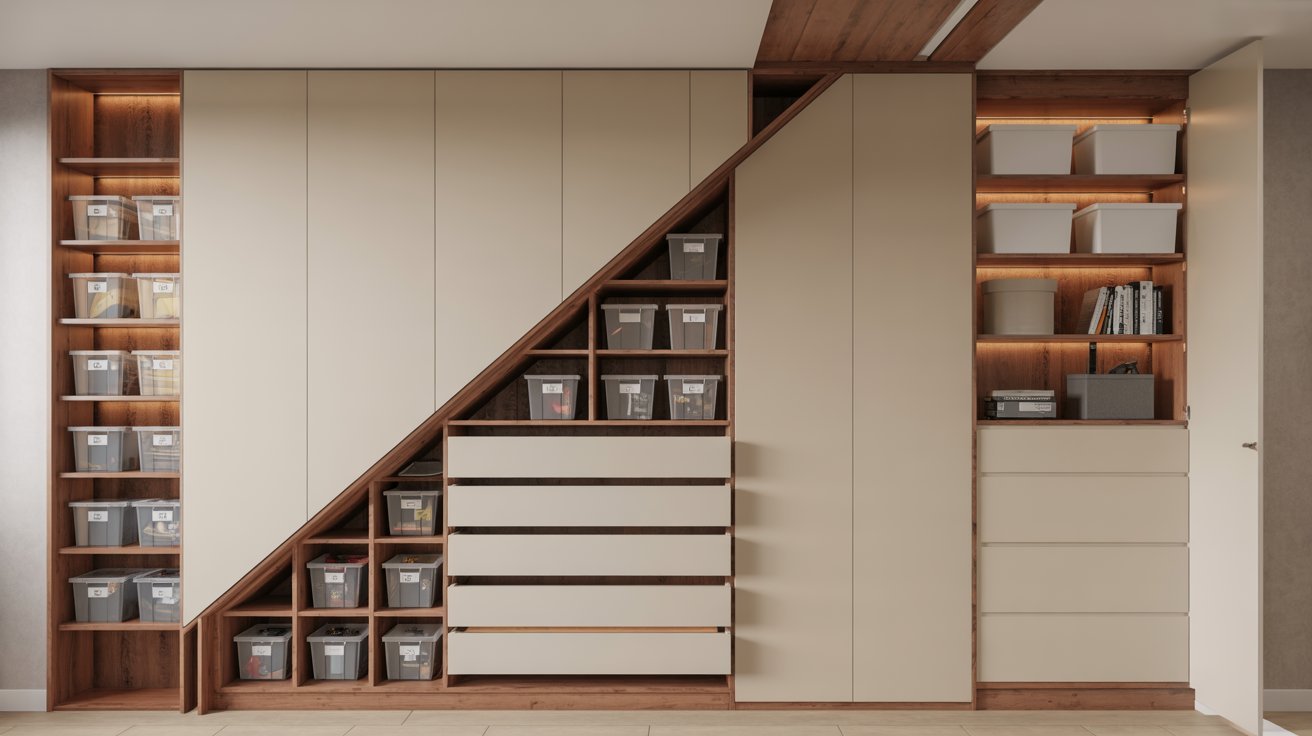
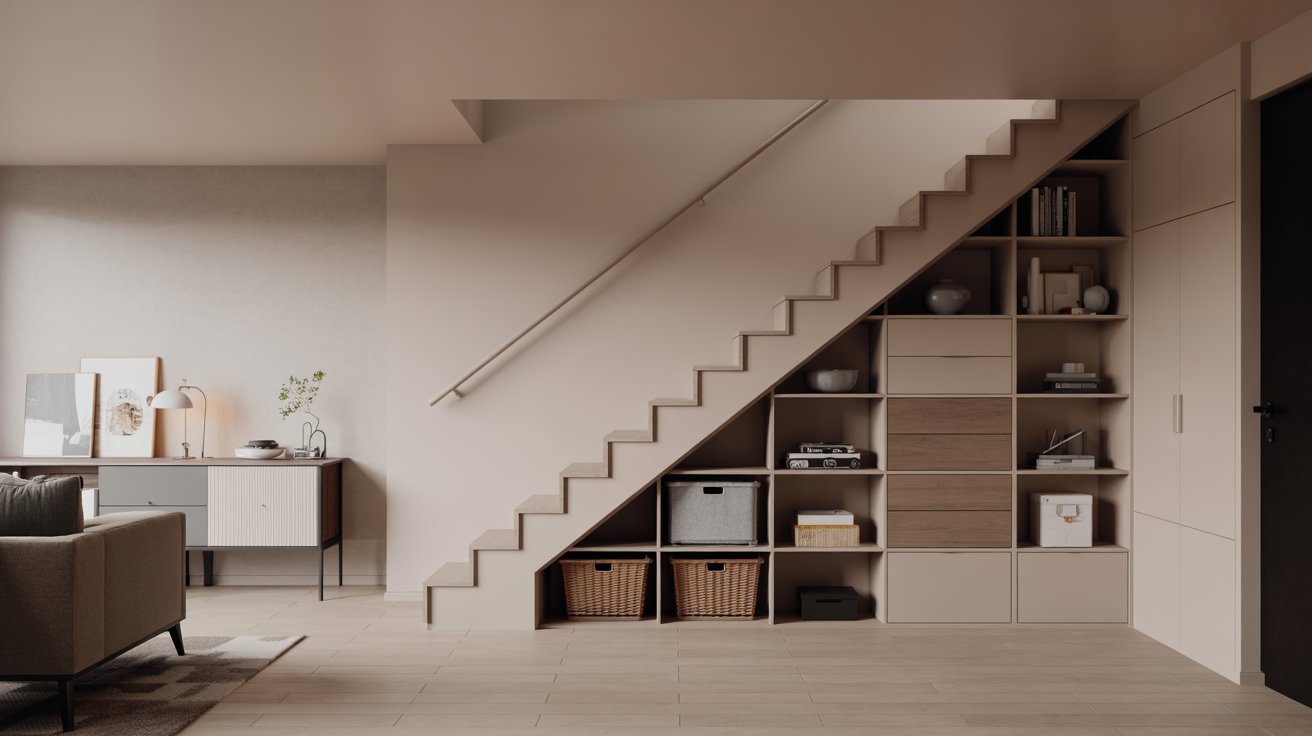
That odd corner under your basement stairs probably collects dust right now. Most people walk past it every day without a second thought. But with a simple plan, that space can hold shelves, drawers, or full cabinets.
Give everyday items a dedicated spot and clutter stops building up. Seasonal stuff, tools, extra supplies – they all need a home.
When you use this space well, your basement stops feeling like a dumping ground and starts working for you. That’s the real value here.
Best Under Basement Stairs Ideas for Smart Storage
Practical ideas that fit real homes, real budgets, and real storage needs.
1.Built-In Drawers for Hidden Storage
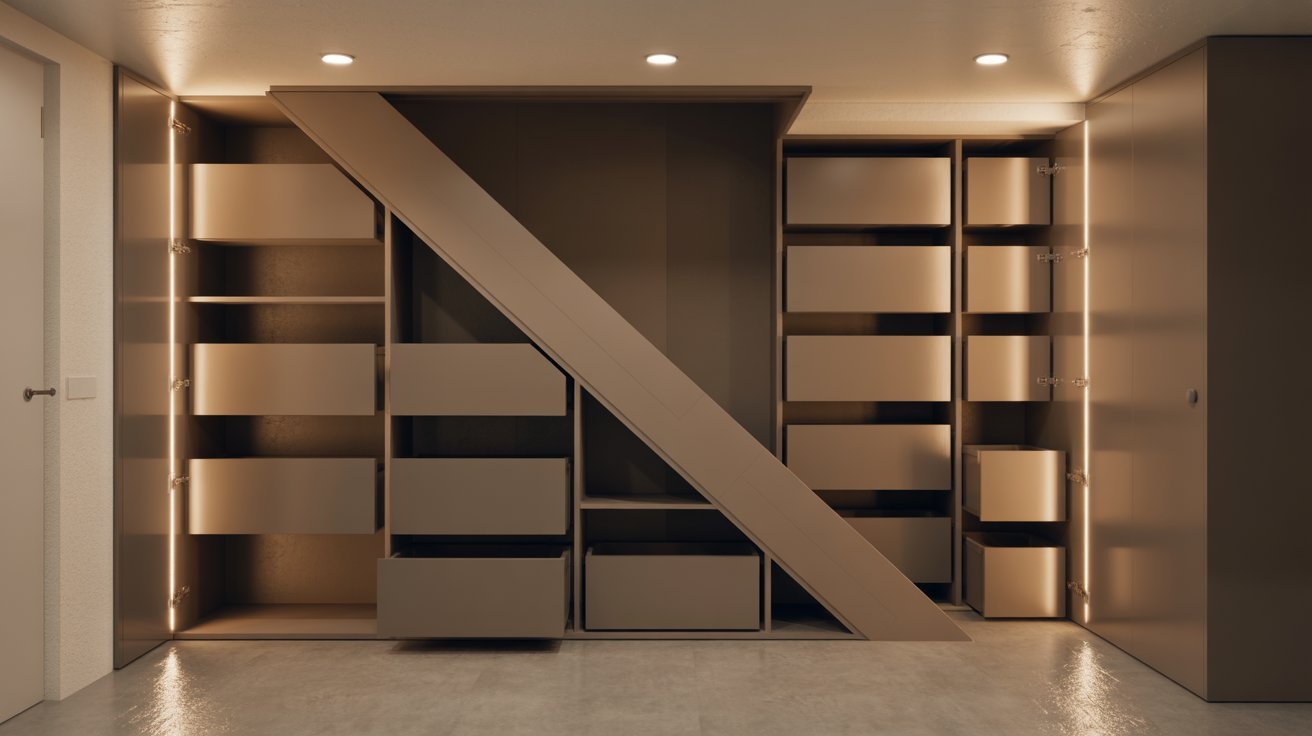
Built-in drawers fit deep, low spaces perfectly. Great for tools, linens, or anything you want hidden from sight.
2.Custom Shelving for Organized Storage
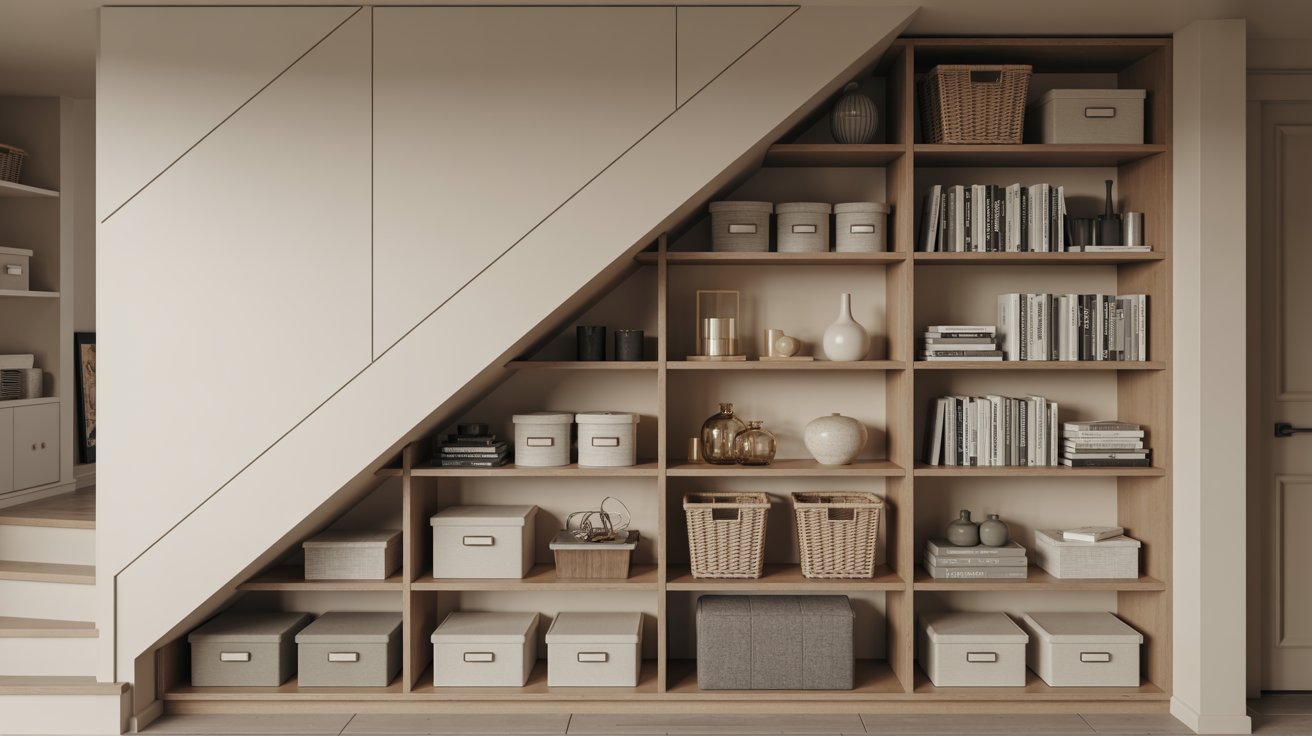
Open shelves are simple and budget-friendly. Store boxes, books, or pantry overflow and add bins to keep it tidy.
3.Under-Stair Storage Closet for Bulk Items
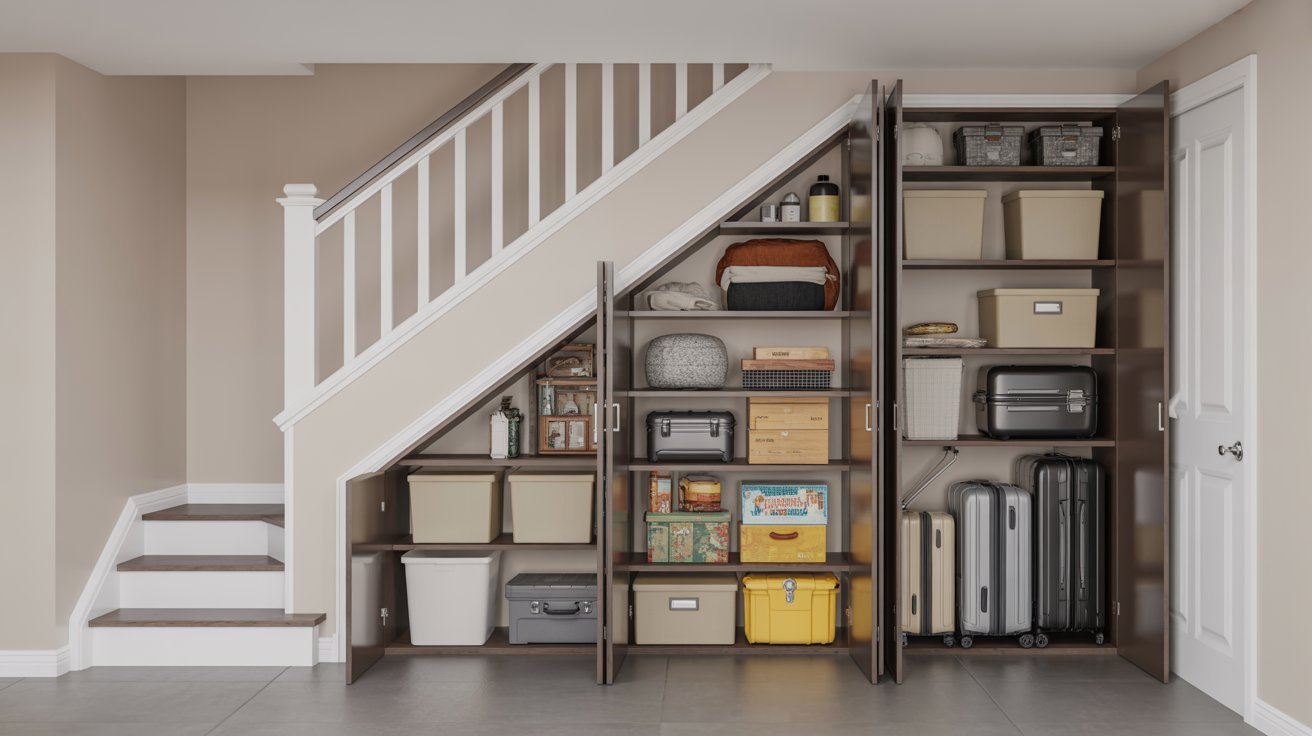
Build a small closet with a door for seasonal items or holiday decorations. Add a light inside for visibility.
4.Pantry-Style Storage for Extra Supplies
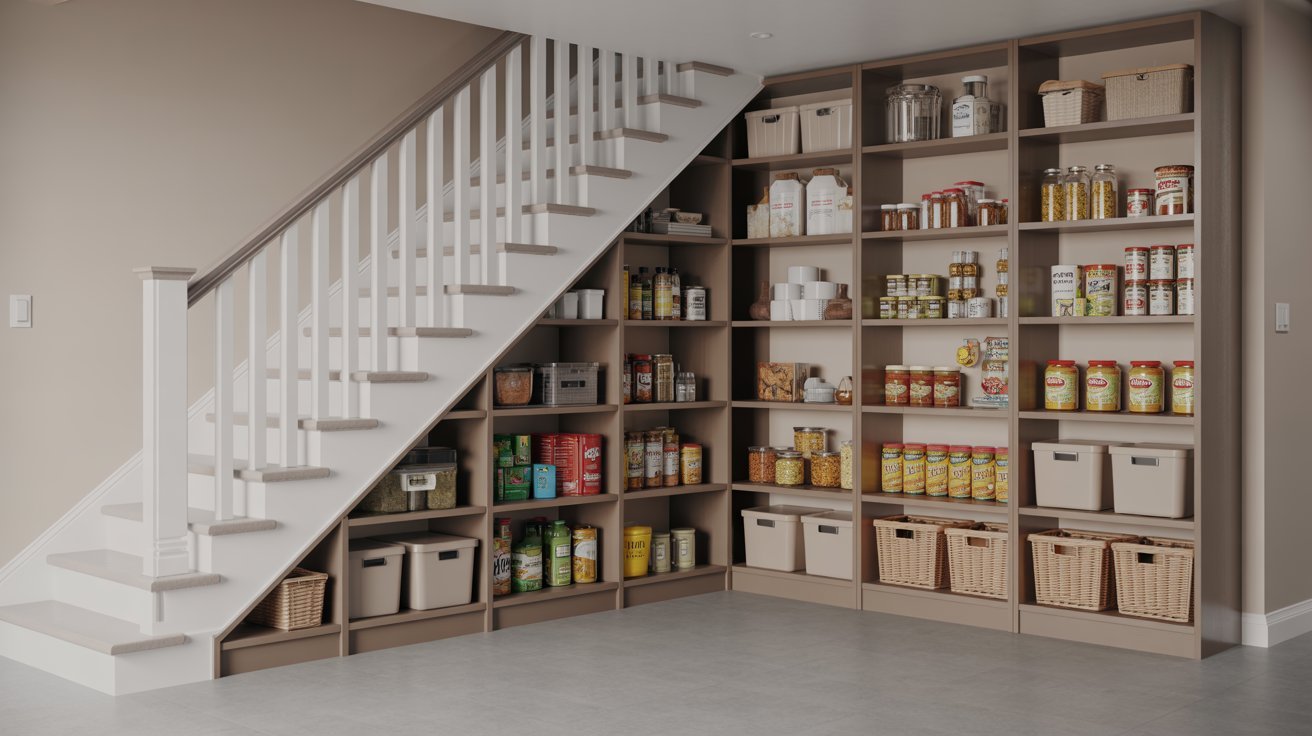
Add narrow shelves and store canned goods, jars, or extra snacks. It takes pressure off your kitchen cabinets fast.
5.Multi-Functional Storage with Bench Seating
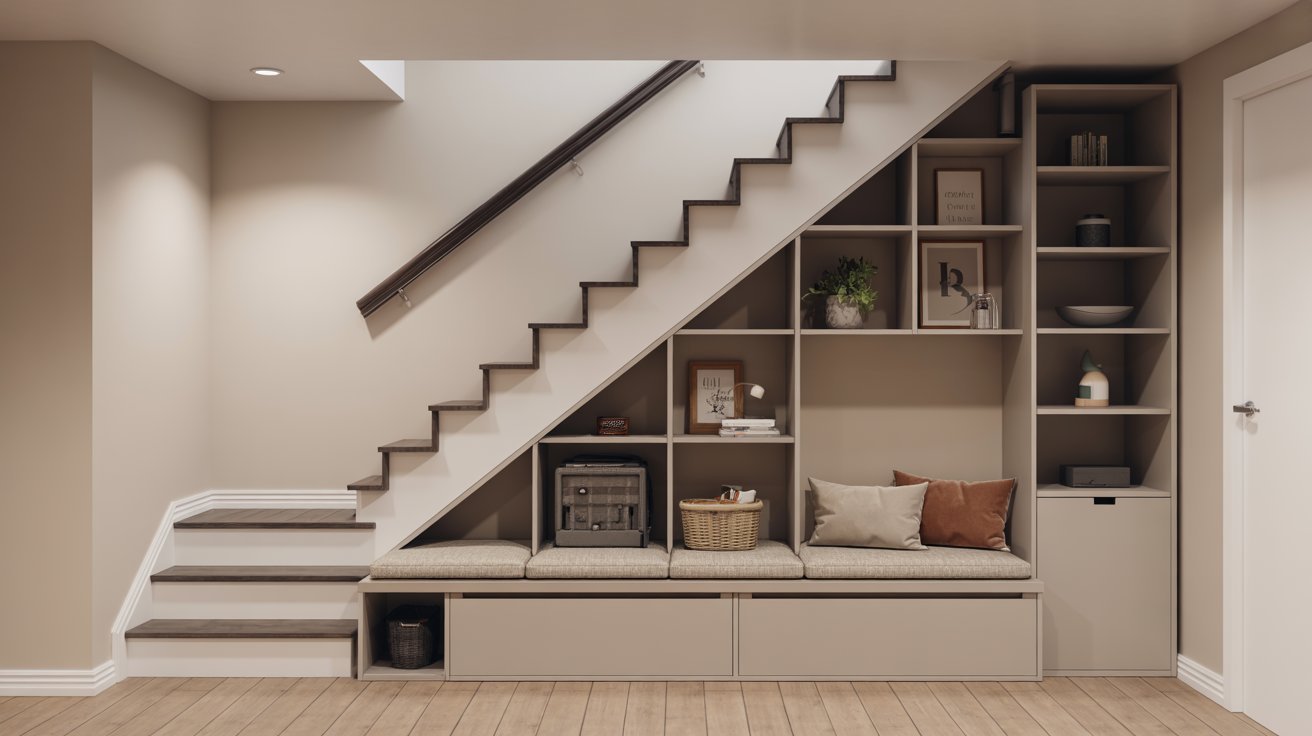
Build a bench at the stair base with hidden storage below. Use lift-top lids or drawers for easy access.
6.Wine and Beverage Storage Rack
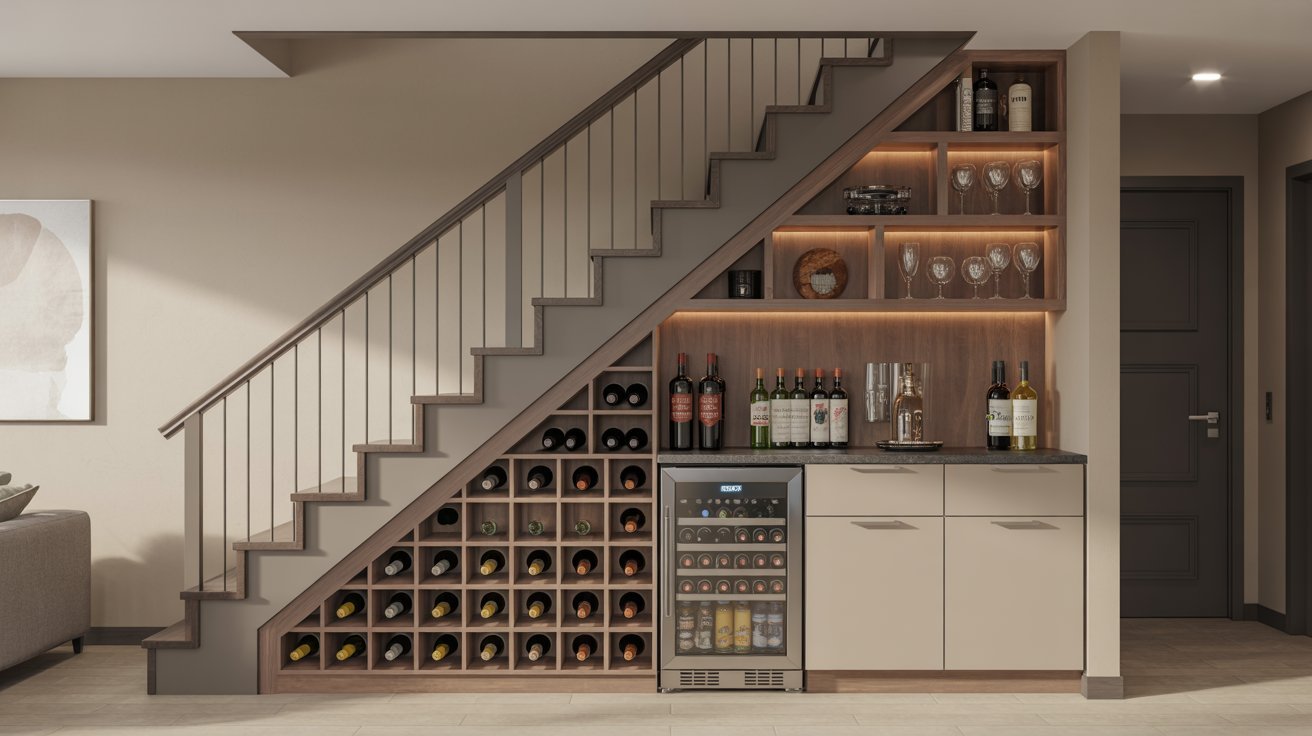
Install a simple wine rack or beverage shelf under the stairs. It keeps bottles organized and frees up kitchen counter space.
7.Home Office Nook with Storage
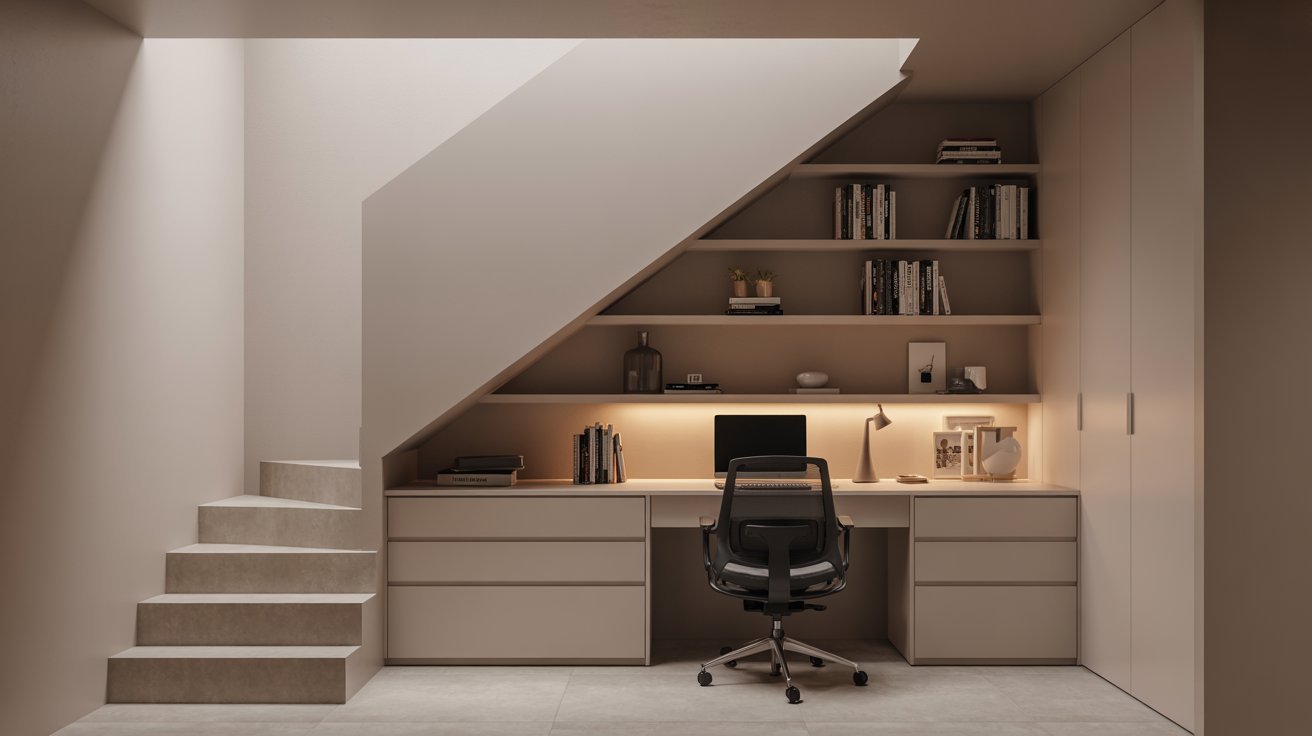
Fit a small desk and shelves into the space for a compact work area. Add a cabinet below to store office supplies neatly.
8.Laundry Supply Storage Station
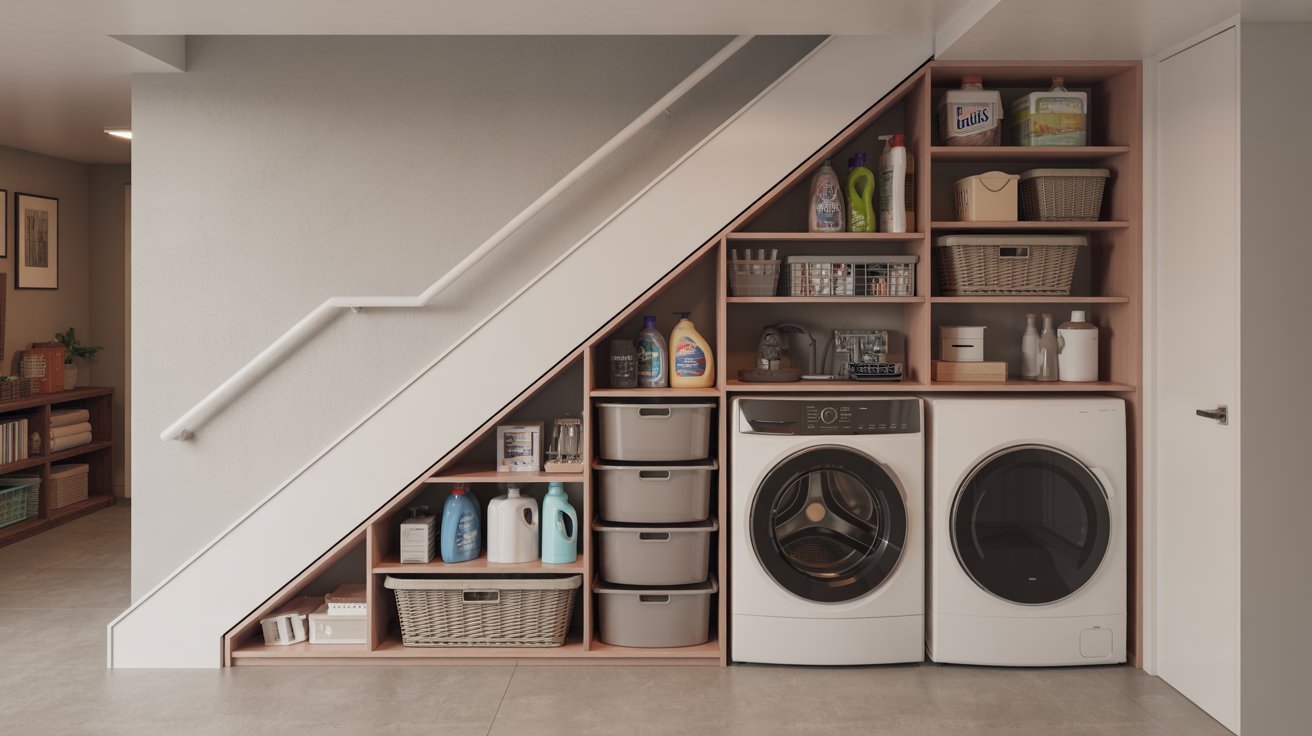
Store detergent, fabric softener, and cleaning supplies here. It keeps laundry essentials close without cluttering your main space.
9.Shoe Storage Cubby System
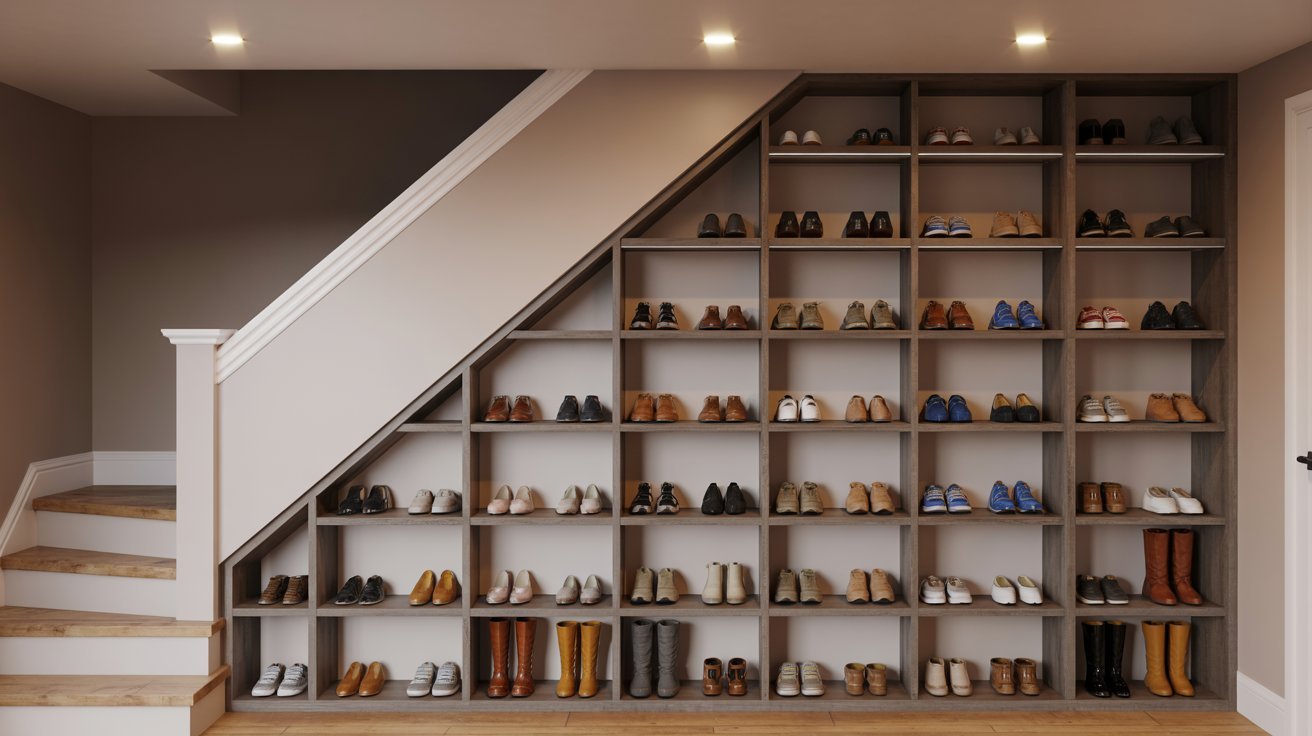
Add cubbies or a shoe rack under the stairs. It clears up entryway clutter and keeps footwear in one easy spot.
1o.Book and Magazine Collection Shelf
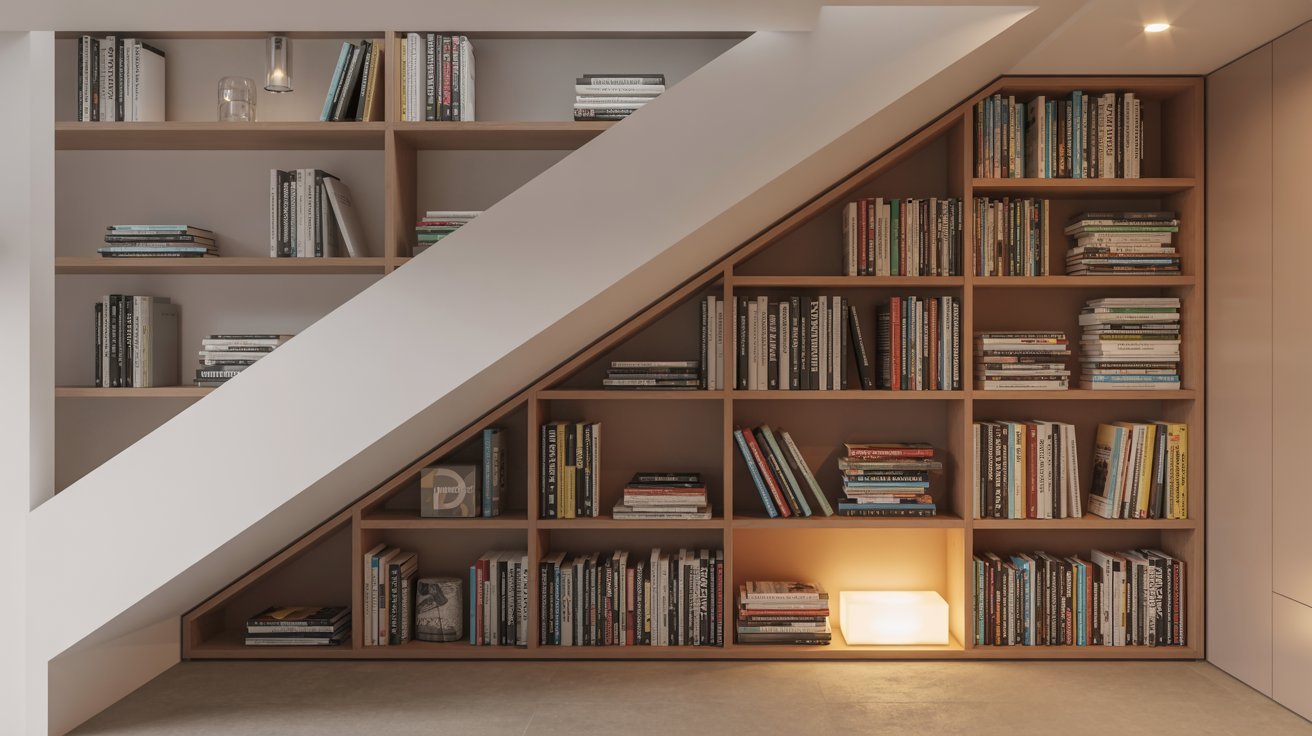
Line the walls with shelves for your reading collection. It works like a mini library and keeps books off the floor.
11.Tool and Hardware Organizer
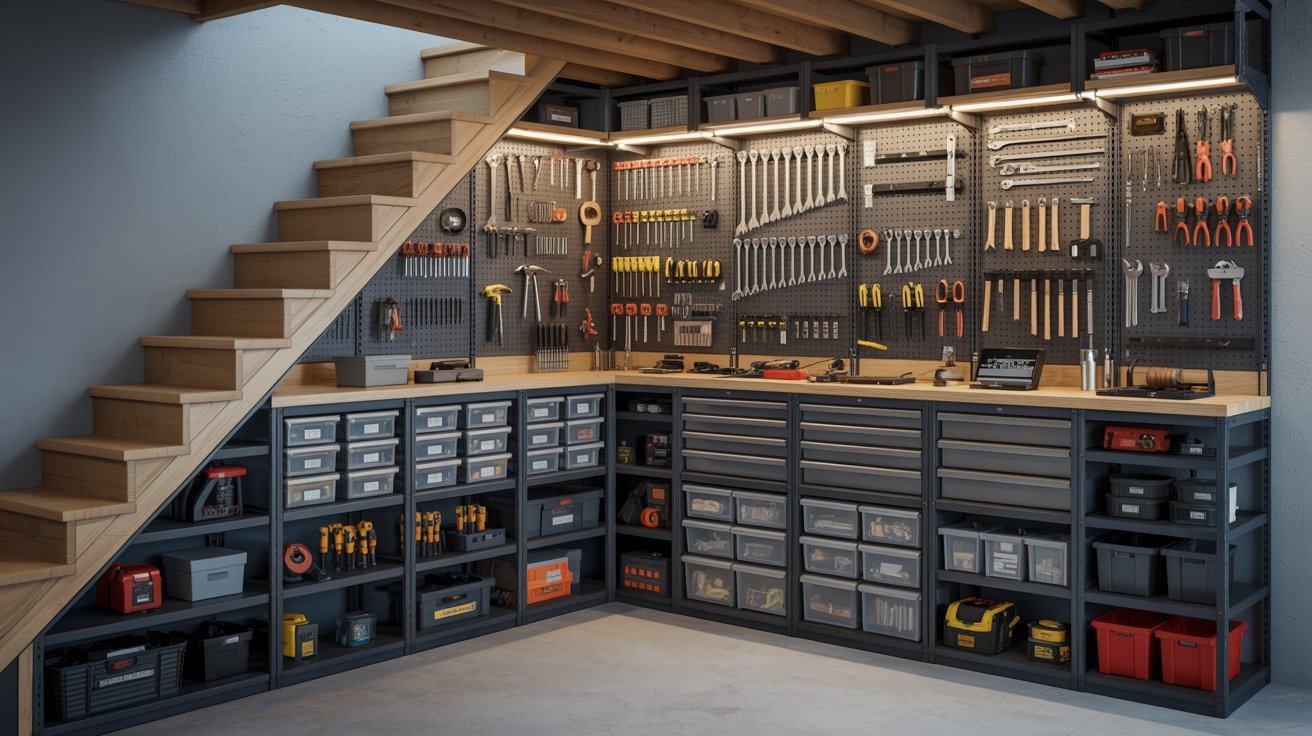
Mount pegboards or add shelves for tools, screws, and hardware. Everything stays in one spot and is easy to find when needed.
12.Kids’ Art Supply Station
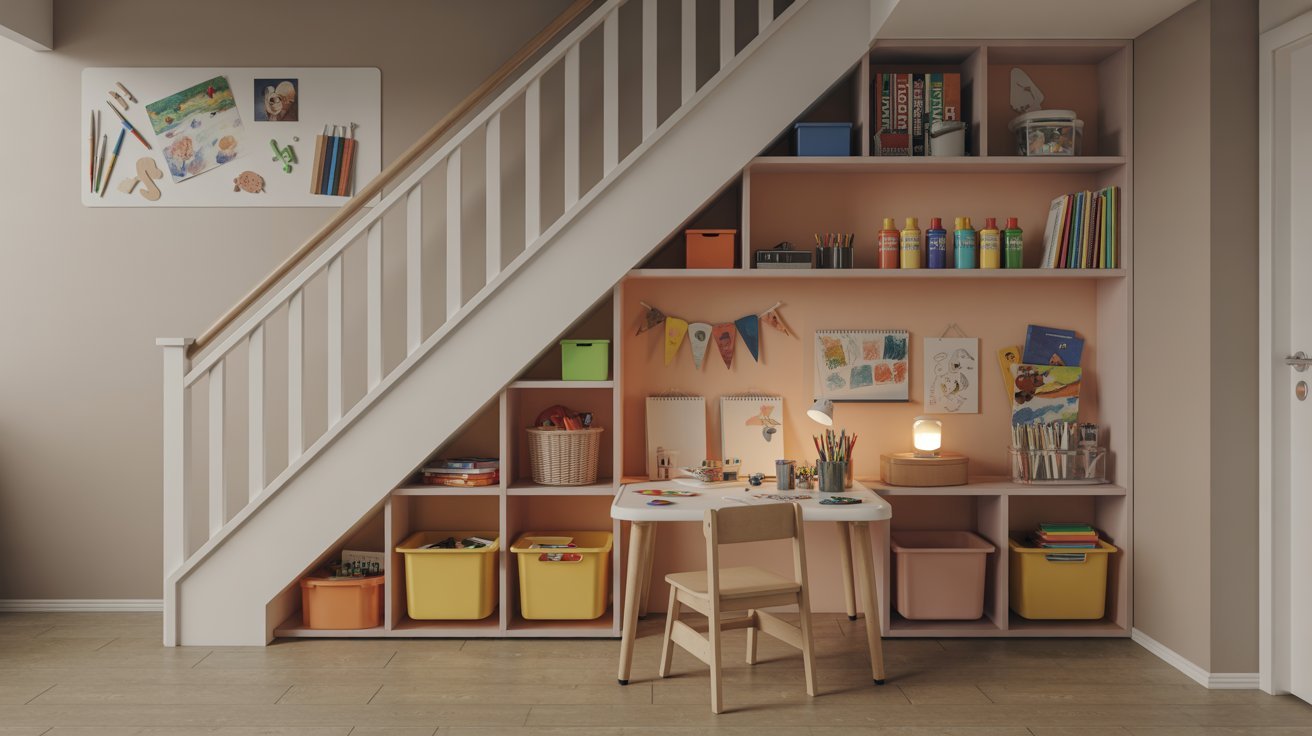
Store crayons, paper, paints, and craft supplies in labeled bins. Kids can grab what they need without making a mess elsewhere.
13.Sports Gear Storage Area
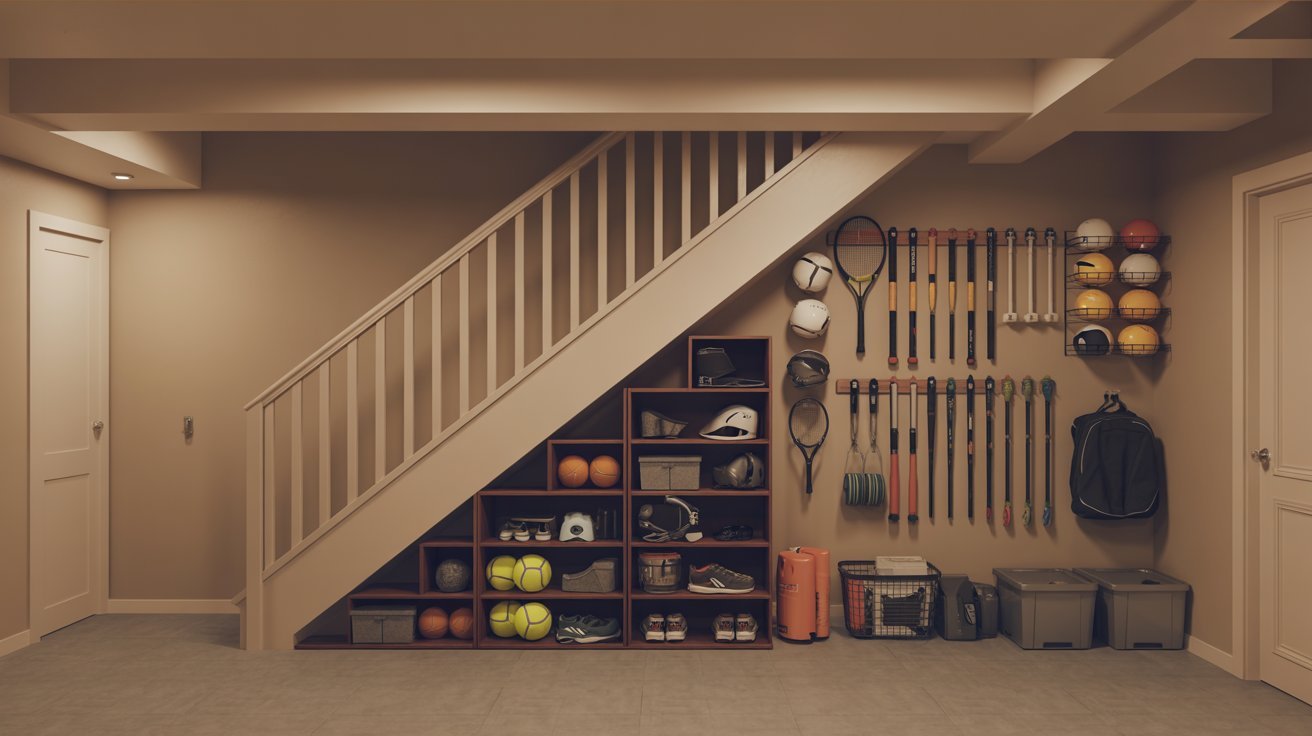
Hang hooks and add cubbies for helmets, balls, and gear bags. It keeps sporting equipment contained and off your garage floor.
14.Board Game and Puzzle Storage
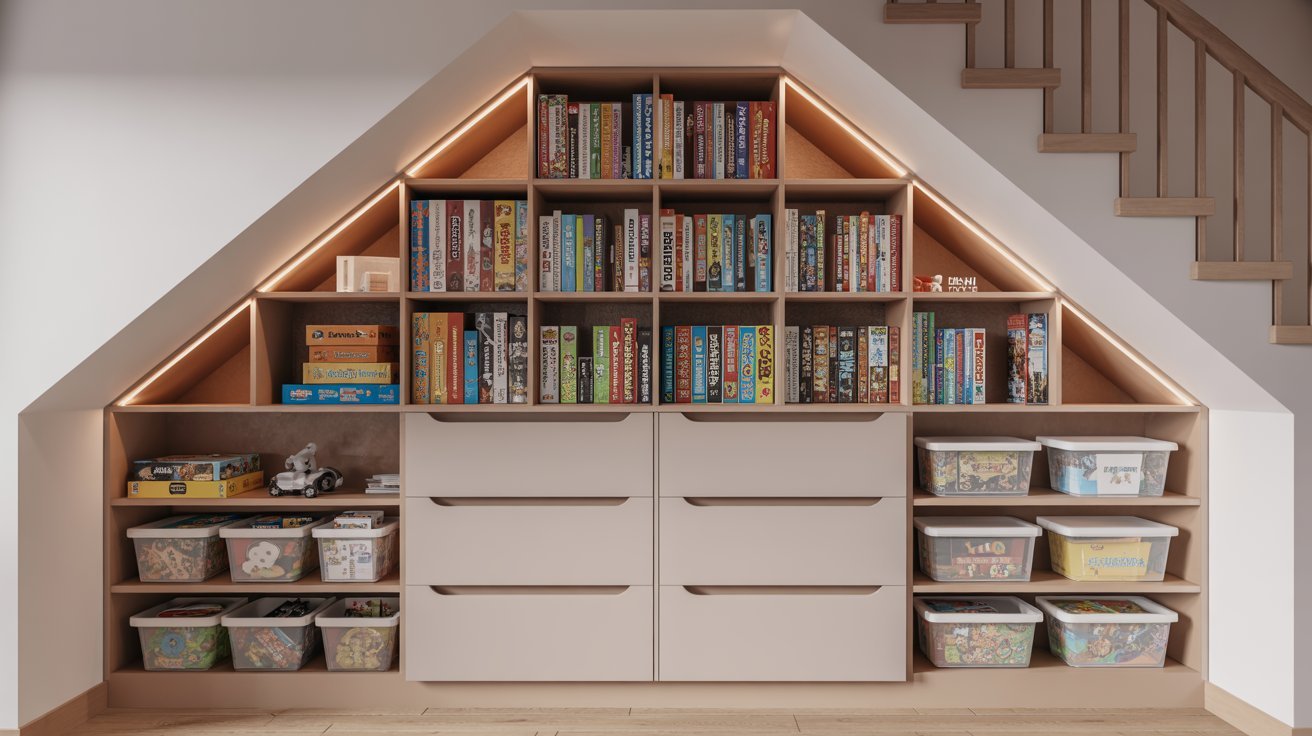
Stack board games and puzzles on deep shelves behind a door. They stay organized and protected from dust and damage.
15.Cleaning Supply Cabinet
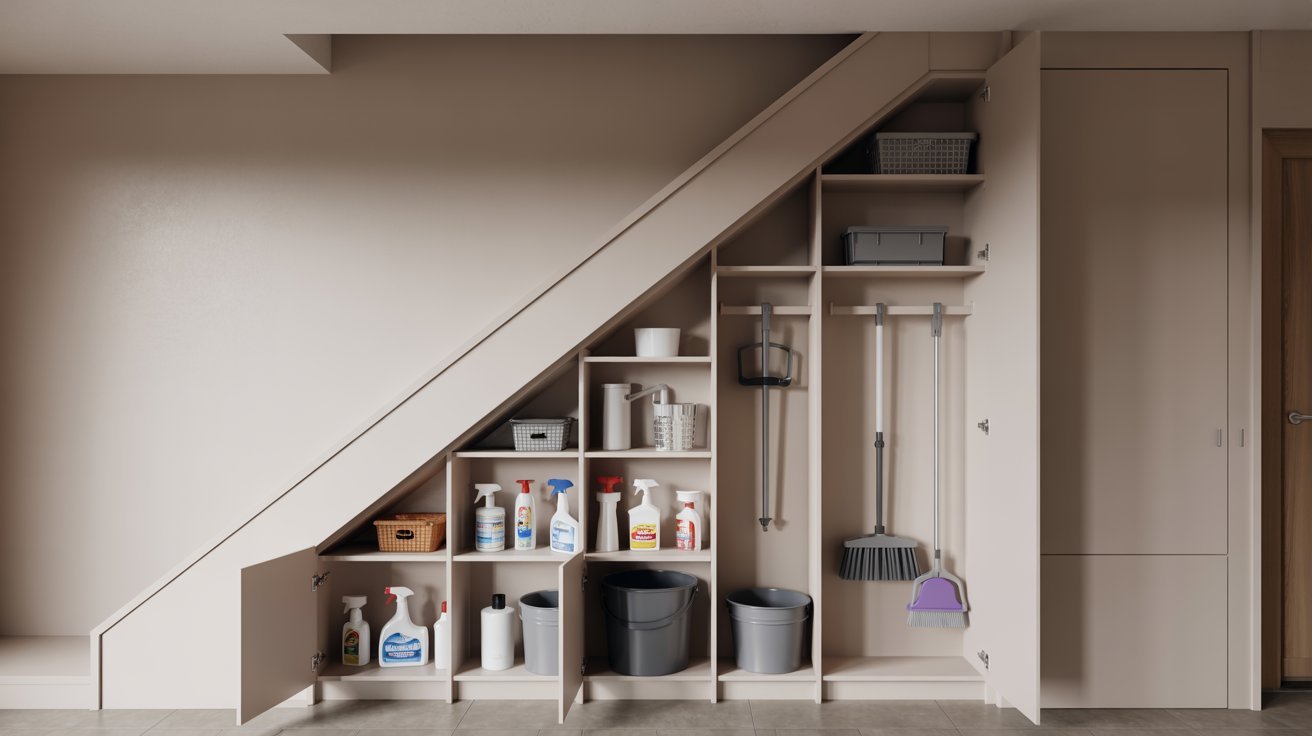
Store mops, brooms, sprays, and cleaning cloths inside a tall cabinet. A door keeps it all hidden and looking clean.
16.Pet Supply Storage Corner
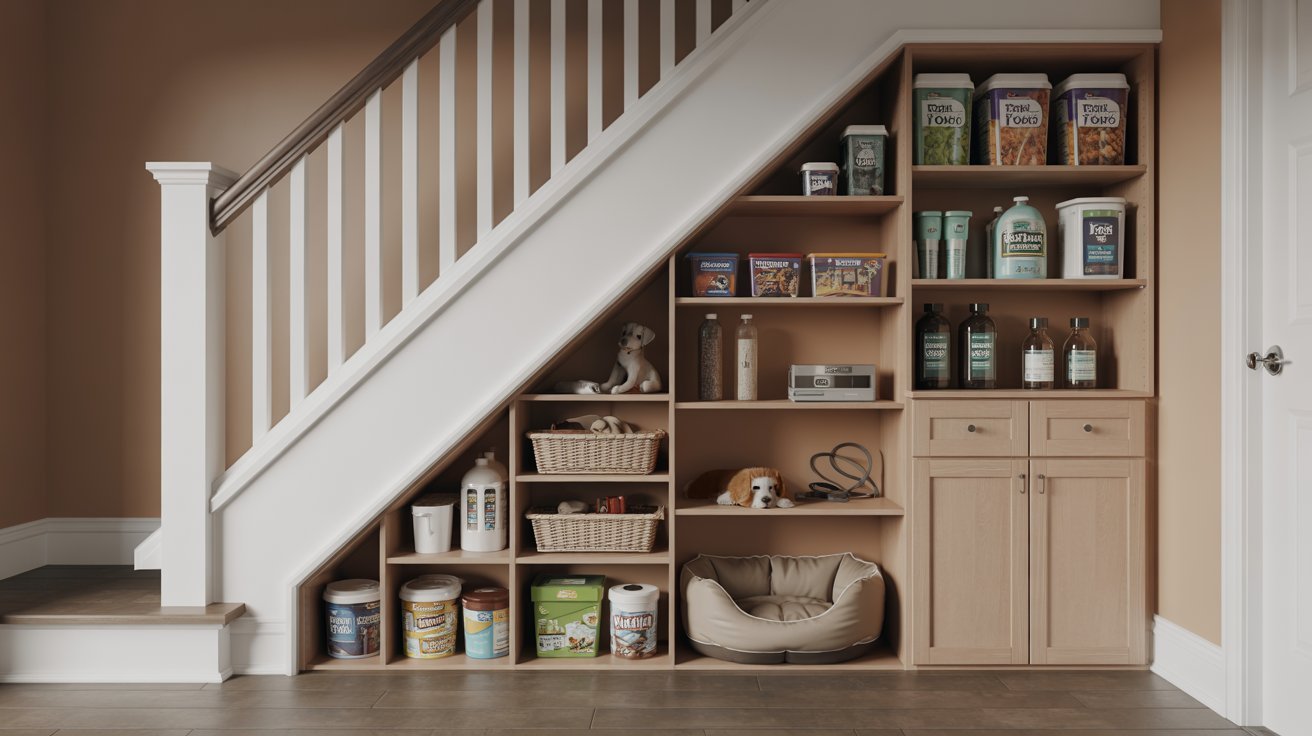
Add shelves and hooks for food bags, leashes, and grooming items. Everything your pet needs stays in one organized spot.
17.Holiday Decoration Storage Zone
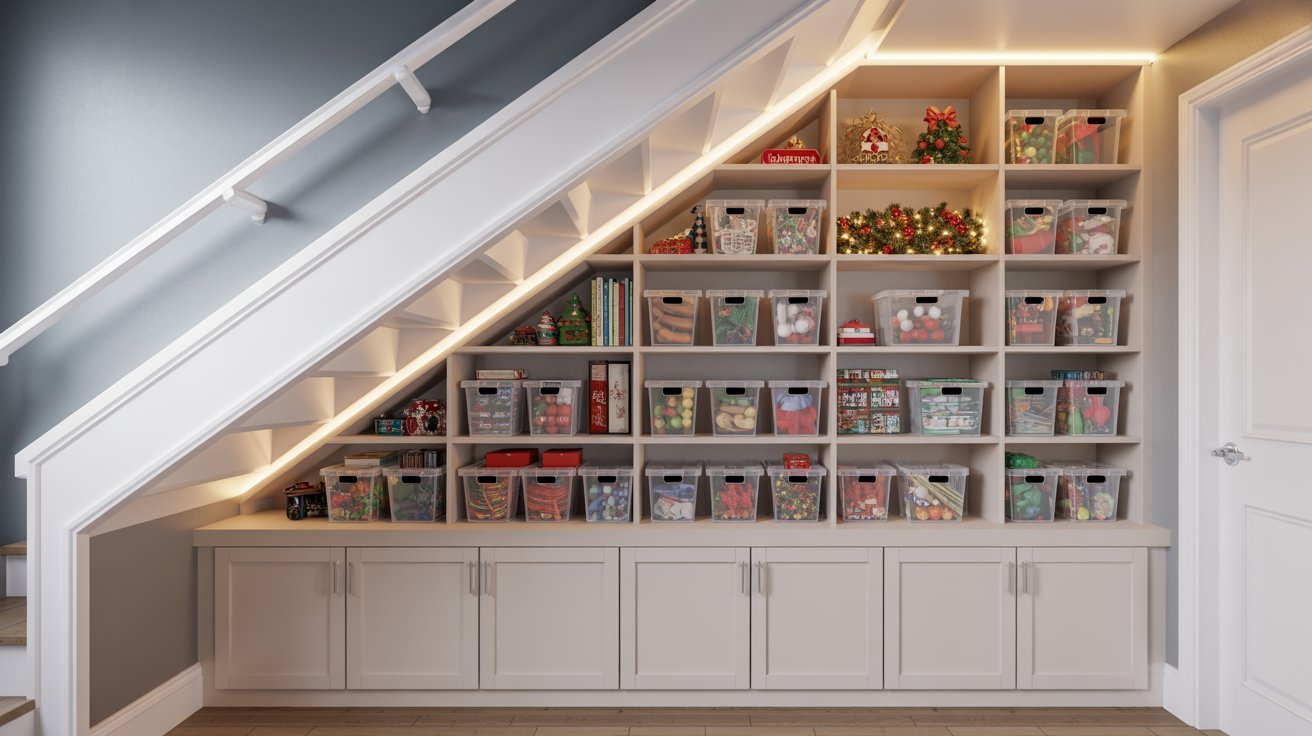
Use labeled bins stacked on shelves for lights, ornaments, and décor. Pull out only what you need each season with ease.
18.Gift Wrap and Craft Supply Station
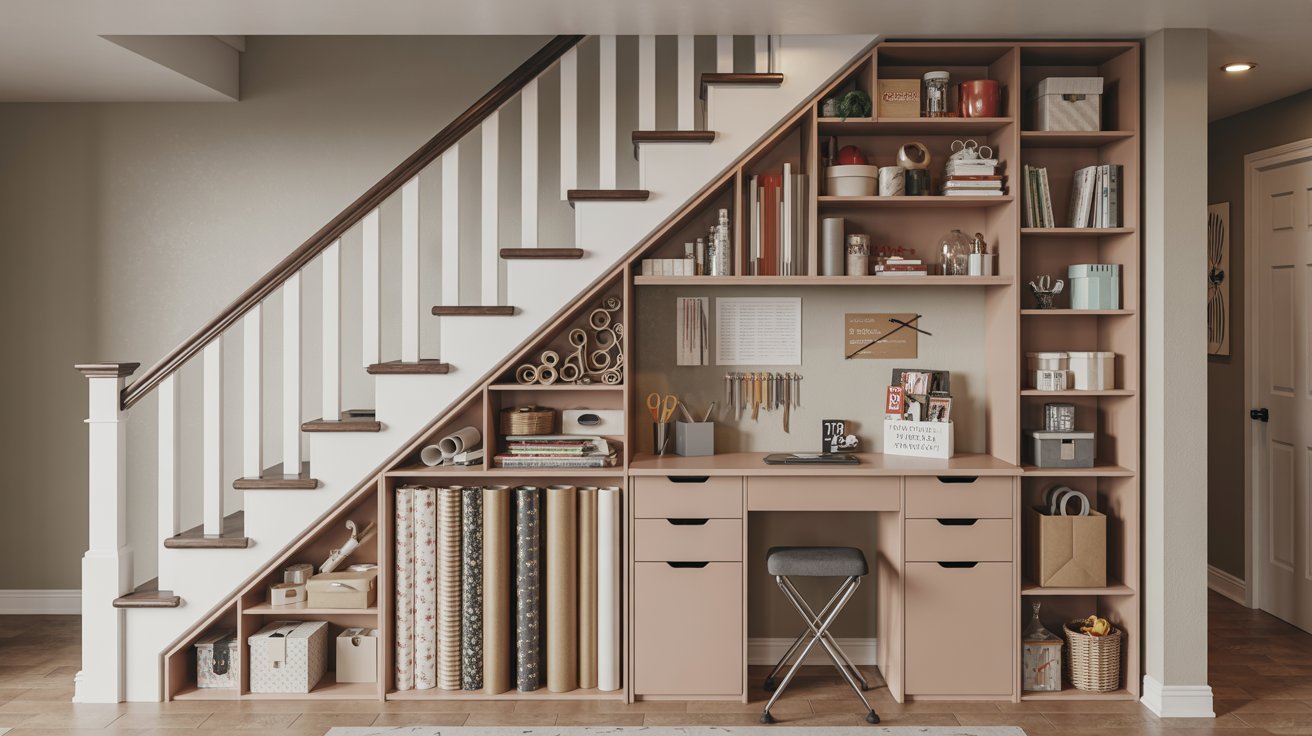
Store wrapping paper rolls, ribbons, tape, and scissors on narrow shelves. It makes gift wrapping faster and far less frustrating.
19.Canned Food and Dry Goods Pantry
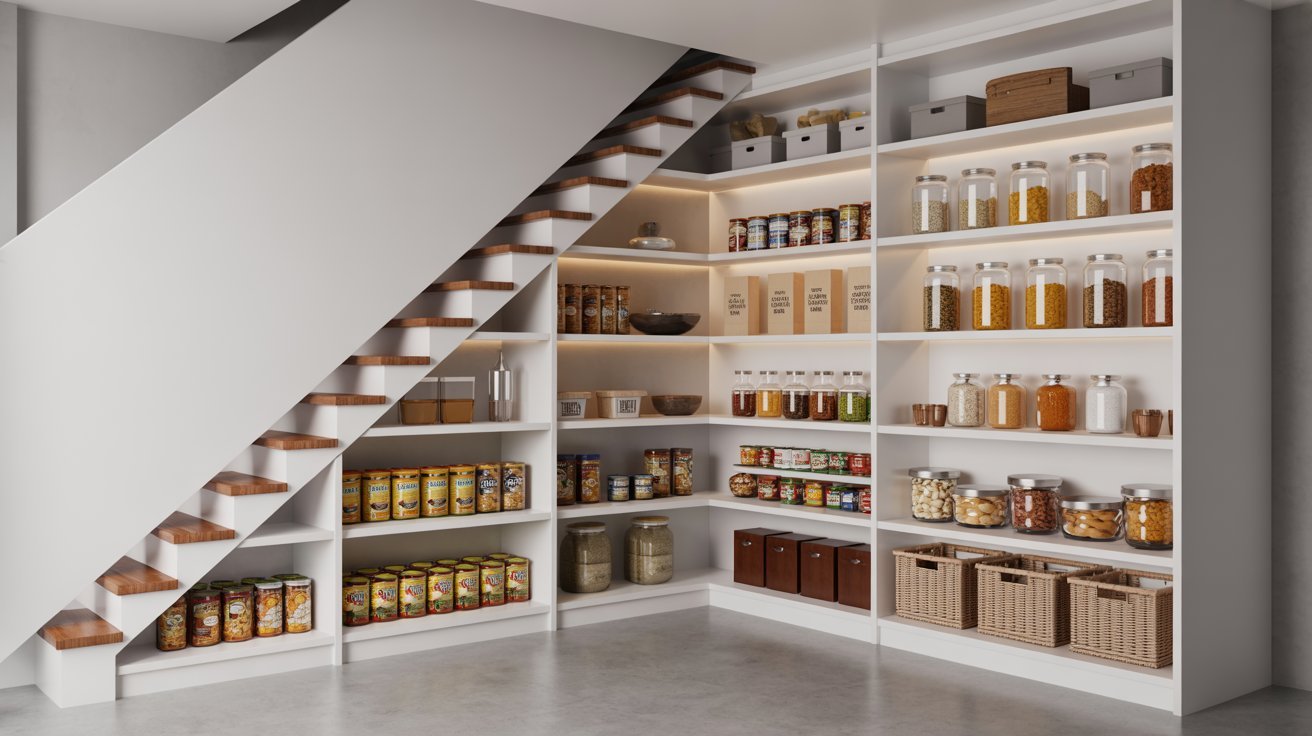
Add rows of shelves for canned foods, pasta, and dry pantry items. It works as extra kitchen storage right in your basement.
20.Plant and Gardening Supply Shelf
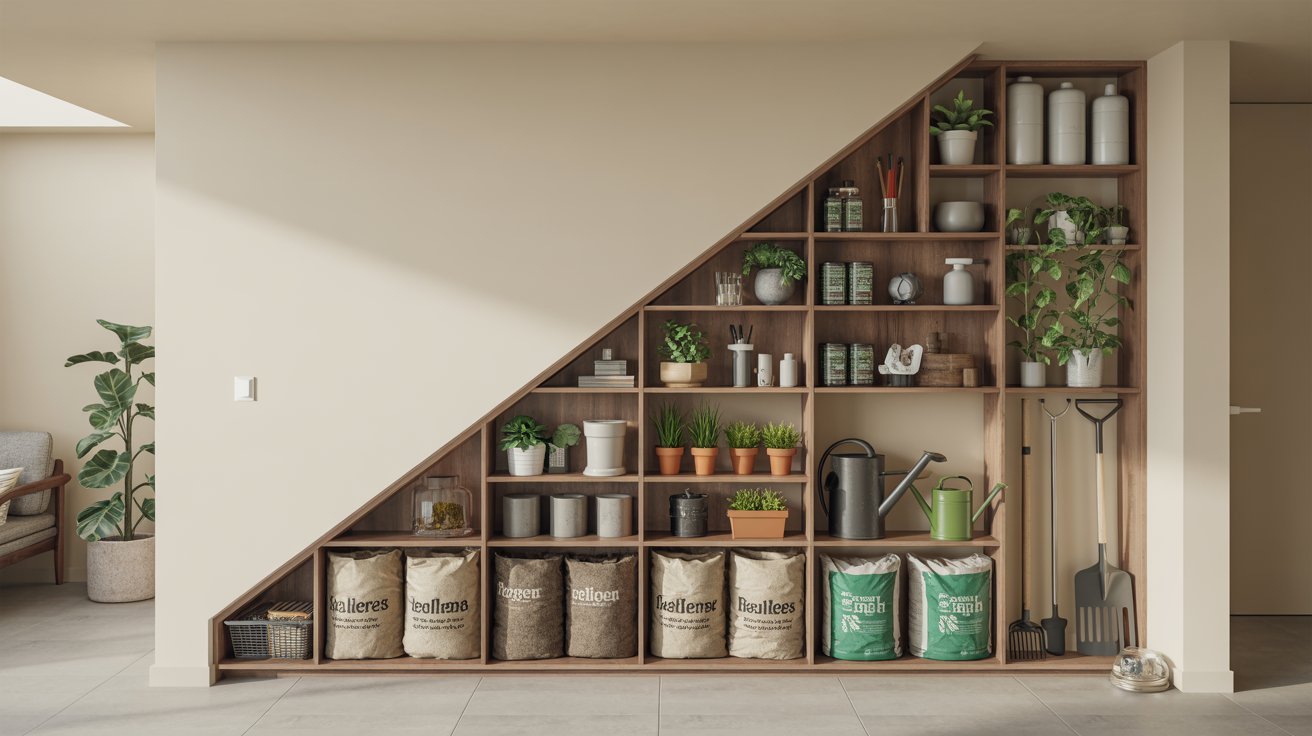
Keep pots, soil, fertilizer, and tools on a dedicated shelf. It saves time when you need supplies and keeps things tidy.
21.Pull-Out Rolling Cart Station
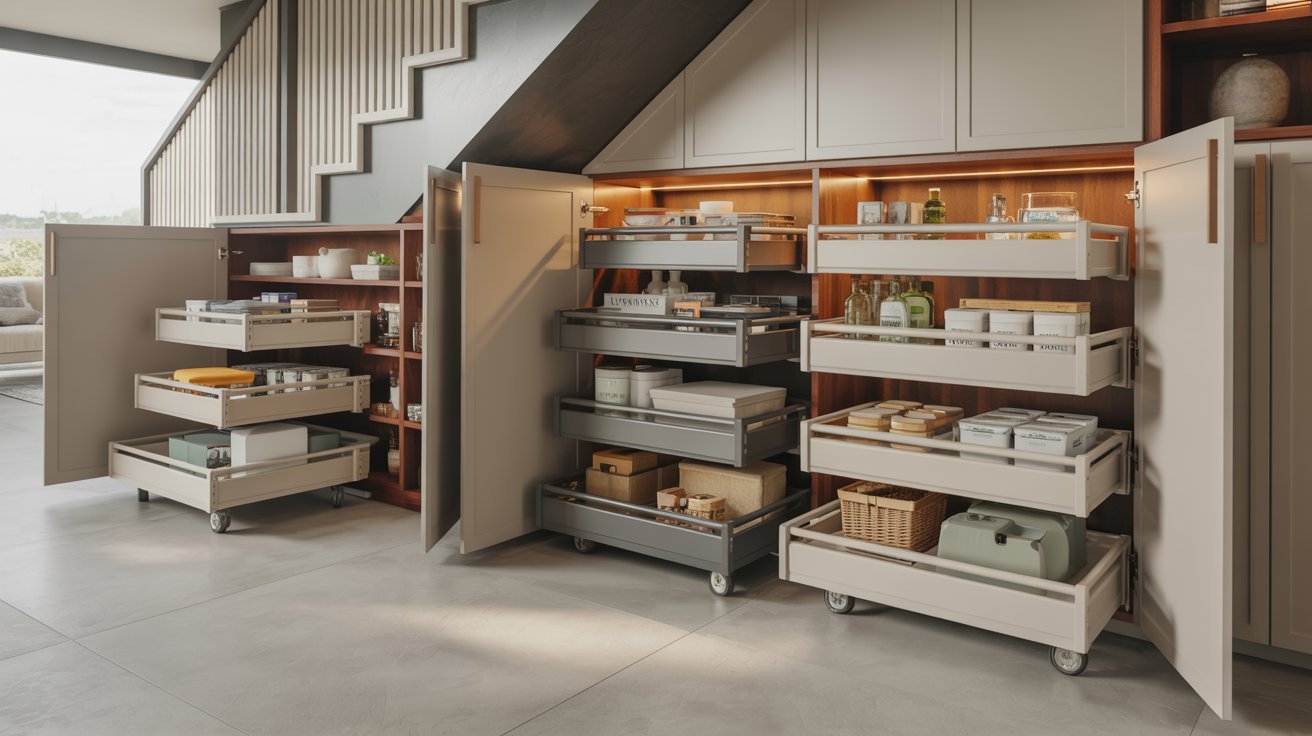
Install a track system with rolling carts that slide in and out. Each cart can hold different categories of items for quick access.
22.Kids’ Toy Bin and Cubby Wall
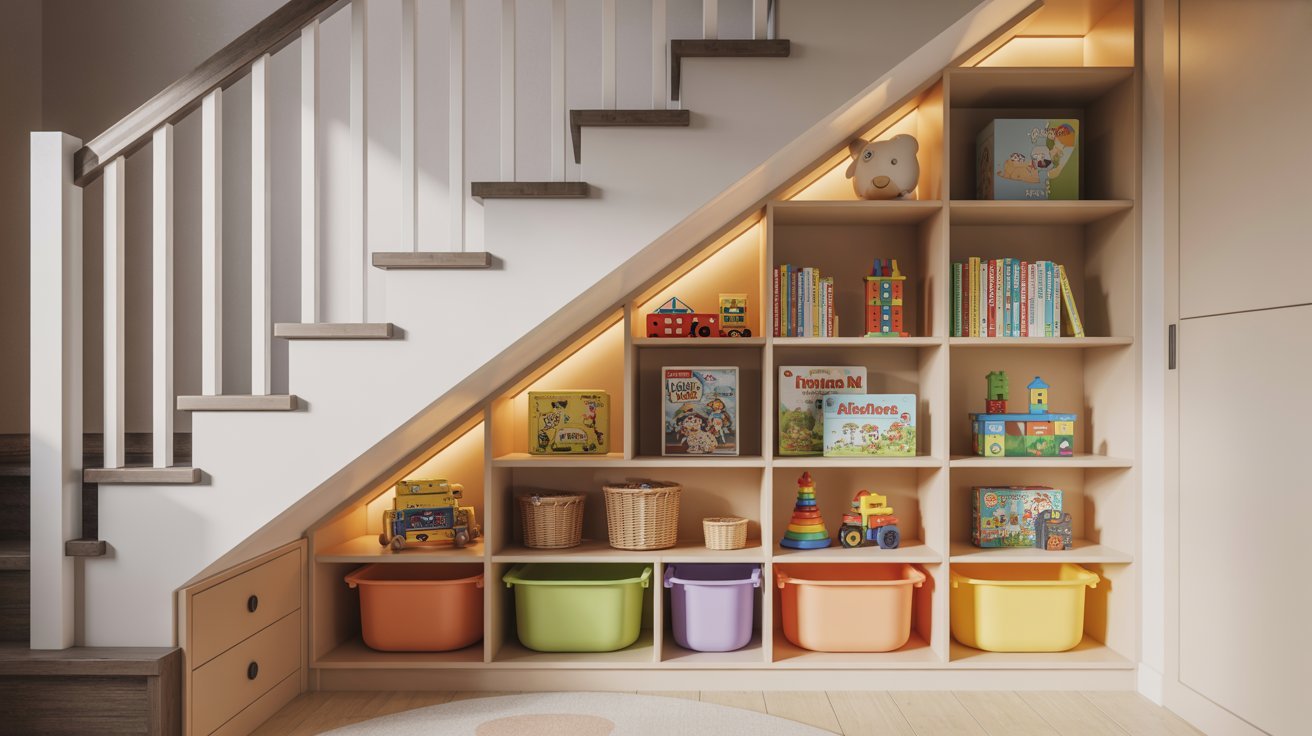
Mount low cubbies and add labeled bins for different toy types. Kids can put things back easily without any help from you.
23.Luggage and Travel Gear Storage
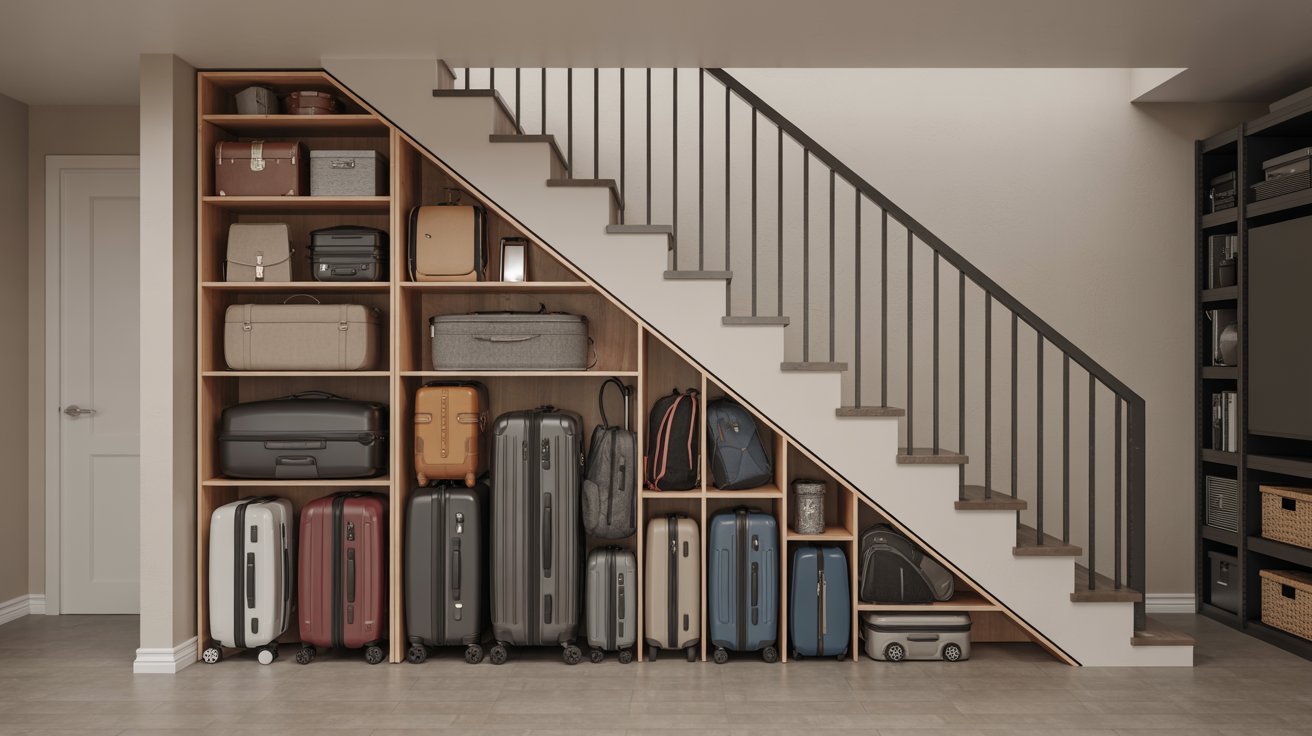
Stack suitcases and travel bags behind a door or on deep shelves. It clears bedroom closets and keeps luggage dust-free.
24.Electronics and Cable Organizer
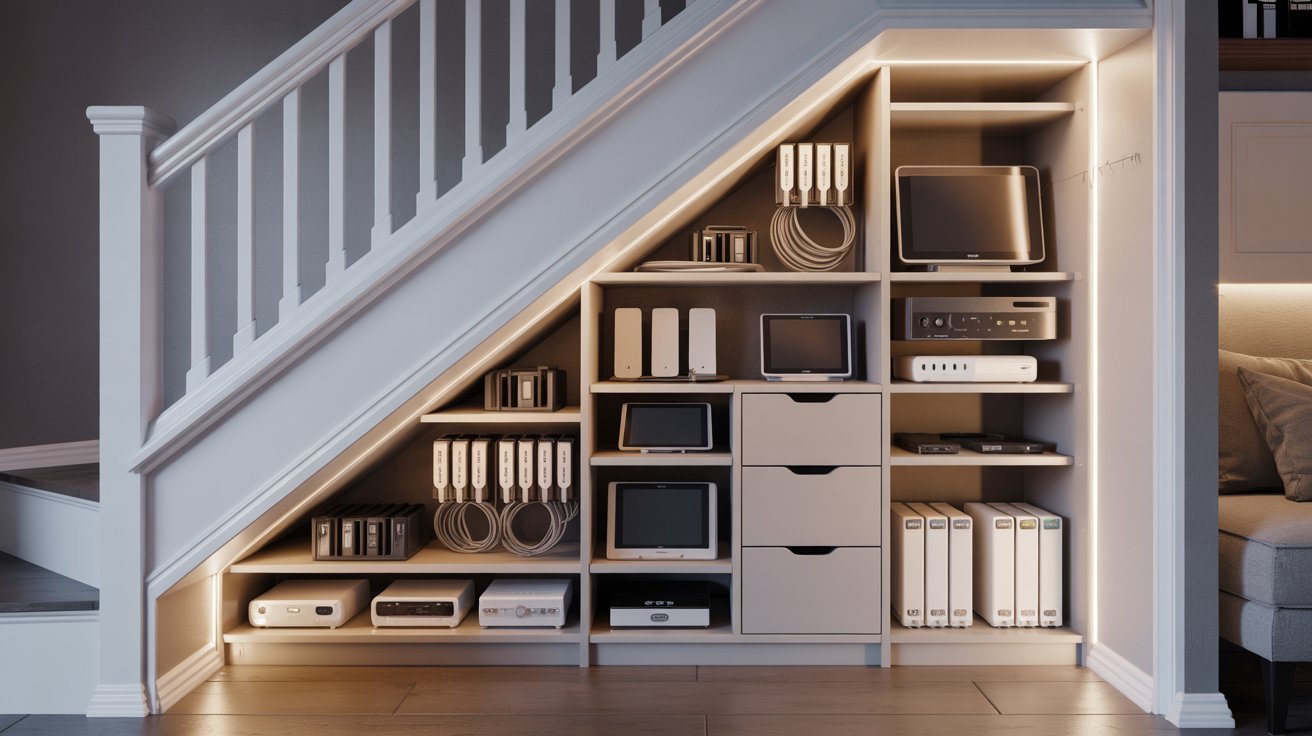
Use bins and labeled boxes for spare cables, chargers, and old devices. Keeps the junk drawer overflowing in one manageable spot.
25.Reading Nook with Under-Seat Storage
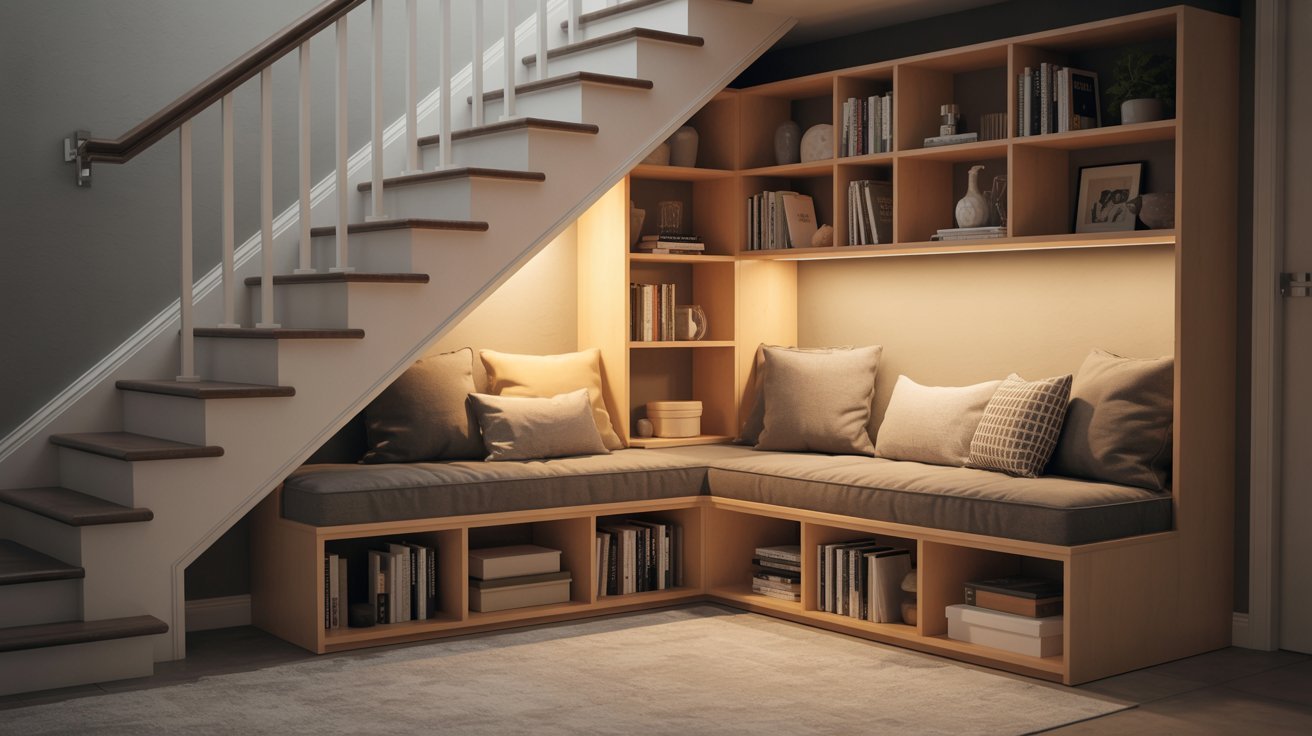
Build a small window-style bench or nook with a lift-top seat. Store blankets, pillows, or books inside for a cozy and functional corner.
How to Design Under Basement Stairs Storage Efficiently
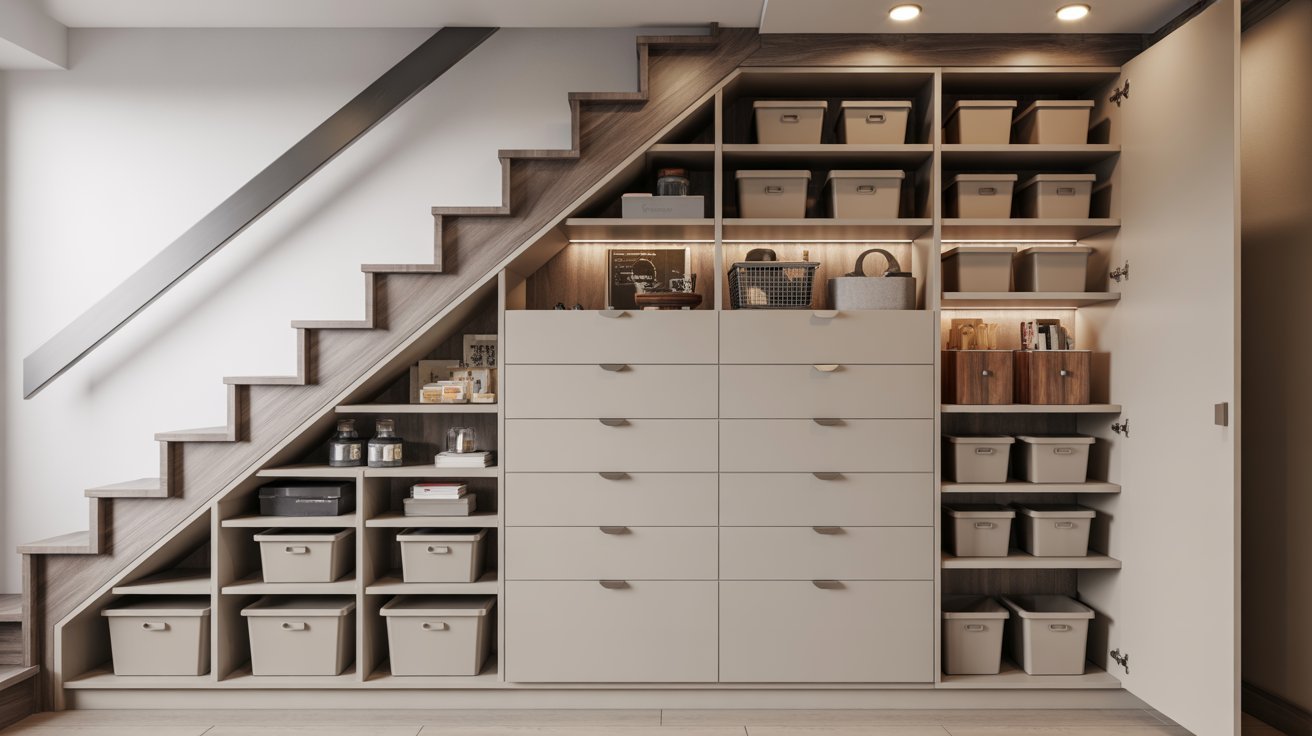
A little planning goes a long way before you start building.
Tips to Maximize Under Basement Stairs Storage Space
Small adjustments that make a big difference in how much you can store.
- Add hooks and stack bins up high to use every inch of vertical space available.
- Install pull-out drawers or rolling carts to reach items stored at the back easily.
- Keep the things you use most in the front where you can grab them quickly.
- Put rarely used items at the back or up high to free up prime storage spots.
- Label everything clearly so every item always goes back to the right place.
Conclusion
I’ve tried a few of these under basement stairs ideas myself, and the difference they made was real.
That corner went from a pile of random boxes to actual organized storage I use every week. Start with one idea that fits your needs and budget. You don’t have to do it all at once.
Even one set of shelves or a few labeled bins will help. If you found this helpful, drop a comment below or share it with someone who could use the extra storage space.
Frequently Asked Questions
What is the best under basement stairs idea for small spaces?
Built-in drawers or pull-out shelves work best for tight spaces. They use every inch without blocking the area.
How much does it cost to build storage under basement stairs?
DIY options can cost as little as $30 to $100. Custom built-ins with cabinets can run a few hundred dollars depending on materials.
Do I need a permit to build storage under my basement stairs?
In most cases, no permit is needed for basic shelving or cabinets. Always check with your local building codes if you’re doing major structural work.
Can I use the under-stair space as a pantry?
Yes. It works well for storing dry goods, canned items, and kitchen overflow. Add shelves and good lighting to make it functional.
How do I keep under-stair storage from getting damp or musty?
Make sure there’s airflow in the space. Avoid sealing it completely. Use moisture-absorbing products like silica packets or a small dehumidifier if your basement tends to be humid.