Hanging cabinets is one of those DIY projects that looks harder than it is. With the right steps, even a first-timer can get it done well.
I’ve been there, staring at a blank wall and wondering where to start. This guide on how to hang cabinets walks you through everything, from picking the right tools to securing the last screw.
You’ll learn what to measure, how to find studs, and how to keep everything level. I’ve done this myself, and I’ll make sure you feel ready to do it too.
Tools, Materials, and Screws Needed to Hang Cabinets
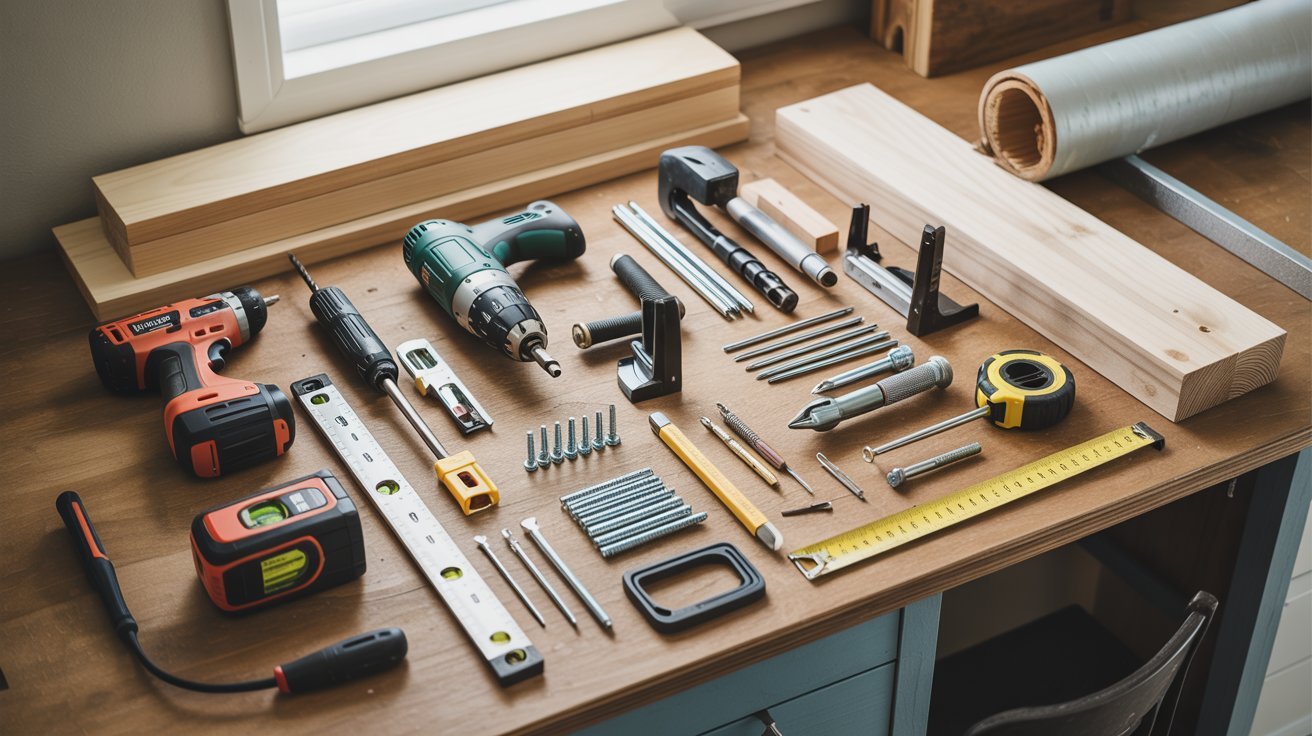
Before you start, gather the right tools:
- Drill
- Level
- Stud finder
- Clamps
- Pencil
- Measuring tape
A good drill and a reliable level are the two most important items on that list.
Step-by-Step Guide on How to Hang Cabinets by Yourself
Follow these five steps carefully and your cabinets will be straight, secure, and long-lasting.
Step 1 – Measure, Mark, and Plan Cabinet Placement
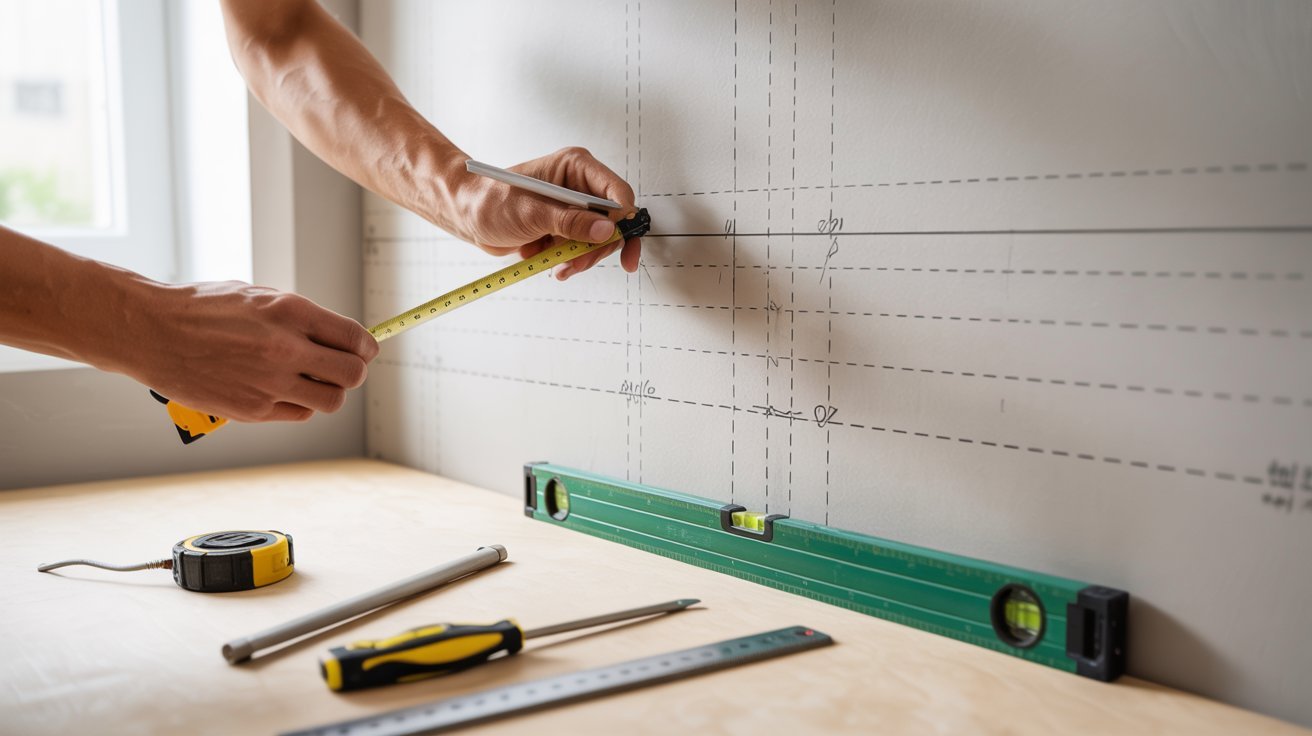
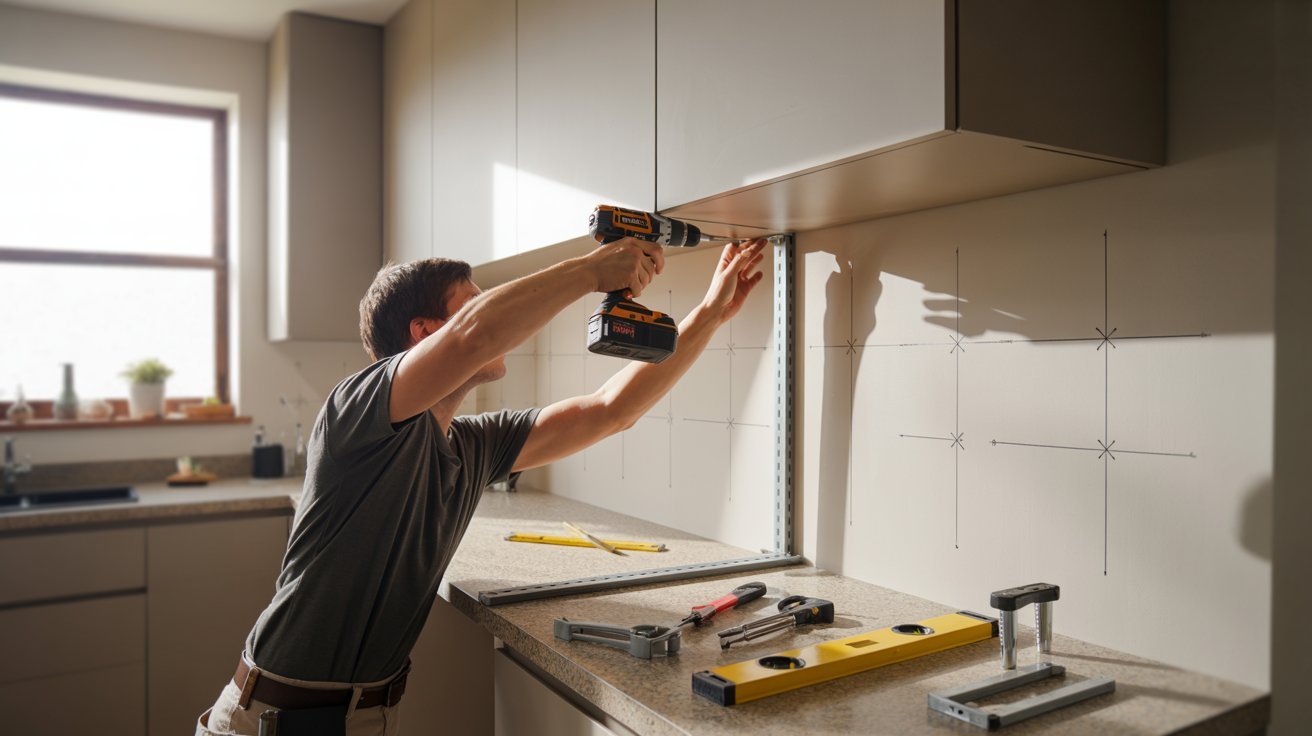
Start by measuring up from the floor. Mark a level horizontal line where the bottom of your cabinets will sit. Use a long level or laser level to keep it straight.
Then use your stud finder to locate wall studs. Mark each one with a pencil. This is where your screws will go.
Step 2 – Choose a Support Method (Platform or Ledger Board)
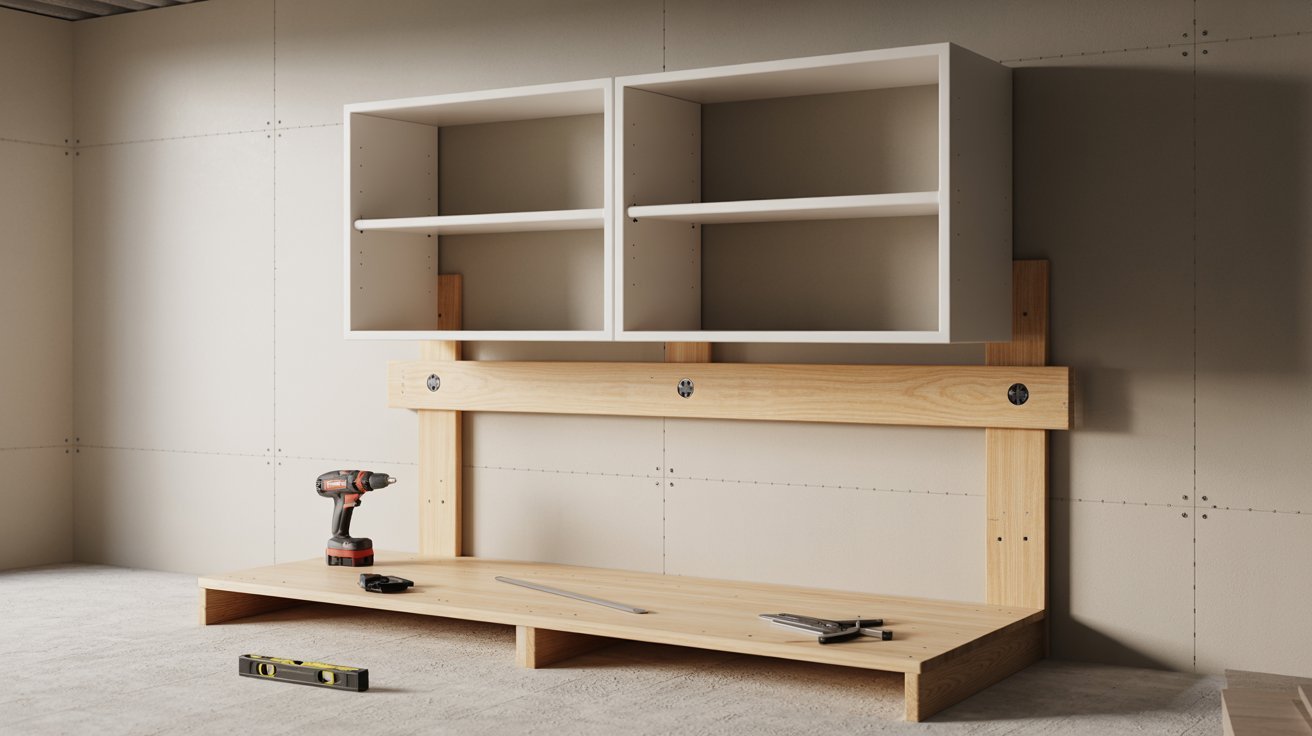
If you’re hanging cabinets by yourself, you need support. Two good options:
- A temporary platform made from boxes or a sawhorse
- A 2×4 ledger board screwed into the wall along your reference line
A ledger board is the better pick for solo work. It holds the cabinet in place while you drill.
Step 3 – Position and Secure the First Cabinet
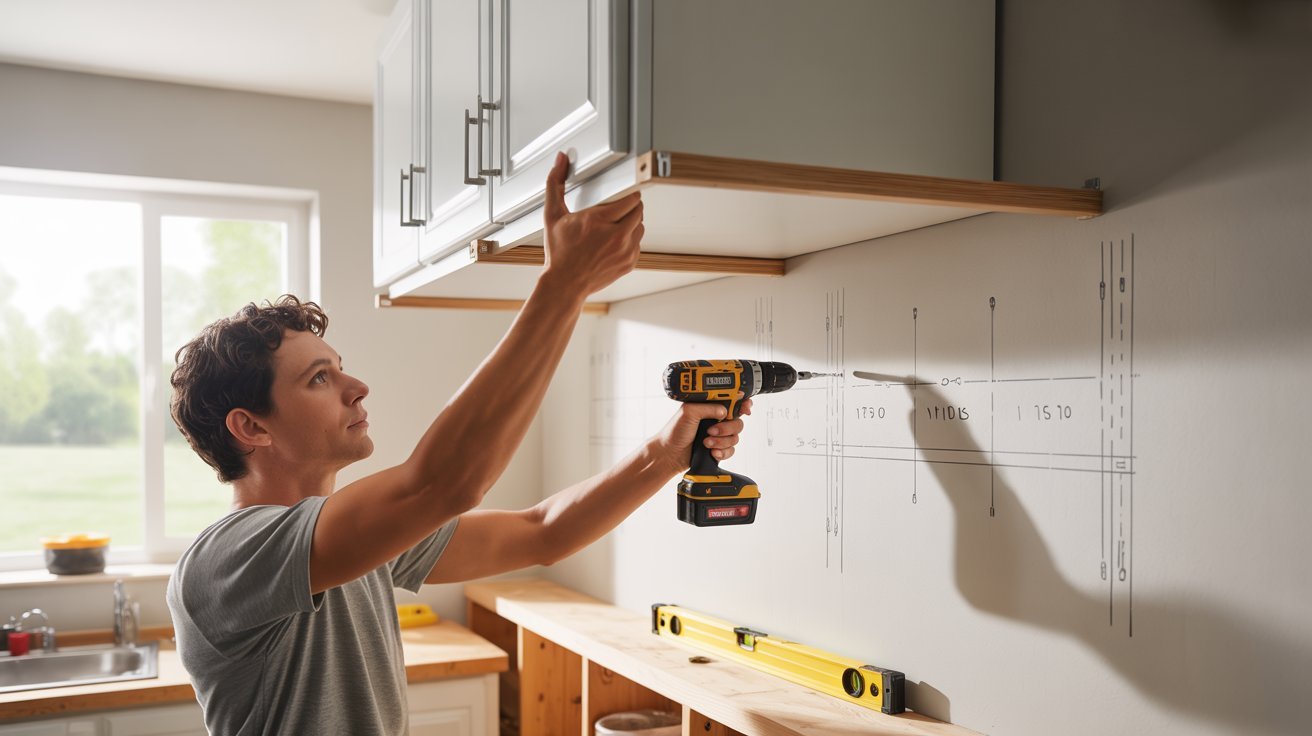
Place your first cabinet on the support or ledger board. Line it up with your level reference line. Check that the cabinet face sits flush with the wall.
Start with just one screw to hold it in place. Don’t fully tighten yet. You’ll want room to adjust.
Step 4 – Level, Shim, and Screw into Studs
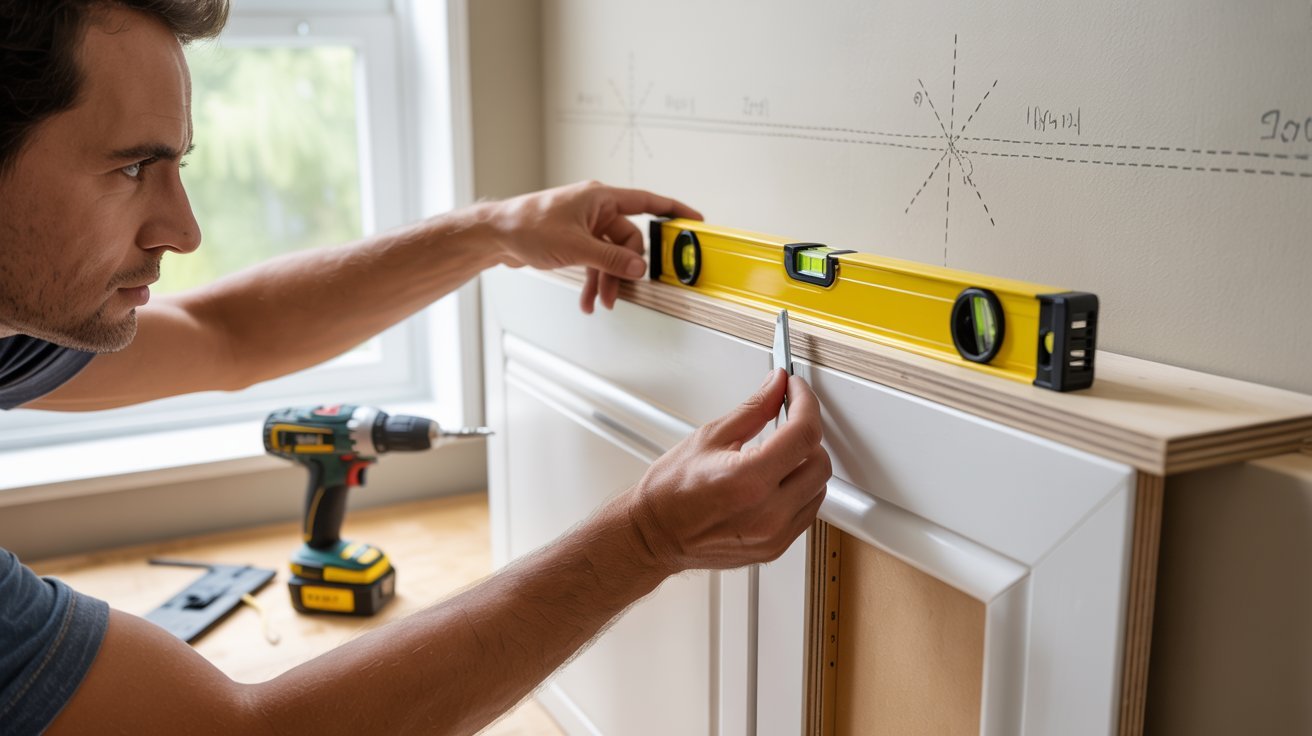
Check the cabinet with your level. Check side-to-side and front-to-back.
If it’s off, slide shims under the cabinet until it reads level. Once level, drive screws through the cabinet’s back rail and into the wall studs.
Use at least two screws per stud. Then tighten everything fully.
Step 5 – Install and Align Remaining Cabinets
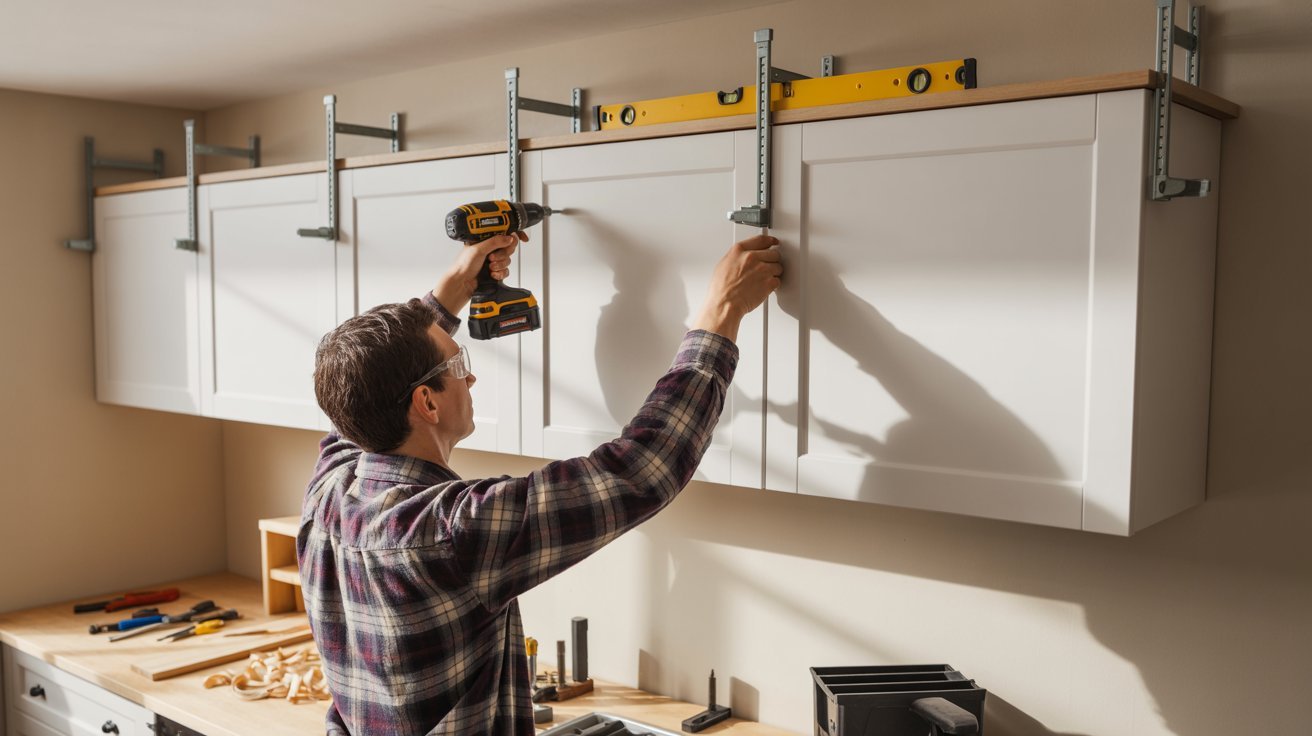
Clamp the next cabinet to the first one before screwing it in. This keeps the faces flush.
Check the level again. Screw the cabinets together through the side frames. Then screw each one into the studs behind the wall.
Repeat for each cabinet. Always clamp first, then level, then screw.
How to Hang Cabinets on Wall, Drywall, and Without Studs
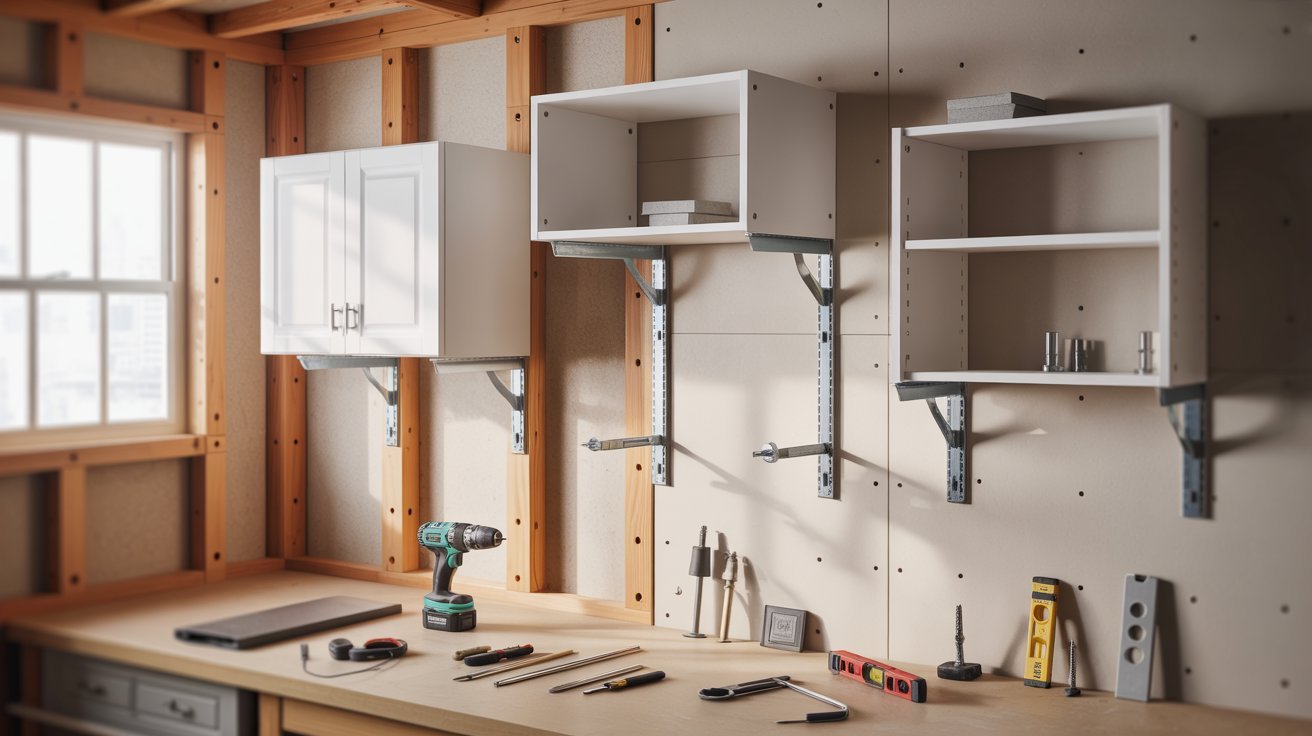
Not every wall is the same. Here’s how to handle the most common wall types safely.
How to Hang Cabinets on Wall with Studs (Best Method)
Studs are the wooden beams inside your walls. They’re the strongest anchor point you have.
Always try to hang into studs. Screws driven into studs can hold 100+ pounds each. It’s the safest and most reliable method for any cabinet setup.
How to Hang Cabinets on Drywall Safely
Sometimes studs aren’t in the right spot. In that case, use toggle bolts or heavy-duty drywall anchors.
These spread the load behind the drywall. But they do have limits. Don’t overload cabinets hung with anchors. Check the weight rating before you load them up.
How to Hang Cabinets Without Studs
For heavy cabinets, use snap toggle anchors or molly bolts. These are rated for serious weight.
Drill the right size hole first. Follow the package instructions. Always stay within the weight limit. This method works, but studs are still the safer choice when possible.
Special Installation Cases (Laundry Room, Metal Studs, Ceiling)
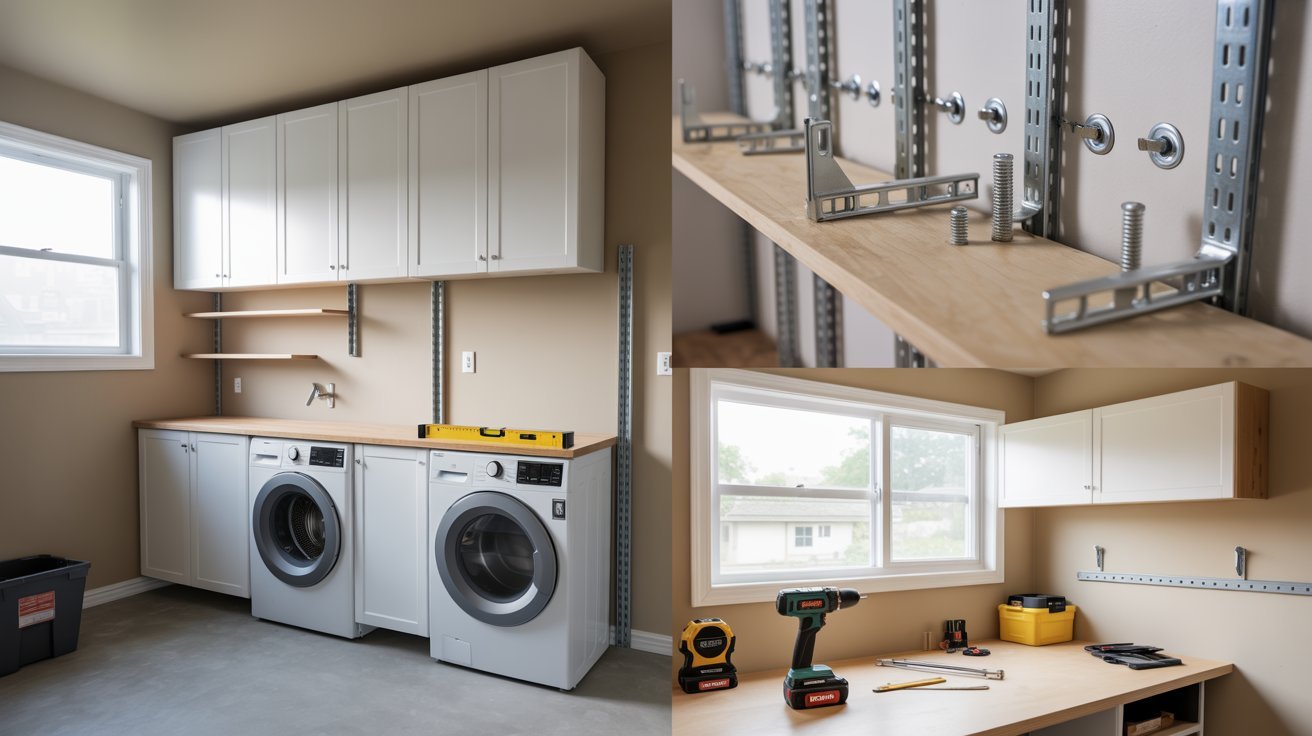
Some spaces need a different approach. Here’s what to know before you start drilling.
How to Hang Cabinets in a Laundry Room
Laundry rooms are tight. Measure your space carefully before buying or placing cabinets. Leave room for appliances, doors, and vents.
Use wall studs whenever possible. If you’re mounting above a washer or dryer, pick a cabinet with a sealed or painted interior to handle moisture over time.
How to Hang Cabinets on Metal Studs
Metal studs are common in newer homes and commercial spaces. They’re hollow and thinner than wood studs.
Use self-drilling screws made for metal framing. A standard wood screw won’t hold. You may also want to add a backing board of plywood behind the drywall for more grip. Don’t hang very heavy loads on metal studs without proper backing.
How to Hang Cabinets from Ceiling
Ceiling-mounted cabinets work well in kitchens or garages. Find ceiling joists the same way you find wall studs.
Use lag bolts for ceiling mounts. They’re much stronger than standard screws. Always have a second person help when working overhead. It’s safer and easier.
Common Mistakes to Avoid When Hanging Cabinets
A few small errors can lead to crooked, unsafe cabinets. Avoid these before you start drilling.
Here are the most common mistakes beginners make:
- Not finding studs correctly. Guessing leads to screws going into drywall only. That’s not safe.
- Using the wrong screws. Drywall screws are not cabinet screws. Use the right type for the job.
- Skipping leveling and shimming. Crooked cabinets are very hard to fix after the fact.
- Poor alignment between cabinets. Always clamp cabinets together before screwing them to each other.
Pro Tips to Hang Cabinets Easily and Accurately
Small habits make a big difference. These tips will save you time and real frustration.
- Always level the first cabinet perfectly. Every other cabinet follows from it.
- Use a ledger board or cabinet jack when working alone. It holds the cabinet while you drill.
- Clamp cabinets together before screwing them to each other. This keeps the faces flush.
- Double-check alignment before driving any screws. Gaps are hard to fix after the fact.
- Work slowly and steadily. Rushing is how mistakes happen, especially on the first install.
Conclusion
Hanging cabinets is more manageable than it looks. Once you have your tools ready and your reference line drawn, everything follows a clear order.
I remember feeling nervous the first time, but taking it one step at a time made all the difference. You’ve got this. Start slow, check your level twice, and don’t skip the studs.
If you found this guide helpful, drop a comment below or share it with someone planning a home project. For more home improvement tips, check out the related posts below.
Frequently Asked Questions
How long does it take to hang cabinets as a beginner?
Most beginners can hang three to four cabinets in a few hours. Working carefully and steadily matters more than working fast.
Can I hang cabinets by myself without any help?
Yes, you can. Use a ledger board or cabinet jack to support the cabinet while you drill. It makes solo work much safer and less stressful.
What size screws should I use to hang cabinets?
Use 2.5 to 3-inch cabinet screws when going into wall studs. These are strong enough to hold the weight of full cabinets without any issue.
How do I know if my wall has studs in the right spots?
Use a stud finder to locate them. If studs aren’t where you need them, use heavy-duty drywall anchors rated for your cabinet’s total weight.
Is it safe to hang cabinets on drywall without studs?
It can be safe if you use the right anchors and stay within weight limits. Always check the anchor’s rated load before hanging anything heavy on drywall alone.