Water in your basement is stressful. It ruins floors, damages walls, and leads to mold. The good news? The right drainage system fixes it.
This guide covers every major type of basement drainage system, from interior French drains to exterior waterproofing. I’ll help you understand how each one works, when to use it, and how to pick the best option for your home.
I’ve researched these systems in depth so you don’t have to guess. Let’s get into it.
What Are Basement Drainage Systems and Why Do They Matter?
A basement drainage system collects, redirects, or removes water before it causes damage. Without one, water builds up and weakens your foundation over time.
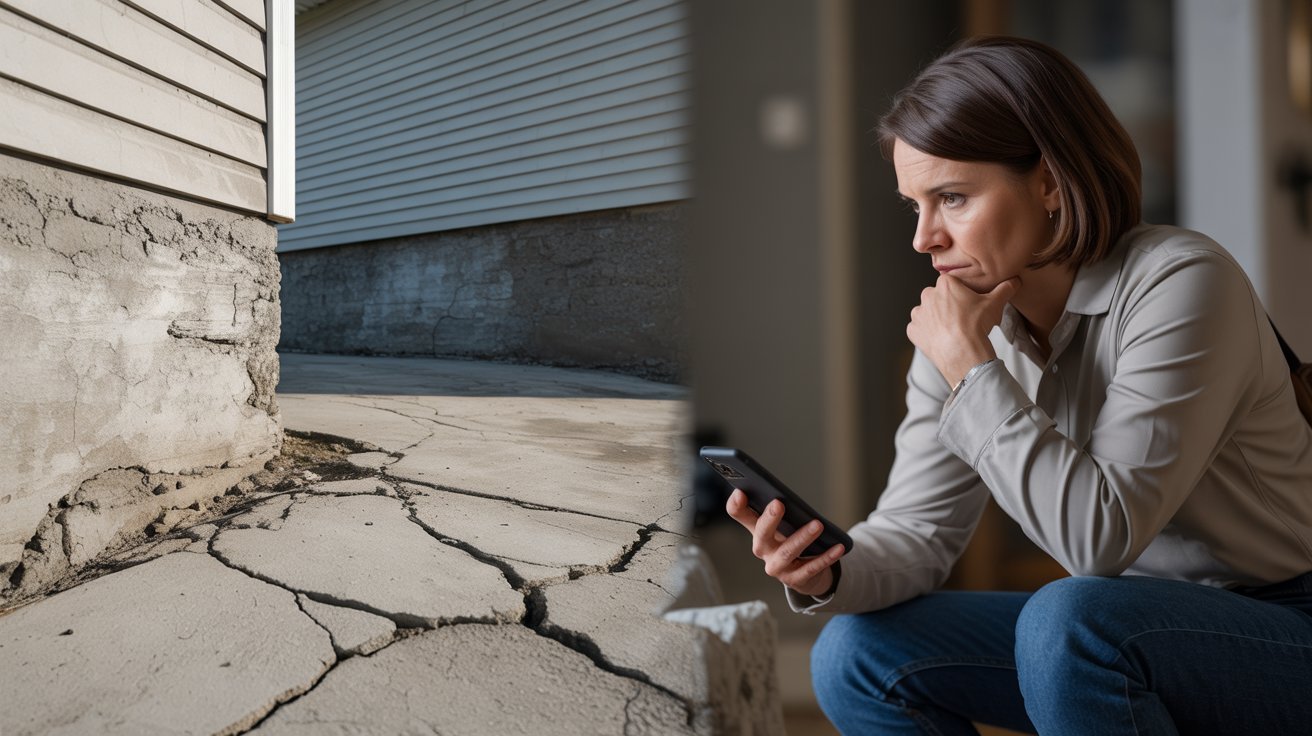
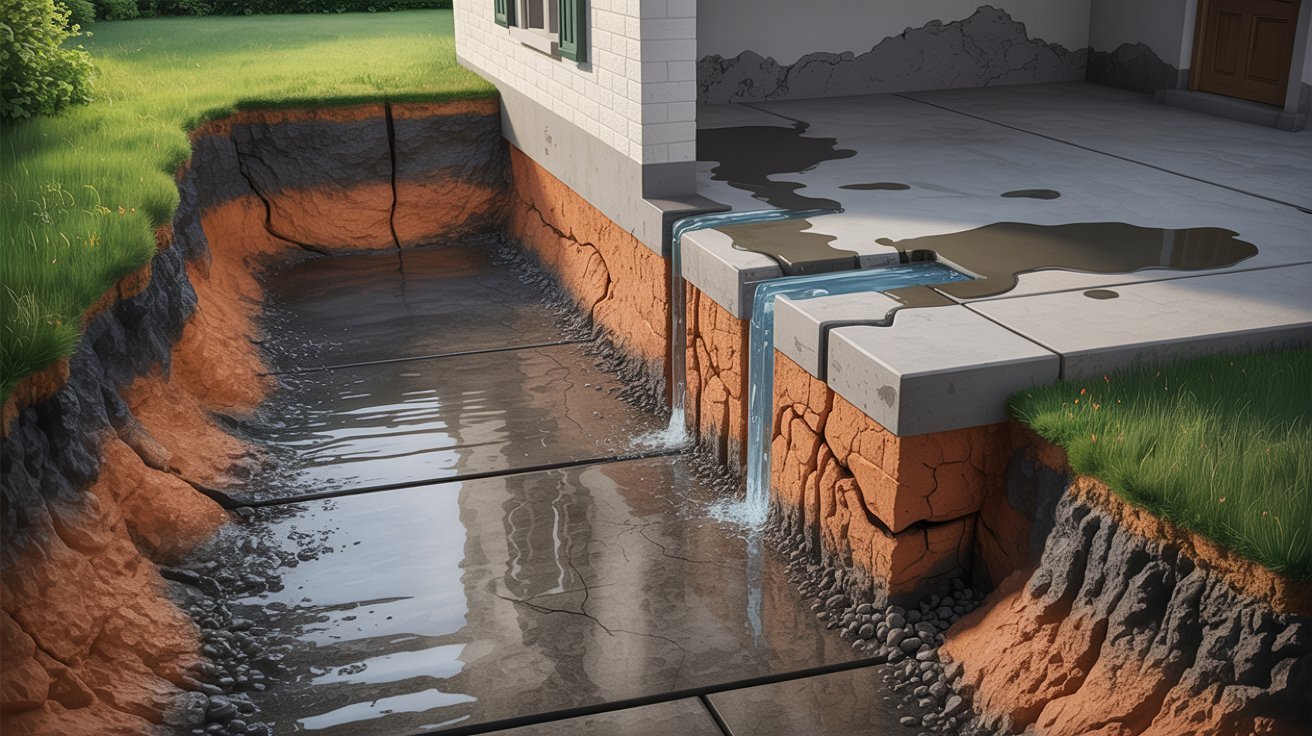
Water gets in through several common causes. Hydrostatic pressure pushes groundwater through walls and floors. Poor grading sends rainwater toward the foundation. Cracks in walls or floors let water seep inside. Knowing the cause helps you pick the right fix.
Types of Basement Drainage Systems
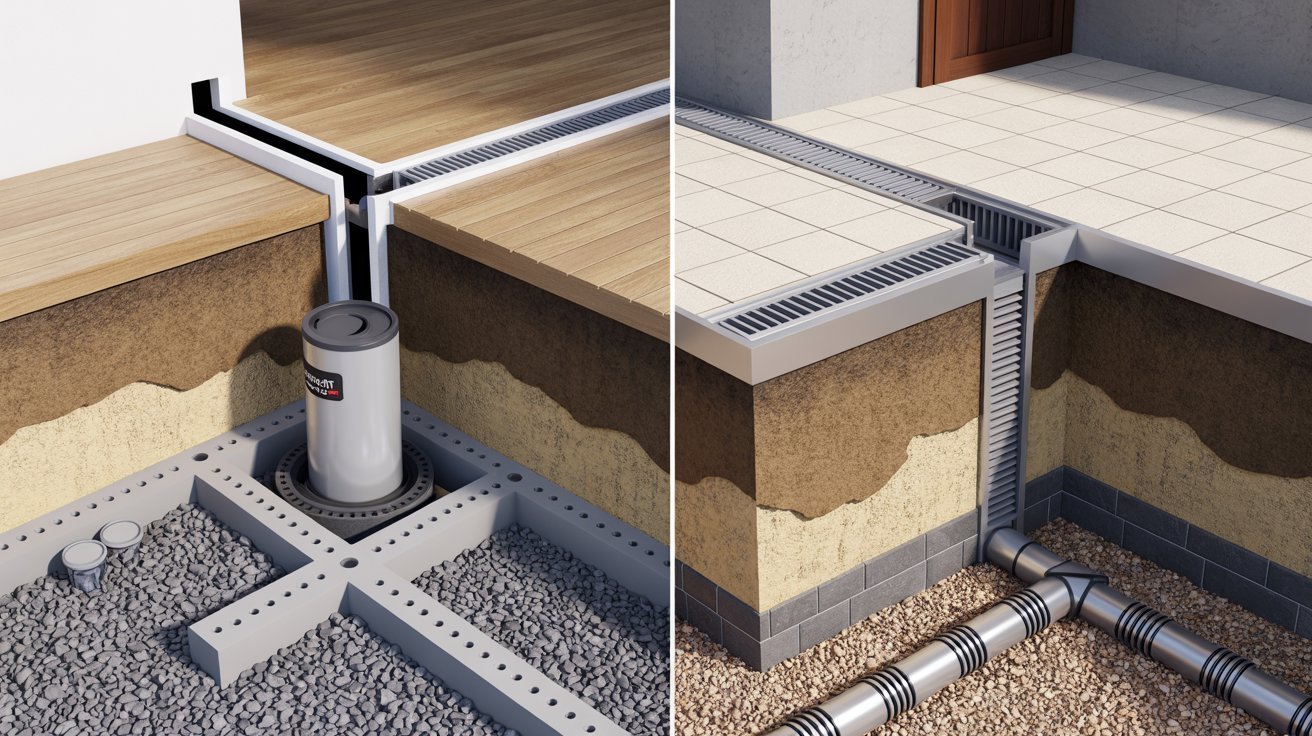
There are three main categories. Interior systems manage water after it enters the basement. Exterior systems stop water before it gets in. Above floor systems sit on top of the floor and redirect water without major digging.
Interior Basement Drainage Systems Explained
Interior systems are the most common solution for wet basements.
1. Interior French Drains (Perimeter Systems)
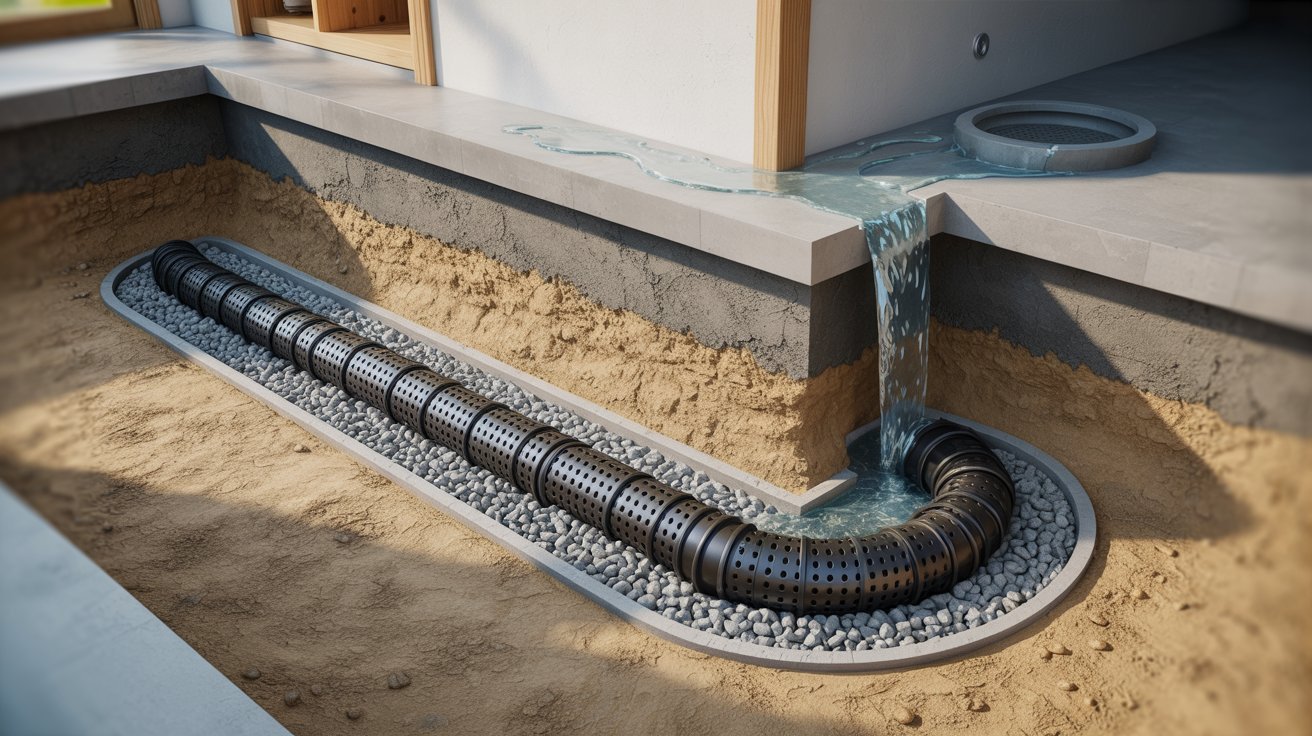
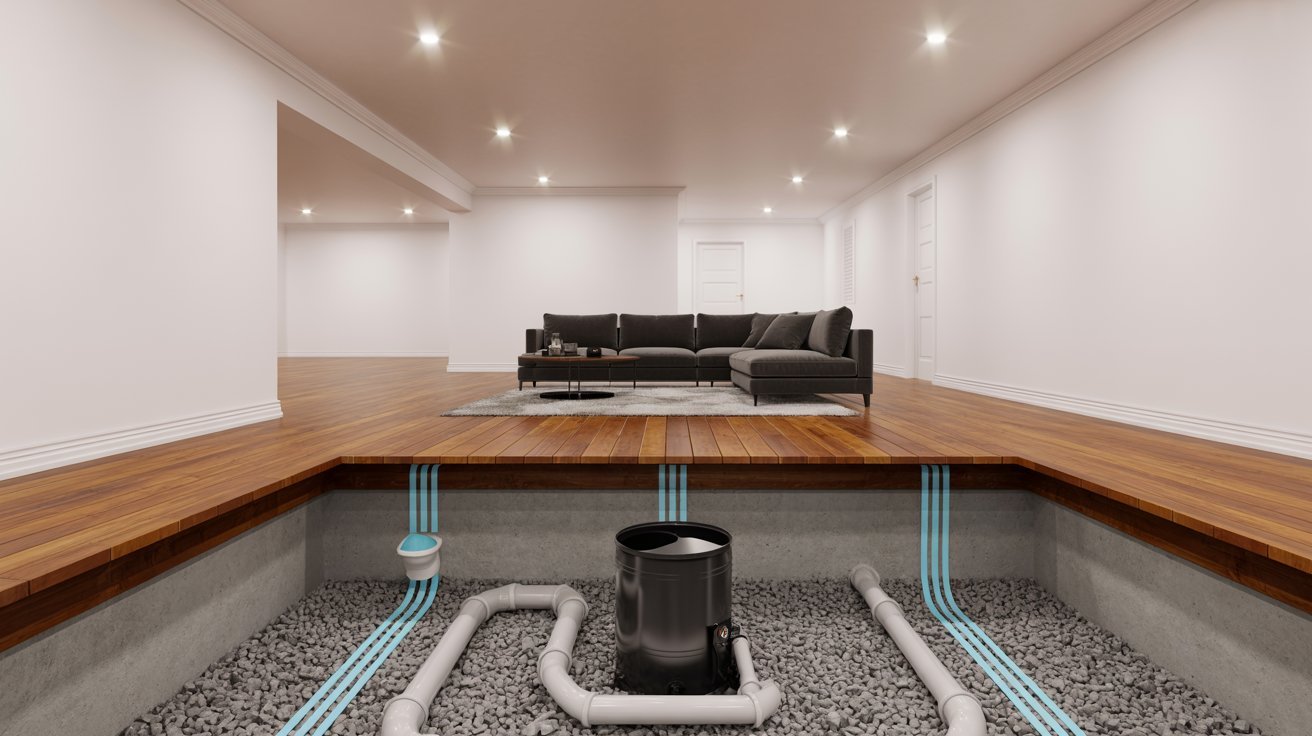
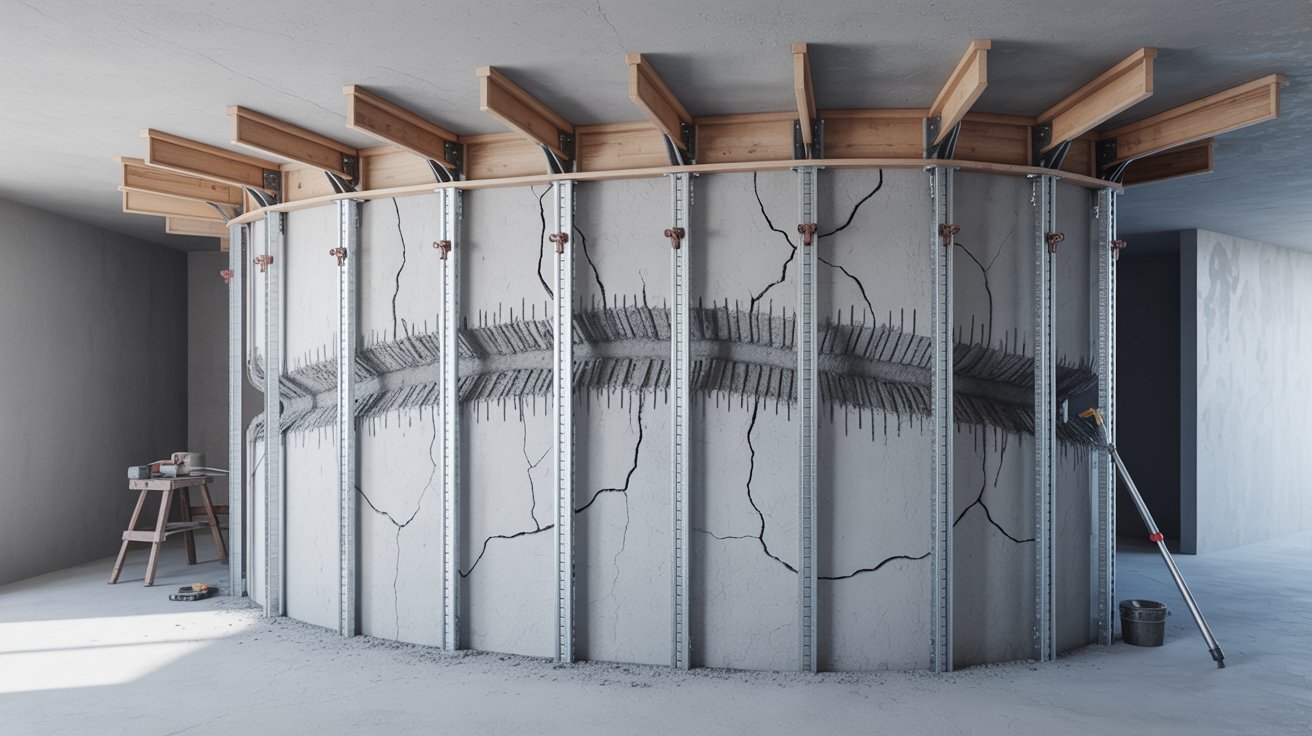
A trench is cut along the basement floor perimeter and a perforated pipe directs water to a sump pit. This works best for basements with consistent wall seepage or hydrostatic pressure issues.
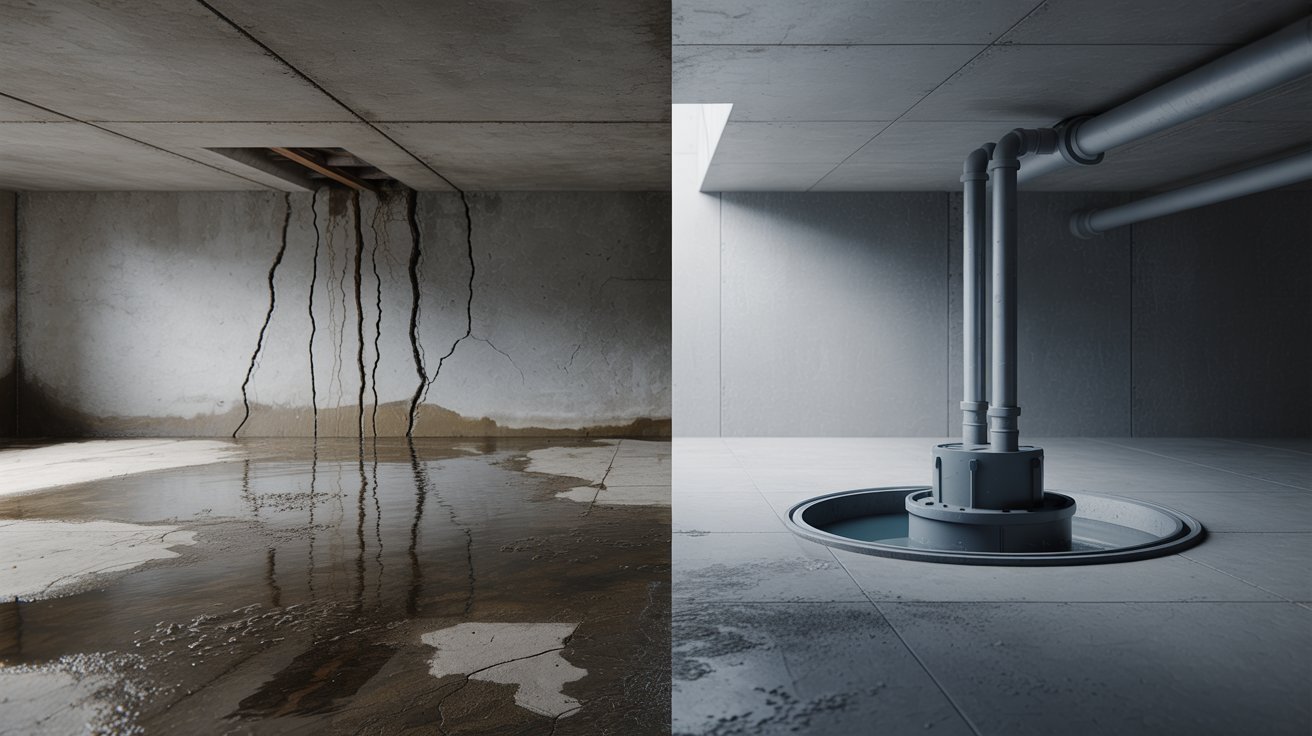
2. Sump Pump Systems
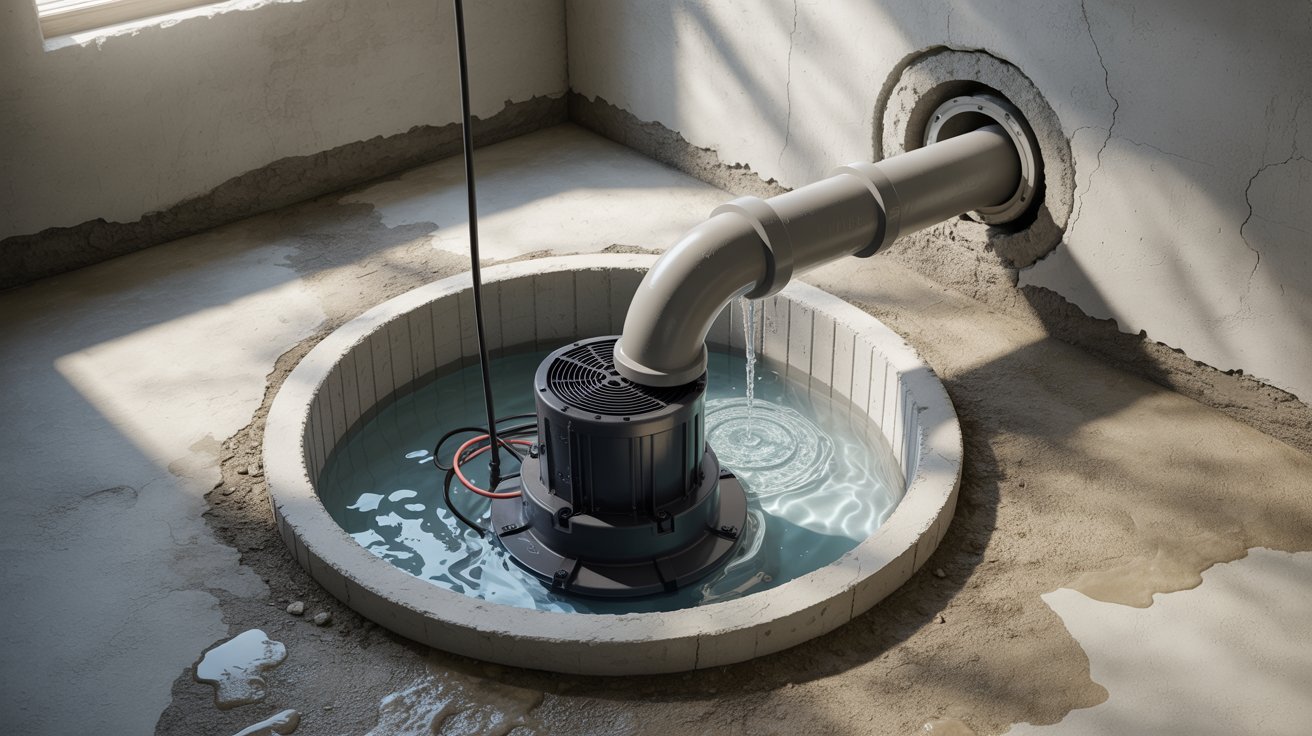
The sump pit collects water and the pump pushes it out through a discharge pipe. Submersible pumps handle more water and last longer than pedestal models. A battery backup keeps things running during storms.
3. Basement Floor Drain Systems
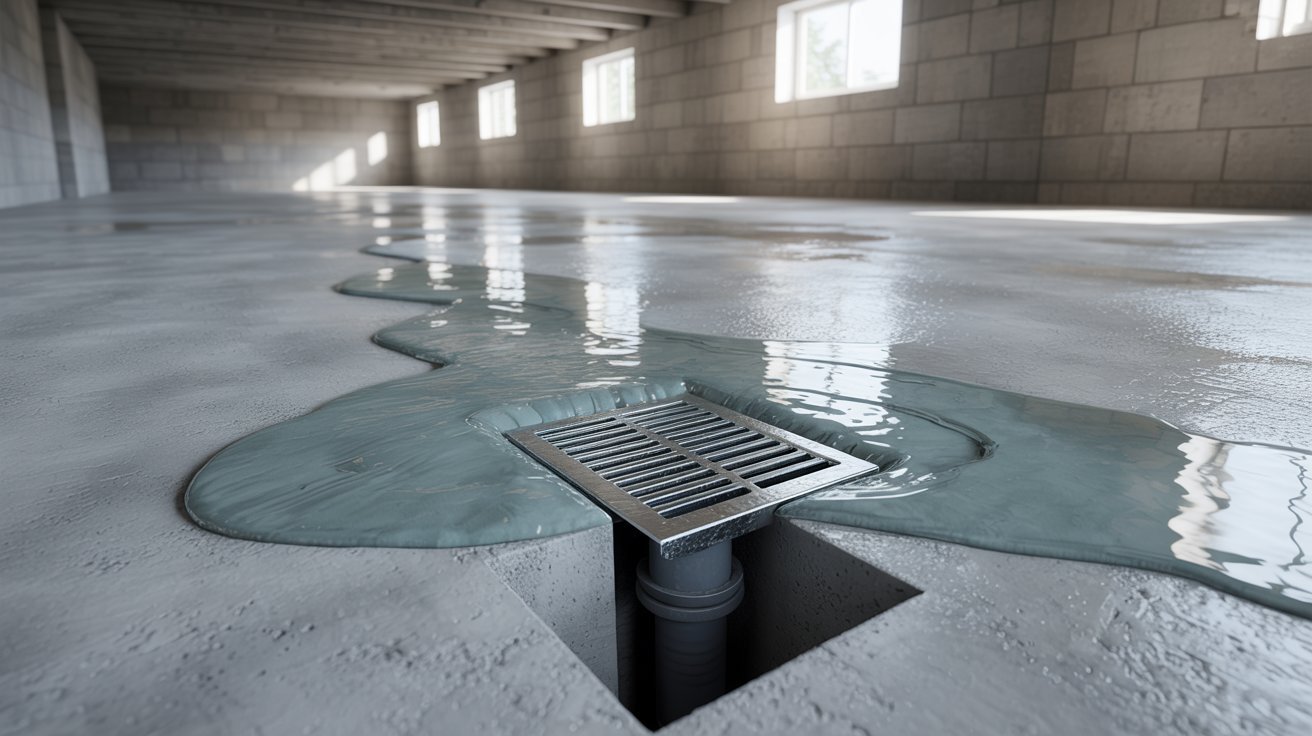
Floor drains sit at the lowest point of the basement and connect to the home’s sewer line or sump system. Keeping them clear is key.
4. Inside Basement Drainage Systems for Finished Basements
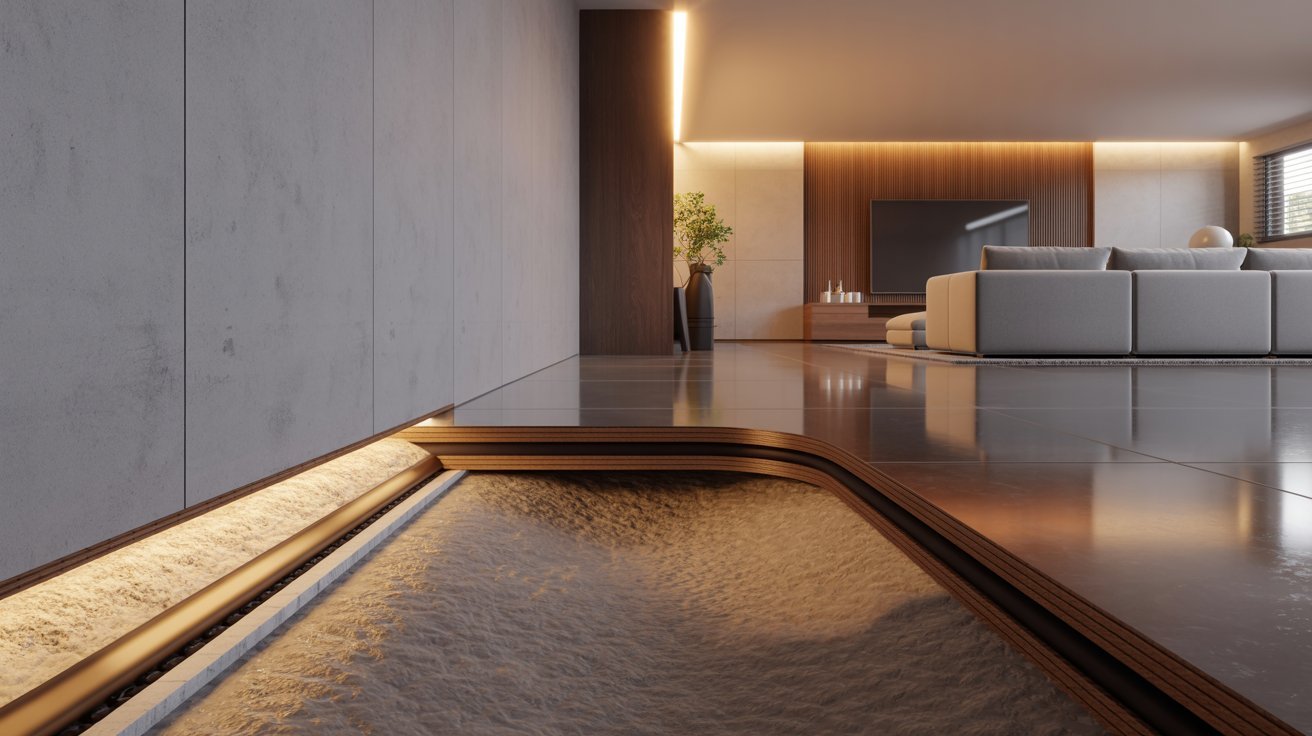
Some systems use drainage channels along the base of walls without cutting the floor at all. It’s a practical choice for protecting finished spaces without major disruption.
Exterior Basement Drainage Systems Explained
Exterior systems stop water before it reaches your basement walls.
5. Exterior French Drains (Curtain Drains)
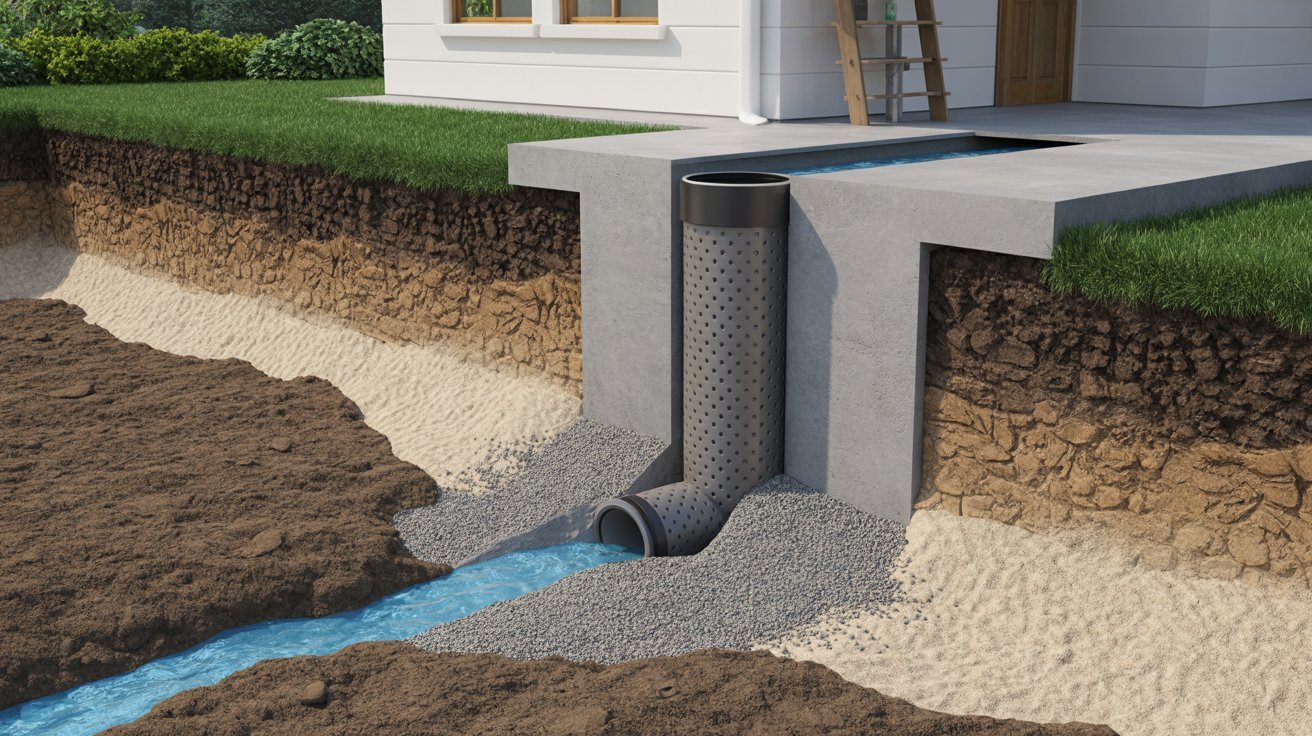
A perforated pipe sits in a gravel-filled trench at the base of the foundation wall and slopes away from the home so water drains by gravity.
6. Foundation Waterproofing Membranes
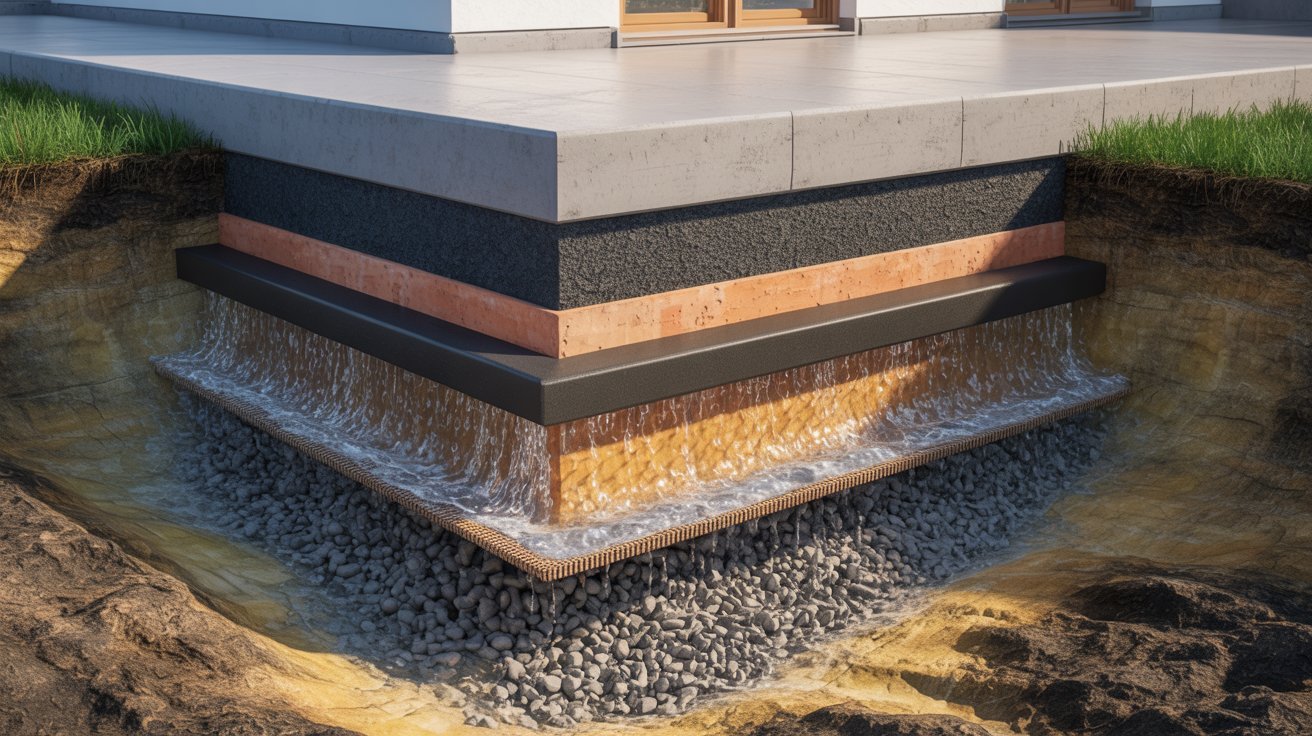
Membranes create a barrier on the outside of your foundation that prevents water from passing through the concrete. Common options include spray applied membranes, sheet membranes, and drainage boards.
7. Proper Grading and Drainage Around the Home
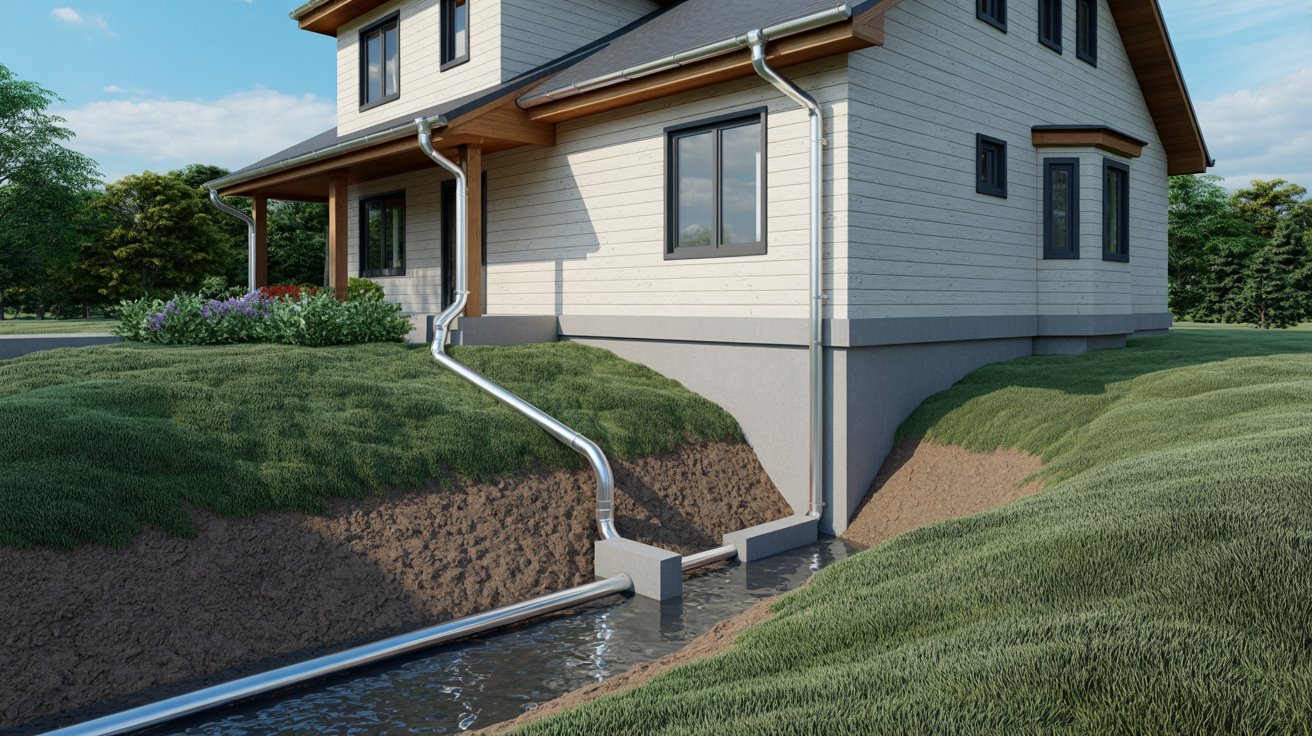
The ground should slope away from the foundation at about 6 inches for every 10 feet. Downspouts need to discharge water at least 6 feet from the foundation.
8. Above Floor Basement Drainage Systems
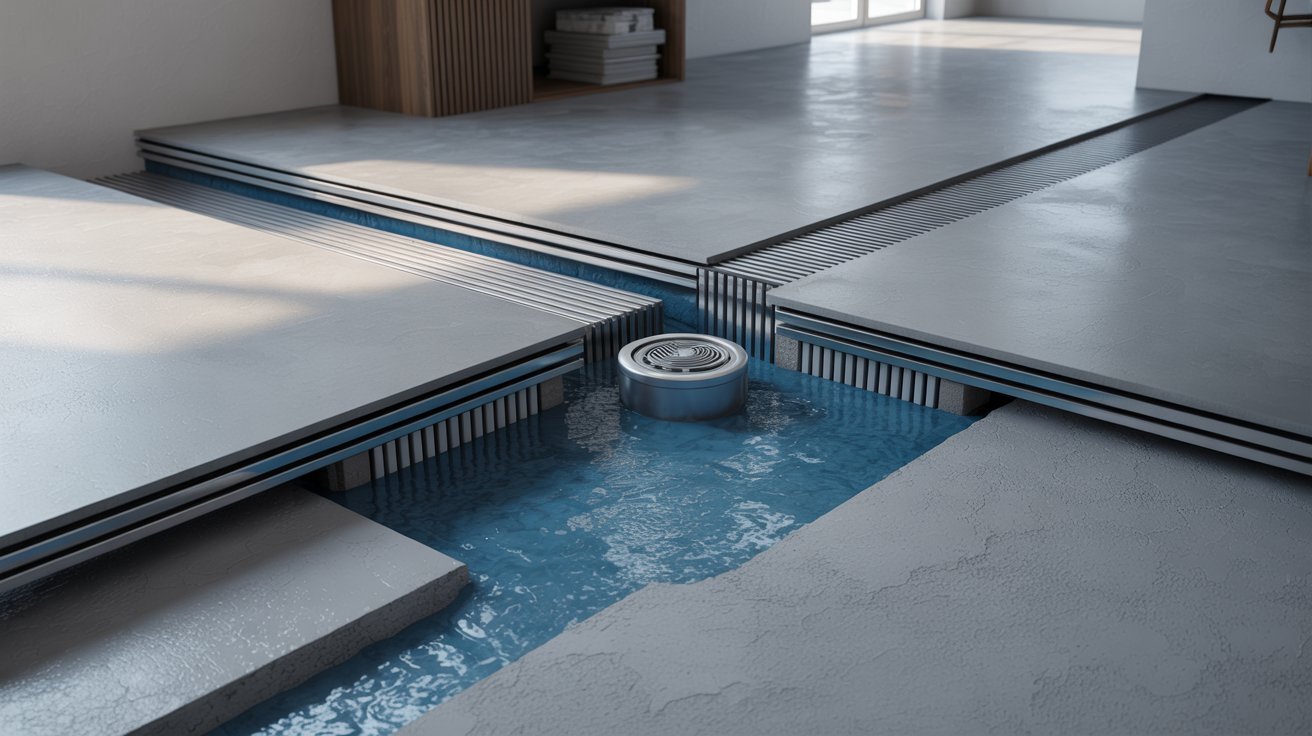
Above-floor systems use raised drainage panels that sit directly on the slab and direct water to a sump pump. No jackhammer needed.
They’re faster to install and ideal for finished or older basements. The downside is they raise the floor height slightly and may not handle extreme water volumes as well.
Old Basement Drainage Systems and Common Issues
Older homes often have drainage systems built with materials that don’t hold up well over time.
9. Common Systems in Older Homes
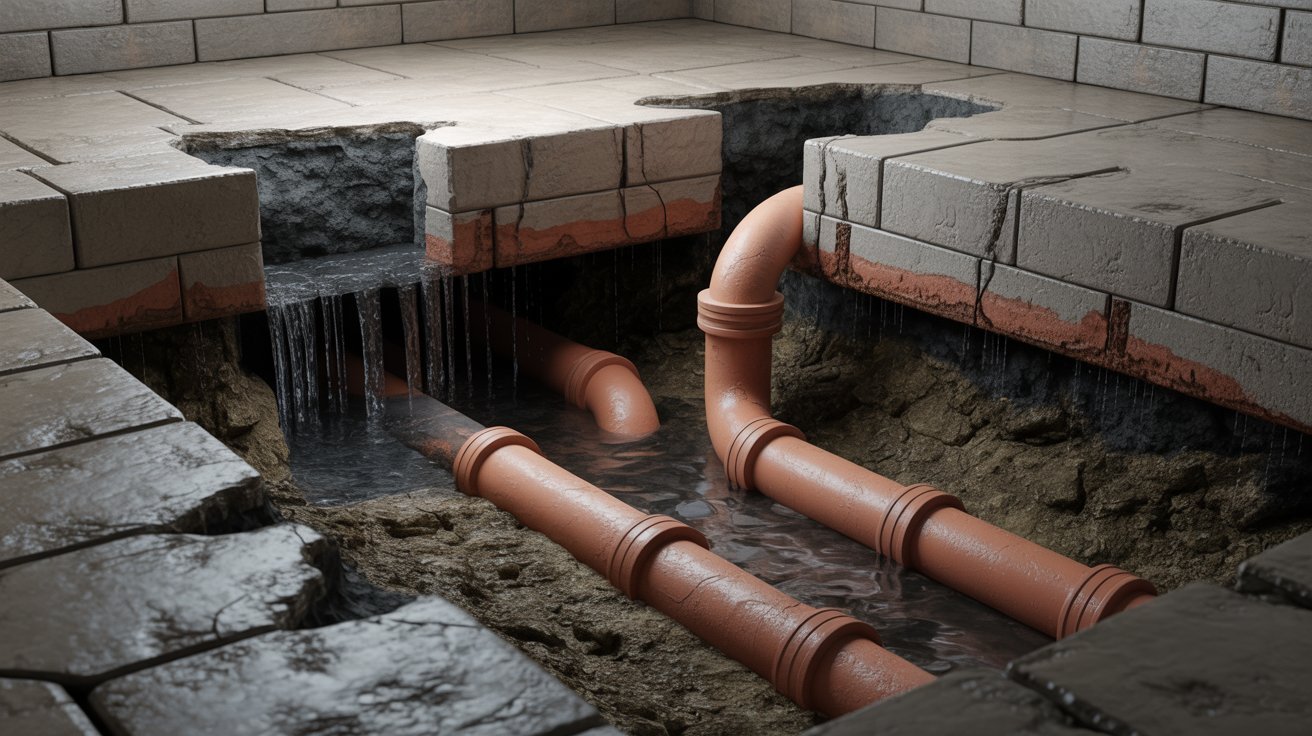
Footing drains, clay pipes, and weep holes were standard in older homes. Clay pipes crack and break over time, and weep holes built into block foundation walls often reach the end of their useful life.
10. Problems With Old Systems
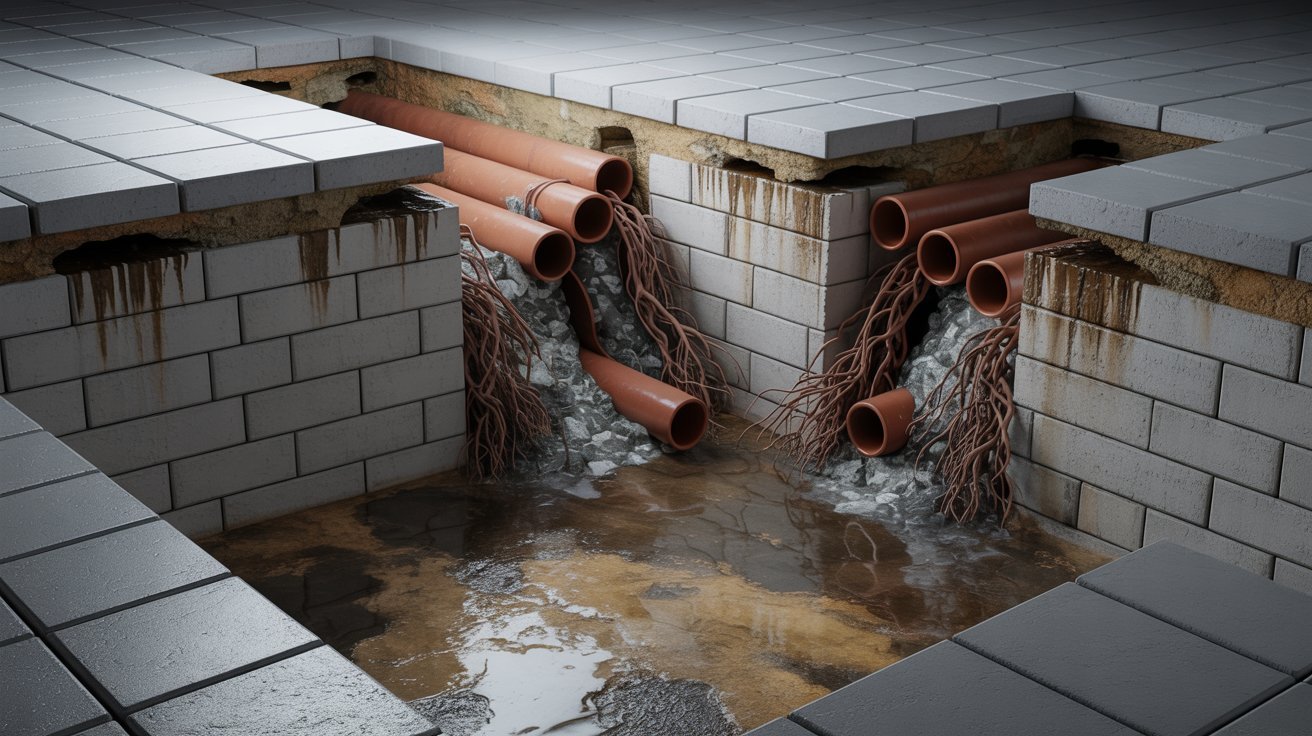
Clay pipes collect roots and debris over the years and eventually clog or collapse. Weep holes get blocked by mineral deposits or soil. When these systems fail, water starts entering the living space.
11. When and How to Upgrade
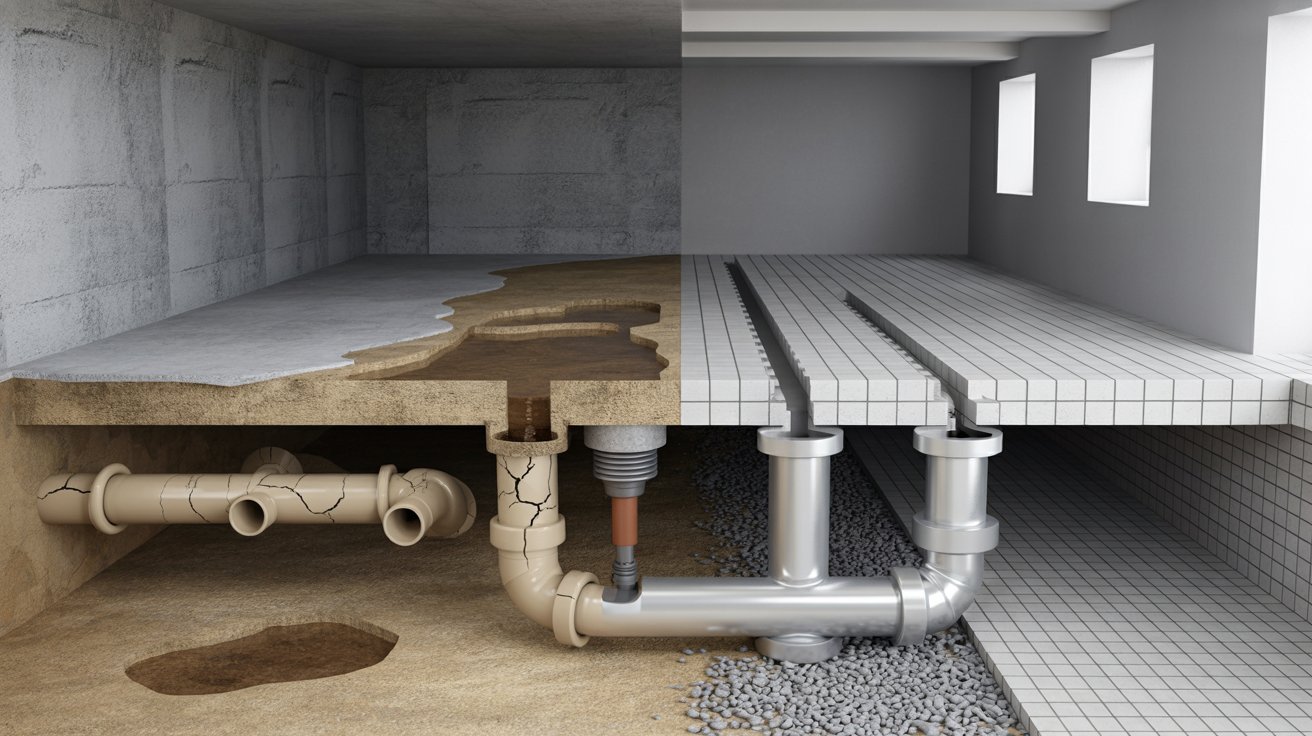
If you have persistent water issues in an older home, the original drainage system is often the cause. Interior French drain systems with PVC pipe and a sump pump are the most common upgrade and far more effective.
How to Choose the Right Basement Drainage System
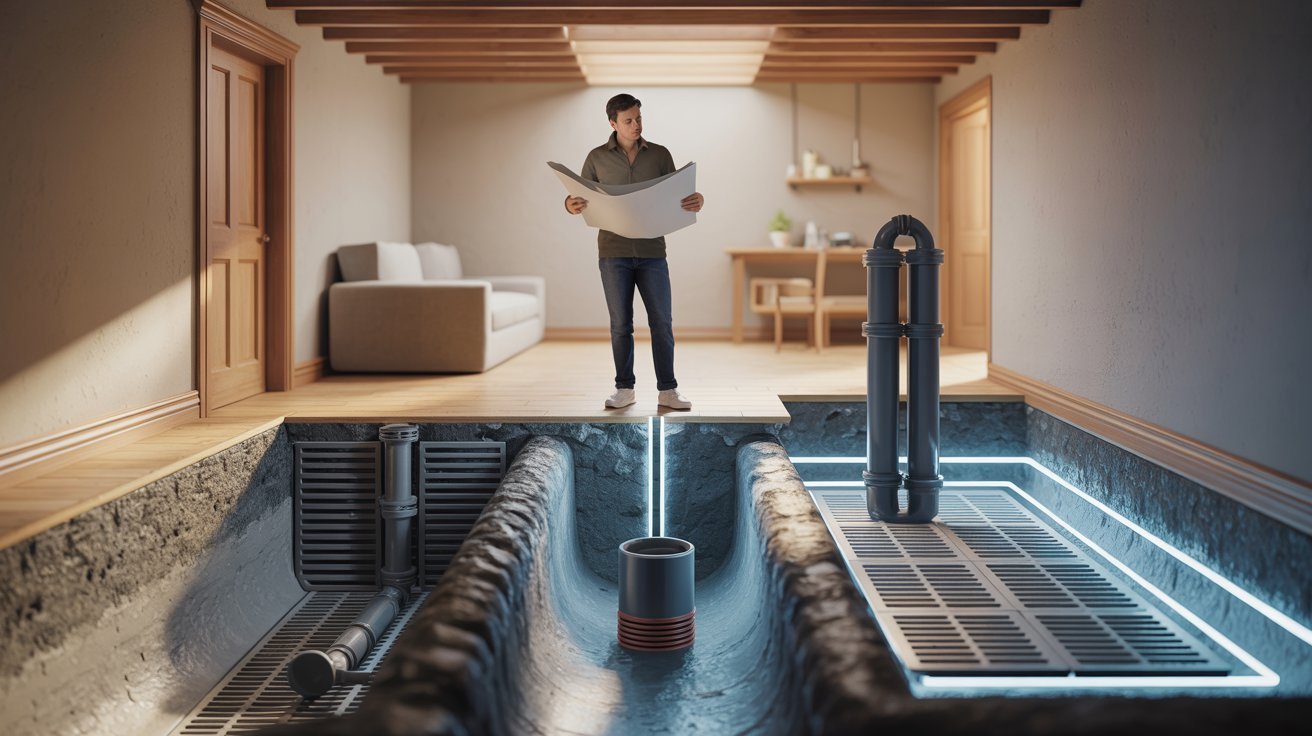
Picking the right system depends on your specific situation, not just what’s popular or cheapest.
Factors to Consider
Clay soil holds water and increases foundation pressure, while sandy soil drains more freely. A high water table requires a more robust solution. Exterior systems cost more upfront but prevent problems at the source, while interior systems are more affordable and still effective.
Interior vs Exterior vs Hybrid Systems
Interior systems handle water after it enters. Exterior systems stop it before it does. A hybrid approach uses both. This gives you protection from multiple angles and is often the best choice for homes with serious or recurring water issues.
When to Combine Systems
If your home has both active leaks and groundwater pressure, combining an interior French drain with exterior grading improvements and a sump pump gives you the most complete protection available.
Signs Your Basement Drainage System Is Failing
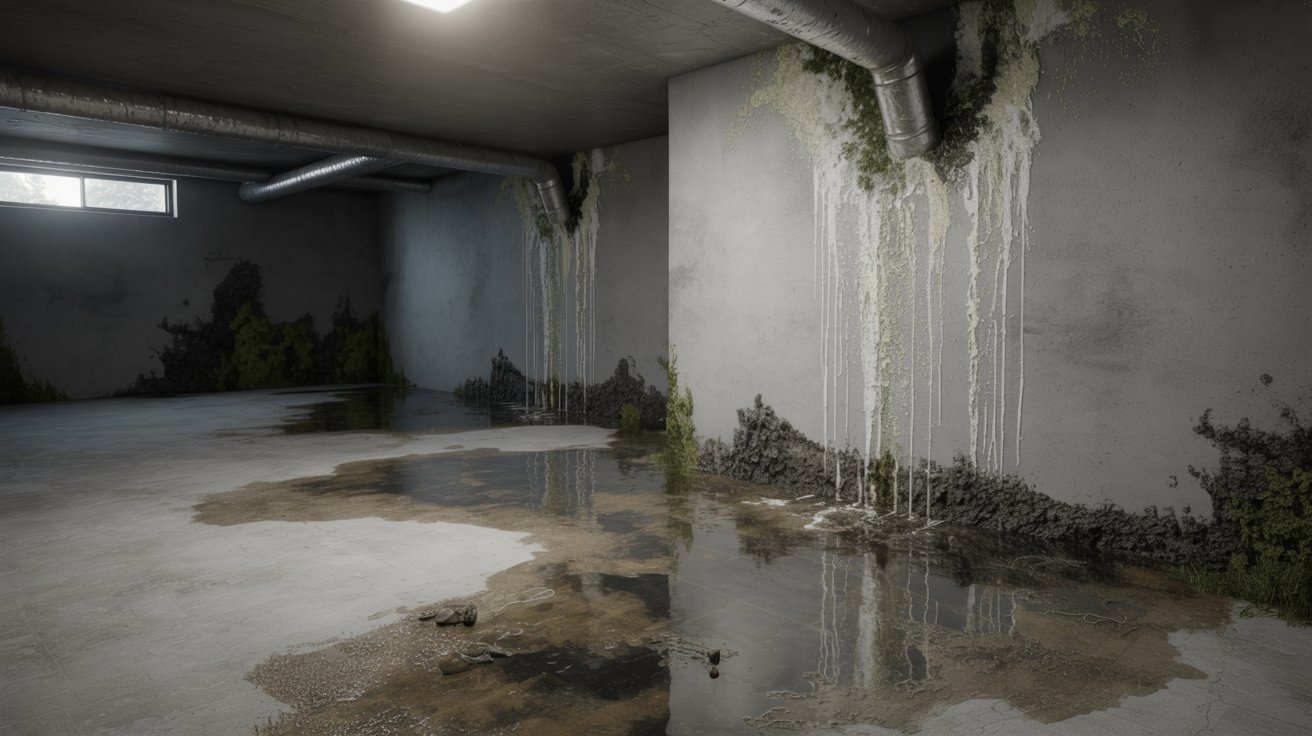
A failing drainage system gives you clear warning signs if you know what to look for.
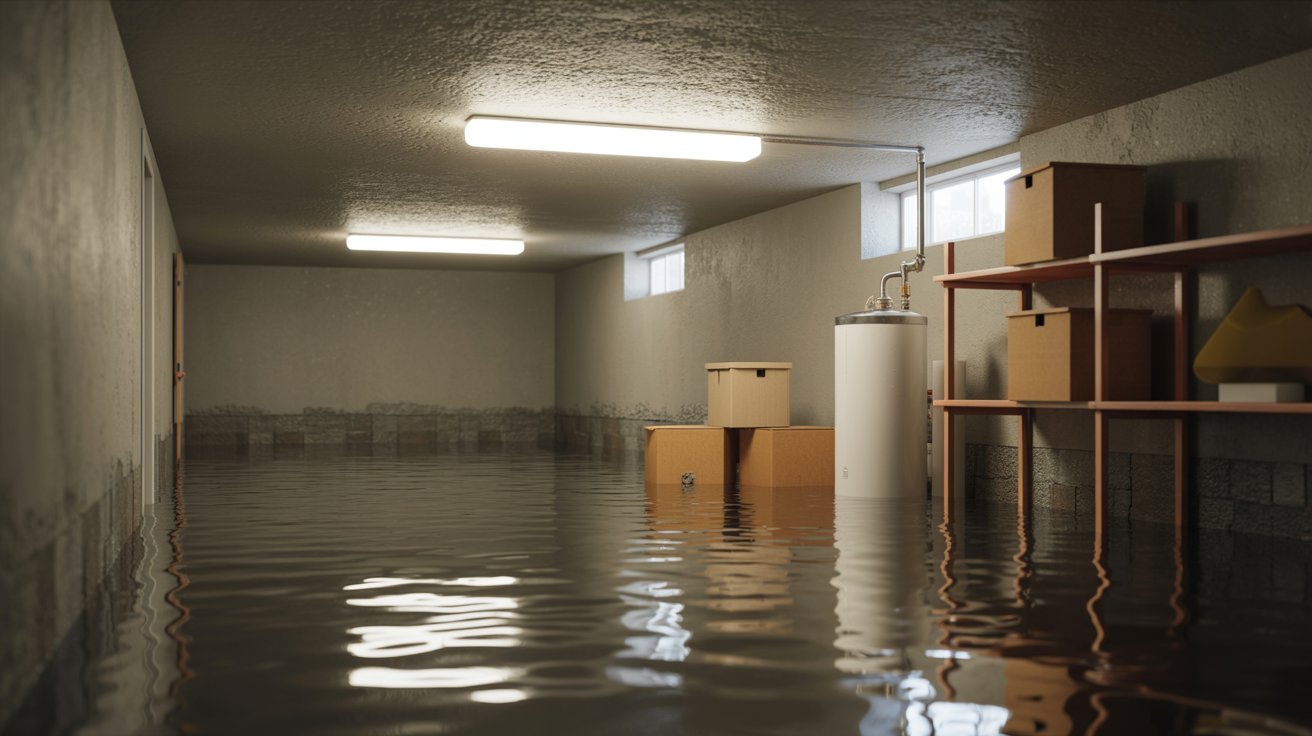
Standing water or wet floors after rain point to a clogged drain, failed sump pump, or collapsed pipe.
A musty smell usually means moisture is hiding somewhere, even if you can’t see it. White chalky deposits on walls, called efflorescence, signal ongoing water movement through the concrete.
A basement that feels consistently damp or humid, even without visible water, is also a red flag worth addressing sooner rather than later.
Expert Maintenance Tips for Basement Drainage Systems
Good maintenance keeps your system working and prevents costly repairs down the road.
- Make sure the ground around your foundation slopes away from the house to keep water moving in the right direction
- Test your sump pump every few months by pouring water into the pit and watching it activate, and install a battery backup so it keeps running during storms
- Inspect and clean your drainage pipes and channels at least once a year to prevent clogs from debris or roots
- Seal any new foundation cracks right away to stop water from finding a new entry point
- Book a professional inspection every few years to catch problems you might miss on your own
Conclusion
A wet basement is one of those problems that only gets worse the longer you ignore it. Trust me, I’ve seen what happens when water sits unchecked for even one season. Choosing the right drainage system gives you real peace of mind.
Start with your biggest problem, whether it’s seepage, flooding, or an aging system that’s past its prime. Then match the solution to your home.
Have questions or experience with a specific system? Drop a comment below or share this post with someone dealing with a wet basement.
Frequently asked questions
What are the main types of basement drainage systems?
The main types are interior systems like French drains and sump pumps, exterior systems like curtain drains, and above floor systems. Each handles water differently based on how it enters your basement.
Which system is best for older homes?
Interior French drains paired with a sump pump work well for older homes, especially if the original clay pipes have failed. Above-floor systems are also a good fit when cutting thick concrete isn’t practical.
Do I need both interior and exterior drainage systems?
Not always, but combining them gives you the most complete protection. For serious or recurring water problems, using both is worth considering.
How much do basement drainage systems cost?
Interior French drain systems typically run between $3,000 and $10,000. Exterior systems cost more due to excavation, often ranging from $8,000 to $20,000 or higher.
How do I know if my system is failing?
Look for water pooling, damp walls, musty smells, or high humidity in your basement. A sump pump that runs constantly or won’t turn on is a clear warning sign.