Planning a deck and wondering how many helical piers you actually need? I’ve been there too. The answer isn’t a single number. It depends on your deck size, the load it carries, and your soil conditions.
In this blog, I’ll cover spacing rules, key factors, and real size examples so you can plan with confidence. I’ve researched so you don’t have to.
No guesswork here, just straightforward answers that actually help. It works for a small patio deck or a large free-standing build. I’ve got you covered. Here’s how it works.
What Are Helical Piers?
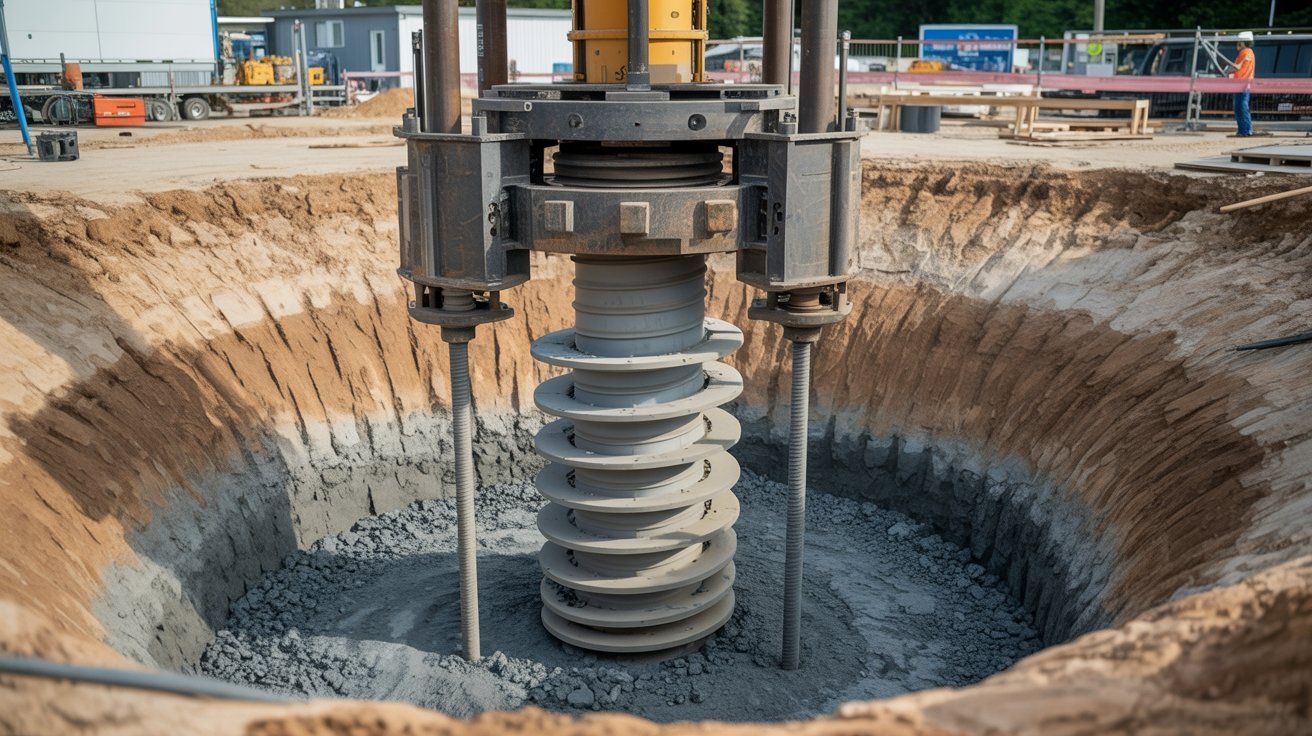
Here’s a quick look at what helical piers are and why they matter for your deck foundation.
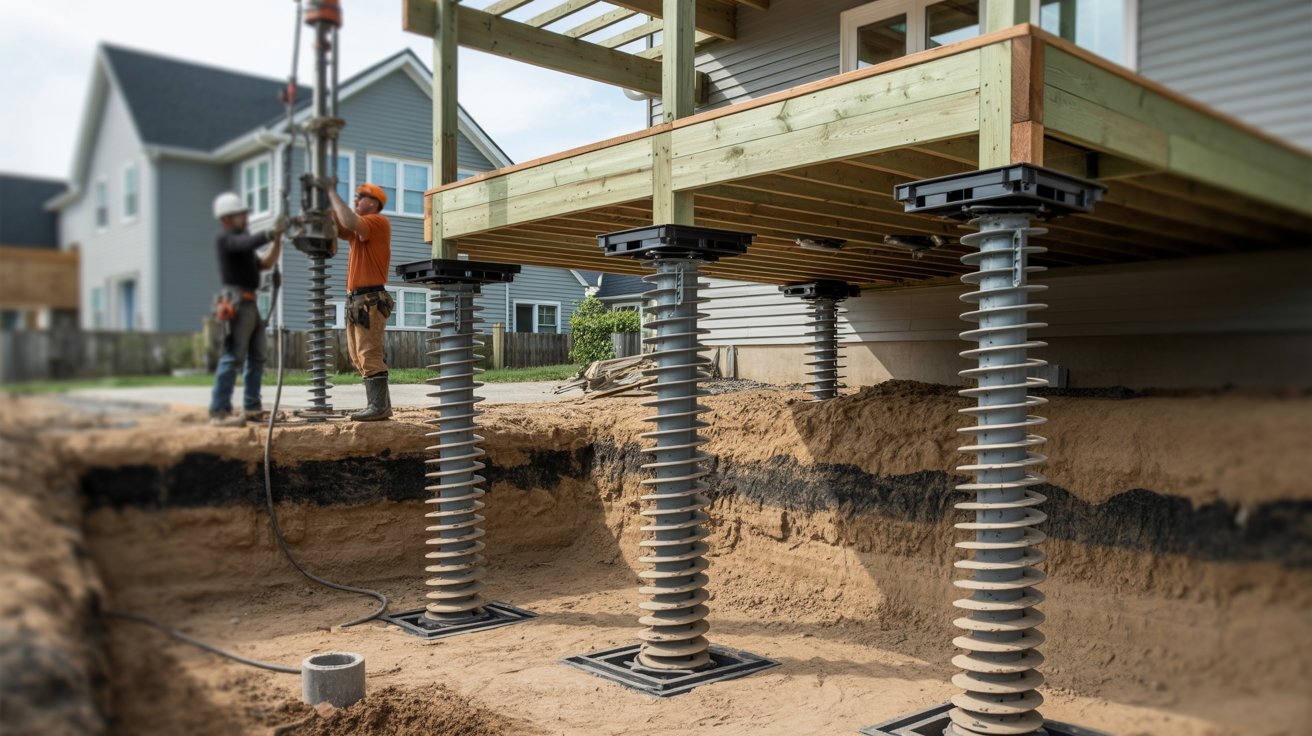
Helical piers are steel shafts with spiral plates that screw deep into the ground, similar to large screws.
They’re installed using hydraulic machinery and anchor your deck to stable, load-bearing soil below the frost line. Decks need a strong base, and regular concrete footings can shift with frost or weak soil over time.
Helical piers don’t have that problem. They go deep enough to stay firmly in place, making them a solid choice for areas with poor soil quality or cold climates where ground movement is a real concern.
How Many Helical Piers Do I Need for a Deck?
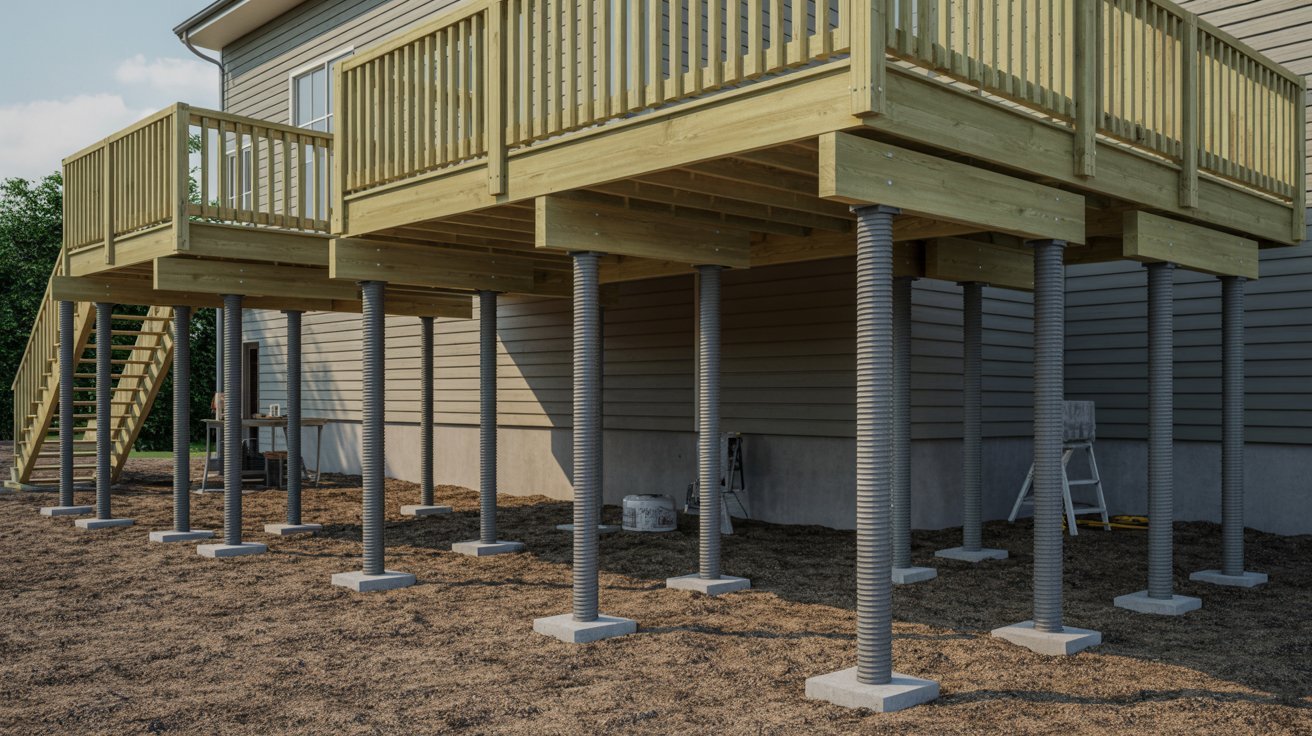
Snap Answer to the Big Question
So, how many piers do you actually need? For most residential decks, you’ll need one pier every 8 to 10 feet along your beams. A small 10×10 deck might need as few as 4 piers.
A larger 20×20 deck could need 9 or more. The number isn’t fixed, though. It shifts based on your deck’s design, how much weight it’ll hold, and your local building codes.
Quick Reference by Deck Type
Here’s a simple breakdown to give you a starting point:
- Attached deck (small): 4 to 6 piers
- Free-standing deck (small): 6 to 8 piers
- Large or heavy-load deck: 9 or more piers
Key Factors That Affect How Many Helical Piers You Need
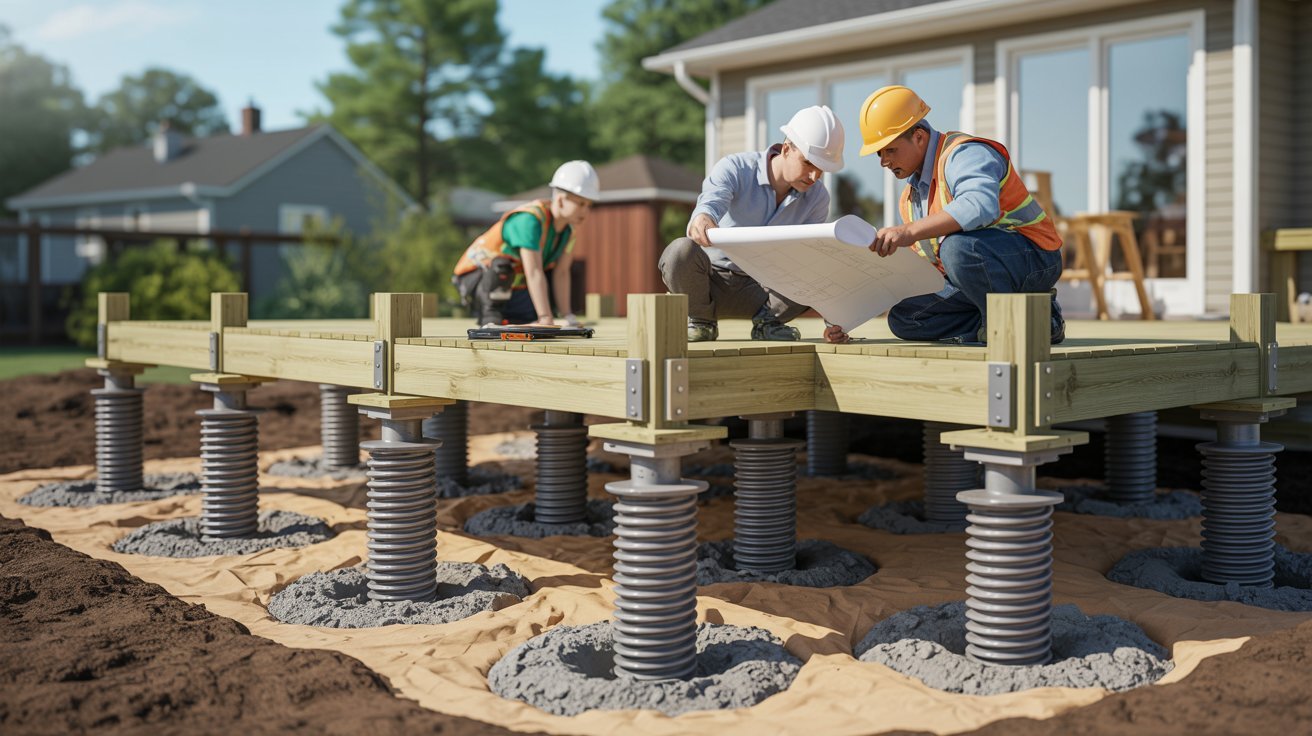
These are the main things that will push your pier count up or down.
Deck Size and Layout
Bigger deck, more piers. That’s the basic rule. A compact 10×10 needs far fewer than a sprawling 20×30. Layout matters too. An L-shaped or multi-level deck has more load points, so it needs more support.
Attached vs Free-Standing Deck
An attached deck shares some of its load with your home’s ledger board. That reduces the number of piers on one side. A free-standing deck carries all its weight independently, so it needs piers on all sides and corners.
Load and Weight Considerations
A basic deck with chairs and a table is one thing. Add a hot tub, a built-in grill, or a large group of people and your load goes up fast. Heavier loads mean you need piers spaced closer together or in more locations.
Soil Conditions
Soft or sandy soil can’t hold as much weight. If your soil is weak, you may need more piers or deeper installation to hit stable ground. A soil test or consultation with a contractor can tell you what you’re working with.
Building Codes and Safety
Your local code may have minimum requirements for pier spacing, depth, and load ratings. Always check with your local permit office before finalizing your plan. Skipping this step can cause problems during inspection or resale.
Helical Pier Spacing and Layout Guidelines
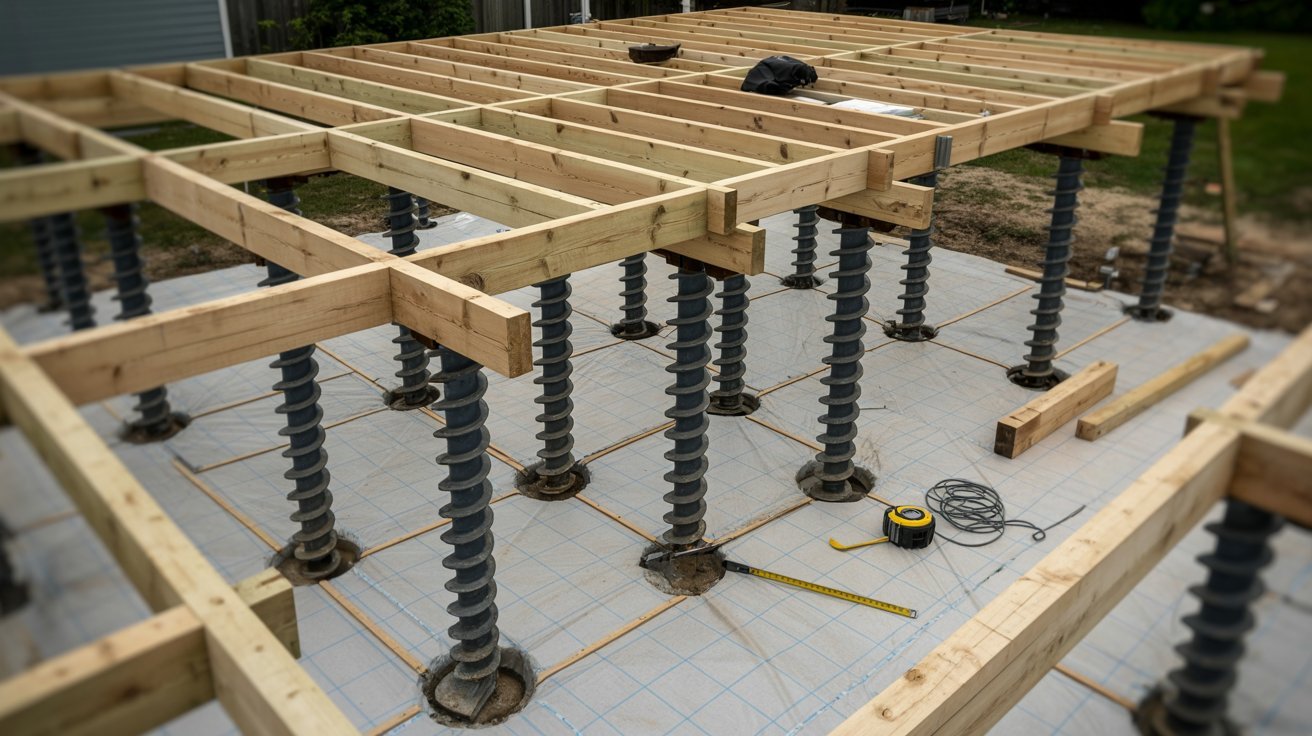
Spacing rules that make sure your deck stands firm and distributes weight properly.
Standard 8 to10 Foot Spacing
The most common rule is to place helical piers every 8 to 10 feet along each beam. This spacing keeps the load distributed and prevents any single pier from taking too much weight. Going wider than 10 feet is generally not recommended for residential decks.
Placement at Beams and Load Points
Every pier should sit directly under a beam. Corners always need a pier. Any point where two beams meet or where extra weight concentrates, like under a hot tub, also needs support.
When to Reduce Spacing
You should tighten your spacing when:
- The soil is soft or unstable
- You’re adding a heavy feature like a spa
- Local code requires it
- Your beams are carrying unusually long spans
How Many Helical Piers Do I Need? (Deck Size Examples)
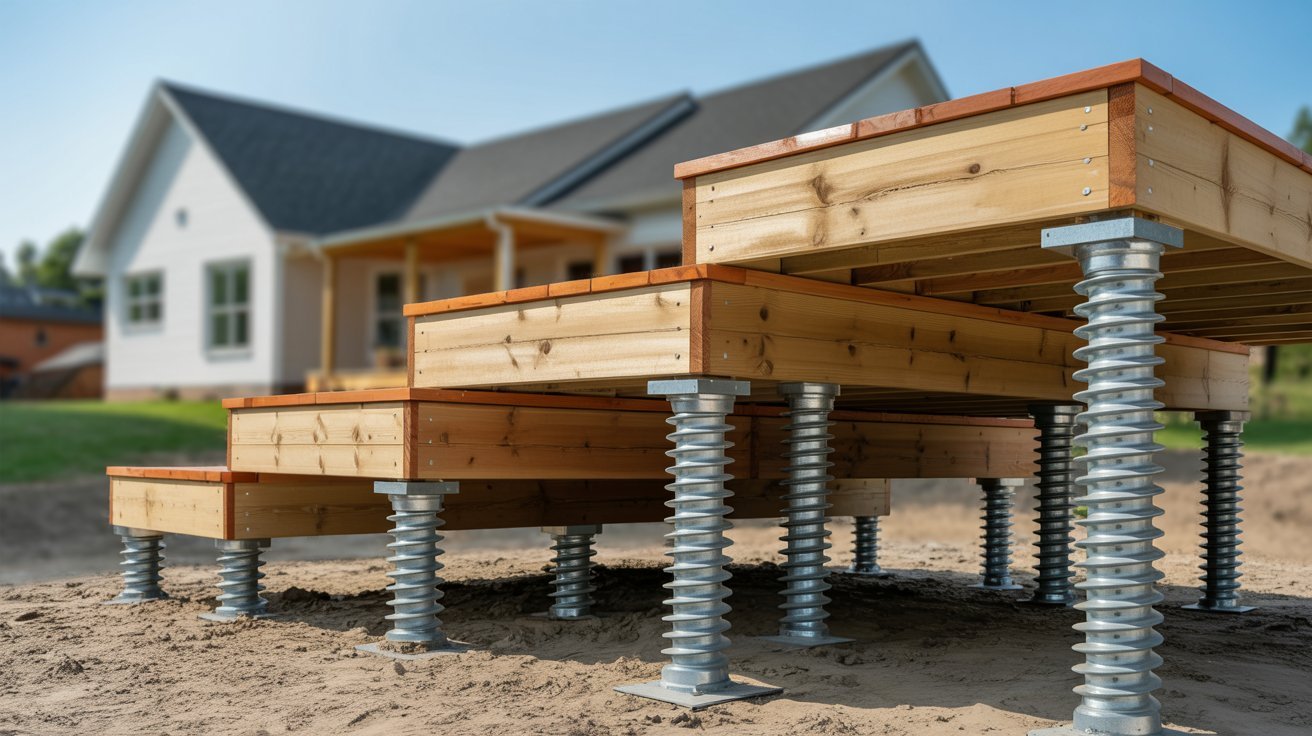
Real size breakdowns so you can estimate based on your own deck dimensions.
|
Deck Size |
Square Footage |
Attached |
Freestanding |
|
10×10 |
100 sq ft |
4 piers |
6 piers |
|
12×16 or 16×20 |
192-320 sq ft |
6-9 piers |
6-9 piers |
|
20×20 or larger |
400+ sq ft |
9-12+ piers |
9-12+ piers |
Tips for Determining the Right Number of Helical Piers
- Online calculators are a good starting point, but they don’t account for your specific soil or local code requirements.
- If you plan to add a hot tub or pergola later, factor that load in now before the piers are set.
- Keep your pier spacing consistent throughout the layout to avoid uneven weight distribution across beams.
- Check for soft spots, waterlogged areas, or fill dirt in your yard before finalizing your pier count.
- For anything beyond a basic deck, getting a professional opinion can save you from expensive mistakes down the line.
Conclusion
Figuring out how many helical piers do I need for a deck isn’t something you can solve with one quick number. I’ve learned that the size, weight, soil, and code all play a role.
Getting this right from the start saves you money and stress later. My advice? Don’t cut corners on foundation planning.
If you’re unsure, get a professional opinion before you buy materials. Drop your deck size and setup in the comments. I’d love to help you think it through.
Frequently Asked Questions
Can I install helical piers myself?
It’s possible, but most installations need hydraulic equipment. Hiring a certified contractor is safer and ensures the piers are torqued to the correct depth.
How deep do helical piers need to go for a deck?
They typically go 10 to 25 feet deep, depending on where stable soil or bedrock is located. Your contractor will determine the right depth on-site.
Do helical piers work in all soil types?
They work in most soil types, including clay and sandy soil. However, very rocky ground can make installation difficult and may need special equipment.
How long do helical piers last under a deck?
When properly installed and coated to resist corrosion, helical piers can last 75 to 150 years. They’re a long-term solution for deck foundations.
Do I need a permit for helical pier installation?
In most areas, yes. Deck foundations are typically part of the building permit process. Always check with your local municipality before starting work.