If you own a 1970s split level, you already know the feeling. The layout feels choppy, the rooms look dark, and the whole house feels stuck in the past.
This guide walks you through real before and after 1970s split level remodel results. We cover layout changes, kitchen and living room updates, exterior upgrades, and cost breakdowns.
I’ve written about home improvement for years and know what actually makes a remodel worth it.
Before and After 1970s Split-Level Remodel: Layout Transformation
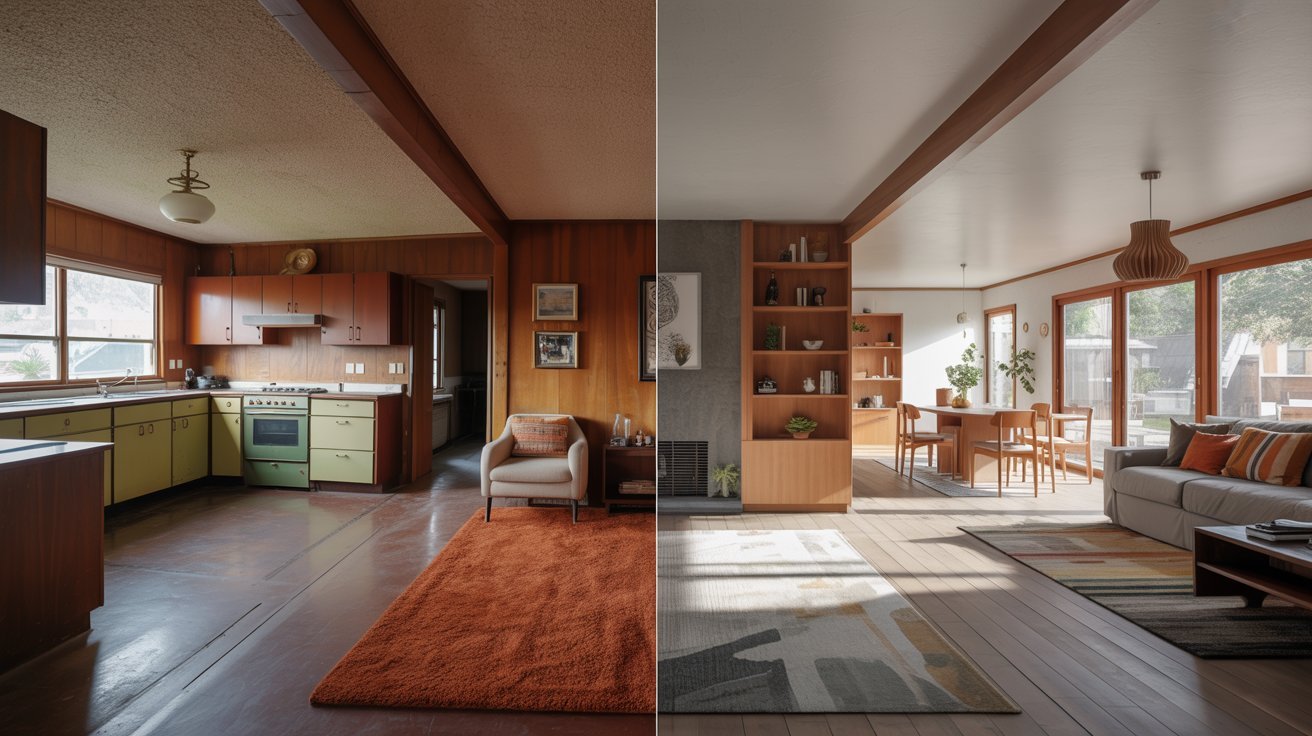
Small layout changes in a split level can open up the whole home and make it feel twice as large.
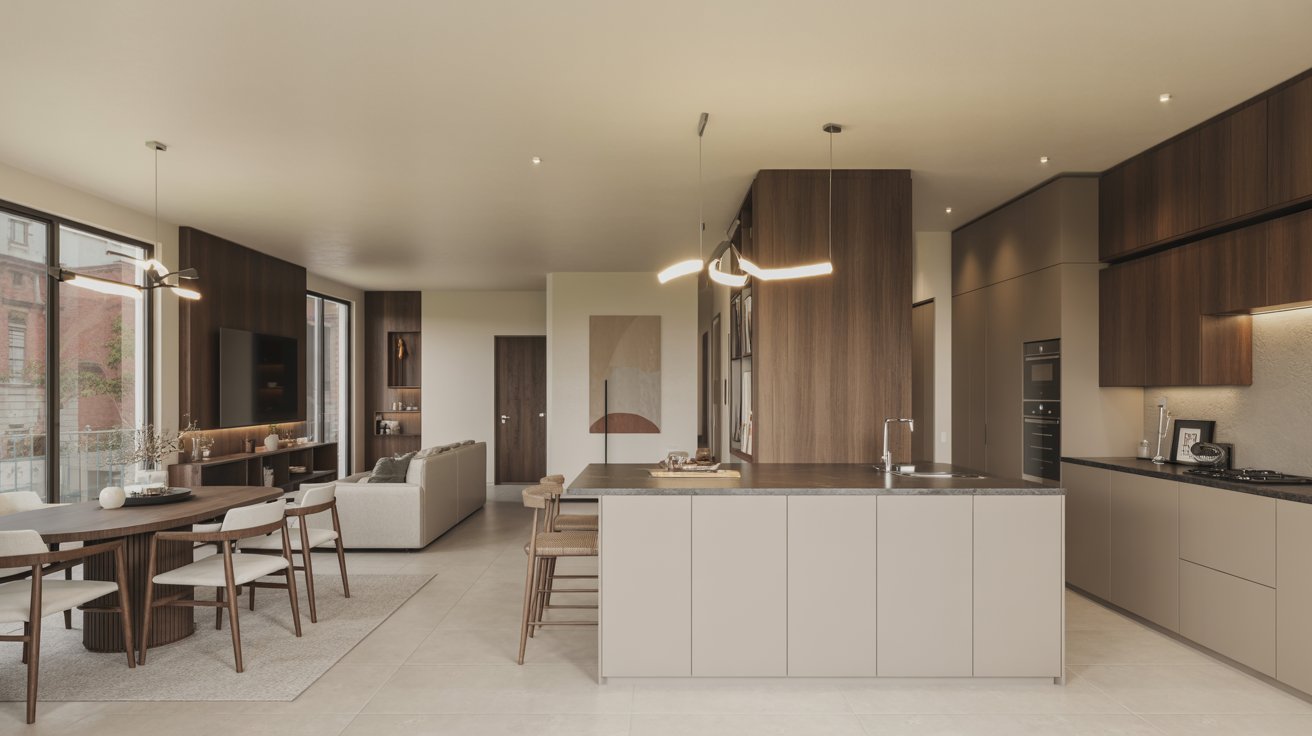
Most 1970s split levels had walls separating the kitchen, dining, and living room. Removing them lets light move freely and connects all three spaces.
Always check if a wall is load bearing first. Use rugs, pendant lights, and built in shelving to keep the open layout feeling organized.
Interior 1970’s Split Level Remodel Ideas (Before and After)
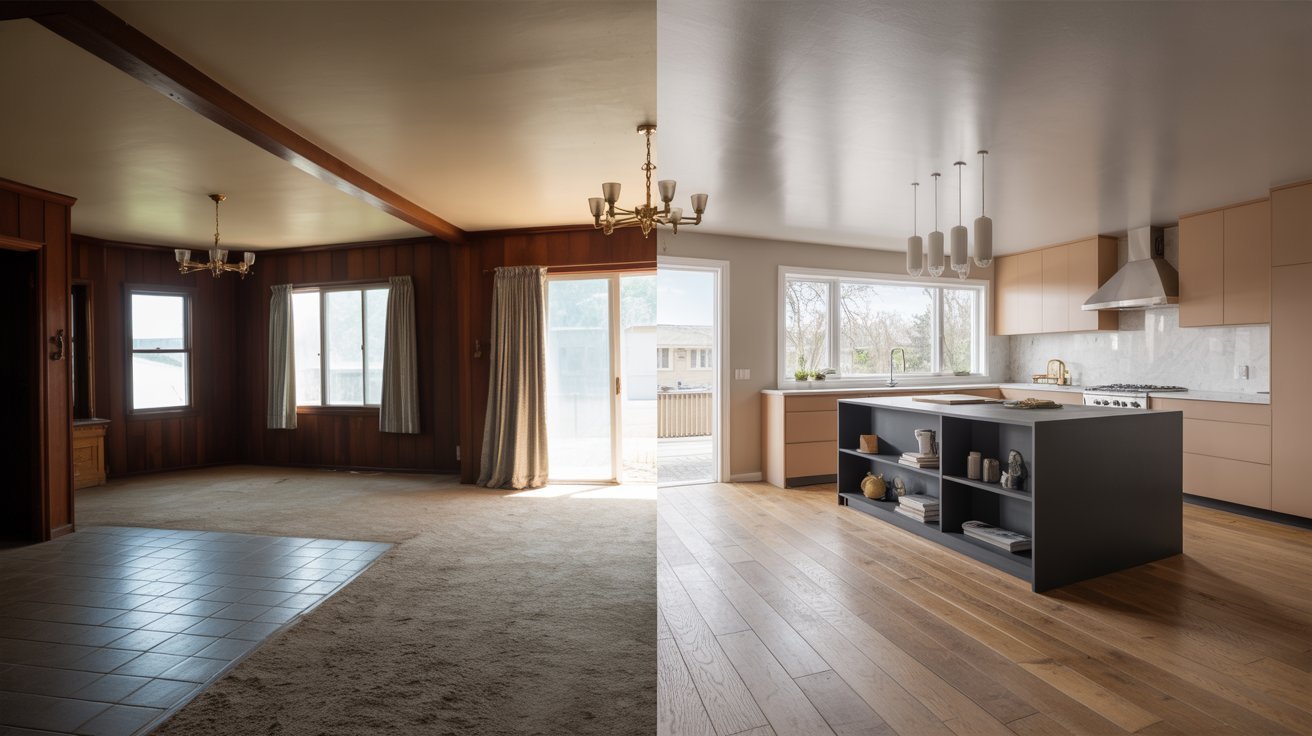
Updating the interior is about making the whole home feel lighter, cleaner, and more connected.
Updating Flooring for a Cohesive Look
Older split levels had different coverings in every room. Wide plank hardwood or luxury vinyl plank throughout the main level fixes the choppy feel fast.
Modern Lighting to Brighten Dark Spaces
Recessed lighting, pendants, and swapping old brass fixtures for matte black or brushed nickel make a strong visual shift without major work.
Neutral vs Bold Color Schemes for Interiors
Stick to warm neutrals like white, cream, or greige for most of the space. Use bold tones selectively on an accent wall or island.
Smart Storage Solutions for Small Layouts
Built ins near the entry, shelving in wall niches, and under stair storage all put dead space to good use.
Living Room 1970’s Split Level Remodel (Before and After)
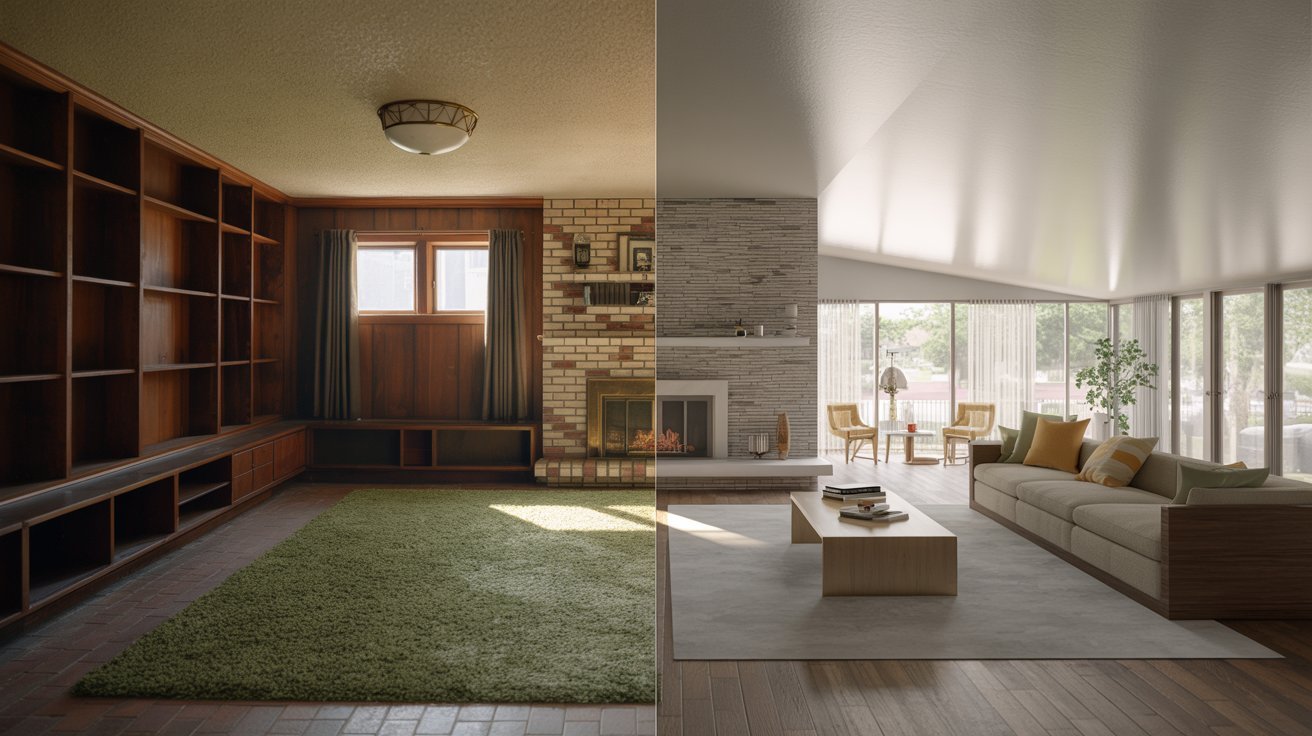
The living room in a split level often looks disconnected, but a few smart changes fix that fast.
Removing Barriers Between Living Spaces
Removing walls opens sightlines across the whole main level and makes the room feel larger right away.
Modern Furniture Layout for Better Flow
Float the furniture toward the center instead of pushing it against the walls. This creates a clear path from the entry to the kitchen.
Fireplace, Feature Walls, and Focal Points
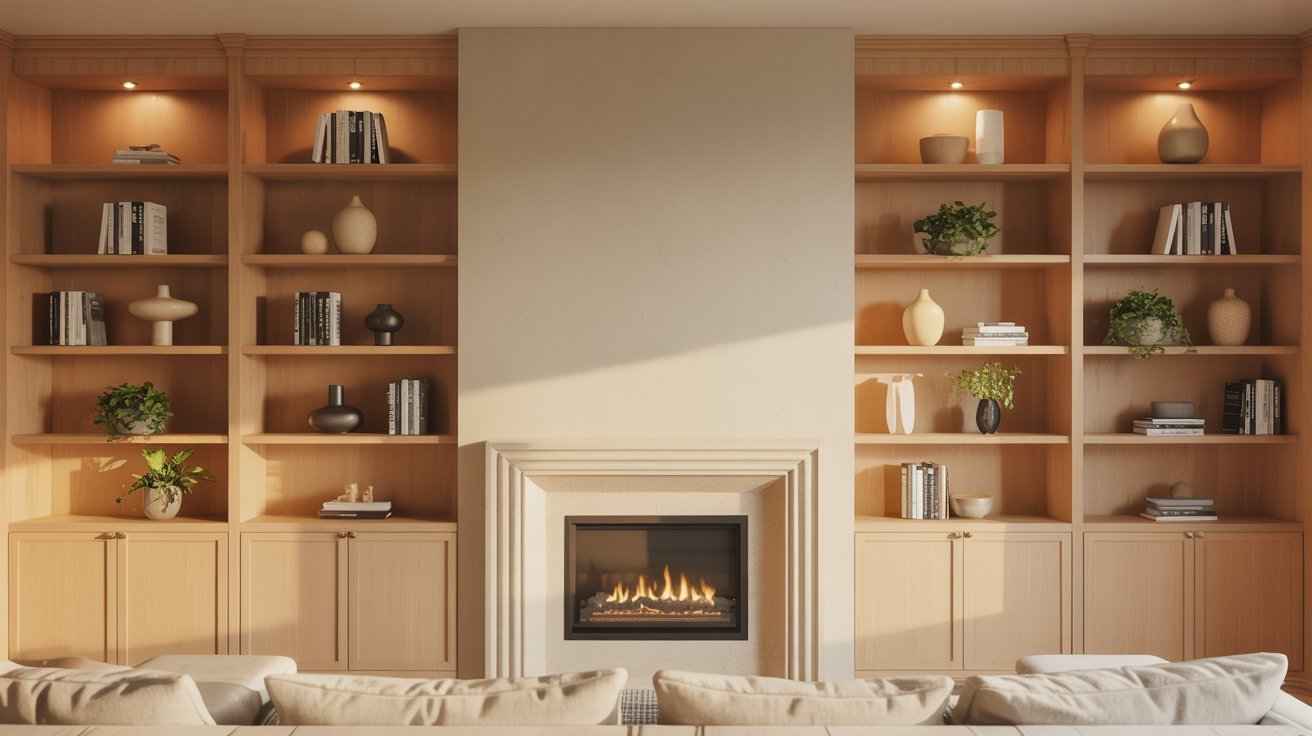
Update an existing fireplace surrounded with tile or stone. No fireplace? A built in media wall or large piece of art anchors the room just as well.
Maximizing Natural Light in Split Level Living Rooms
Replace small windows with larger ones and place mirrors across from windows to push more light into the room.
Kitchen Before and After 1970’s Split Level Remodel
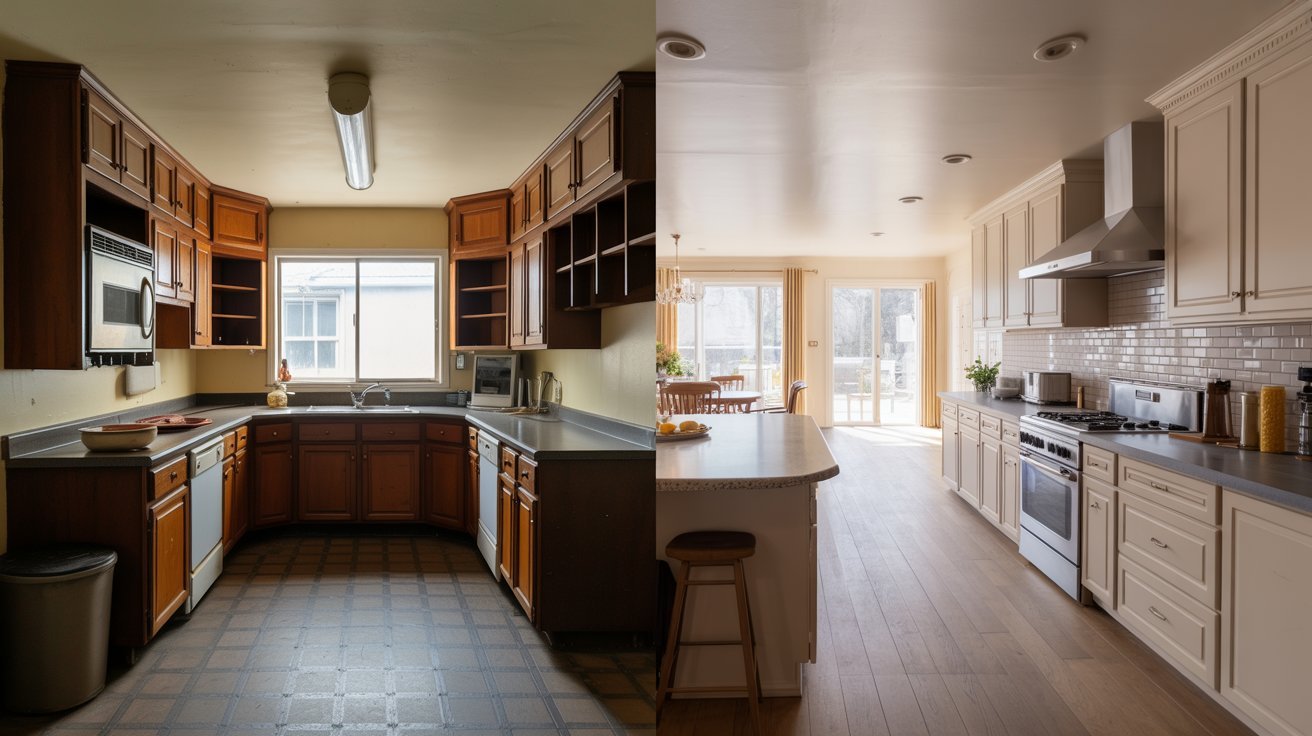
The kitchen in a 1970s split level was usually small, closed off, and separated from the rest of the home.
Transforming a Closed Kitchen Into Open Concept
Once the walls come down, the kitchen becomes the hub of the home instead of a back room nobody enjoys being in.
Adding a Large Island Instead of a Dining Table
A large island with deep drawers on one side and bar seating on the other replaces a separate dining table and keeps the open feel intact.
Cabinet, Countertop, and Backsplash Upgrades
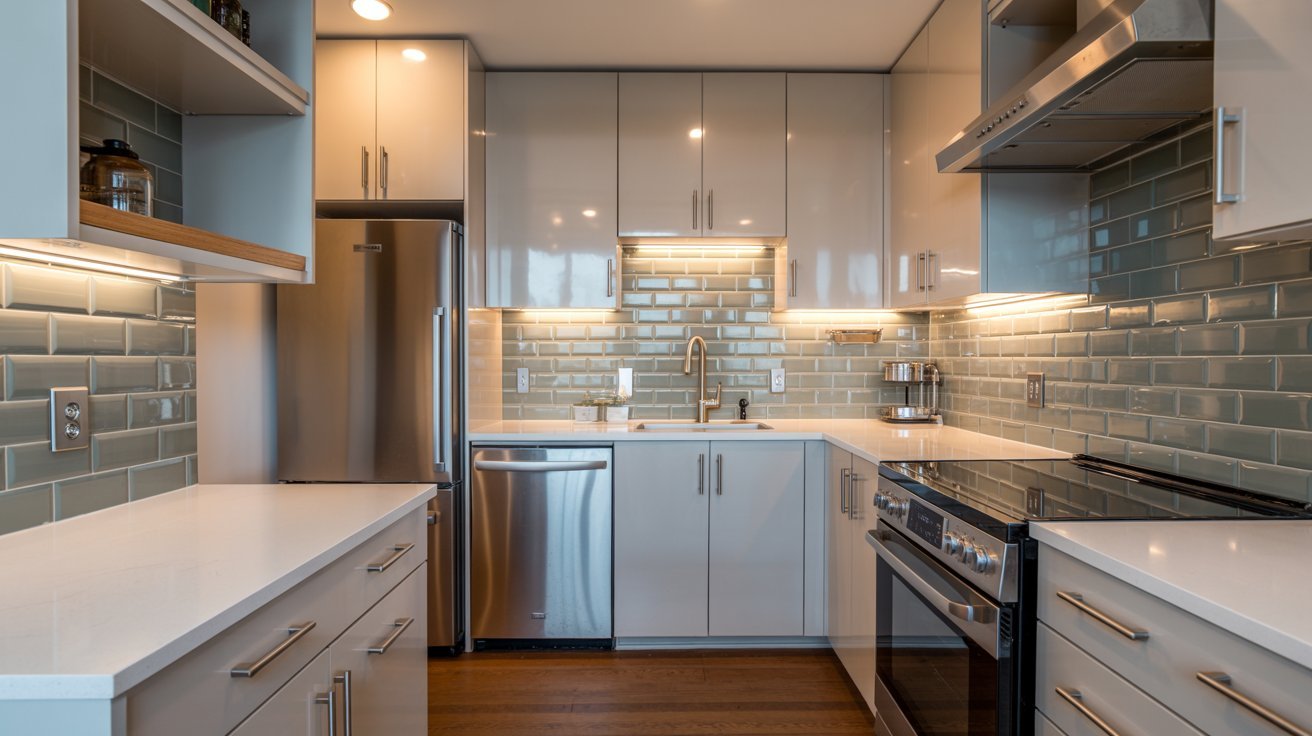
Flat front shaker cabinets in white, cream, or soft green paired with quartz countertops and a simple backsplash give a clean, current finish.
Improving Storage With Buffet Walls and Built-Ins
If opening the kitchen cost you cabinet space, a built in buffet along one wall adds it back without shrinking the room.
Entryway 1970’s Split Level Remodel (Before and After)
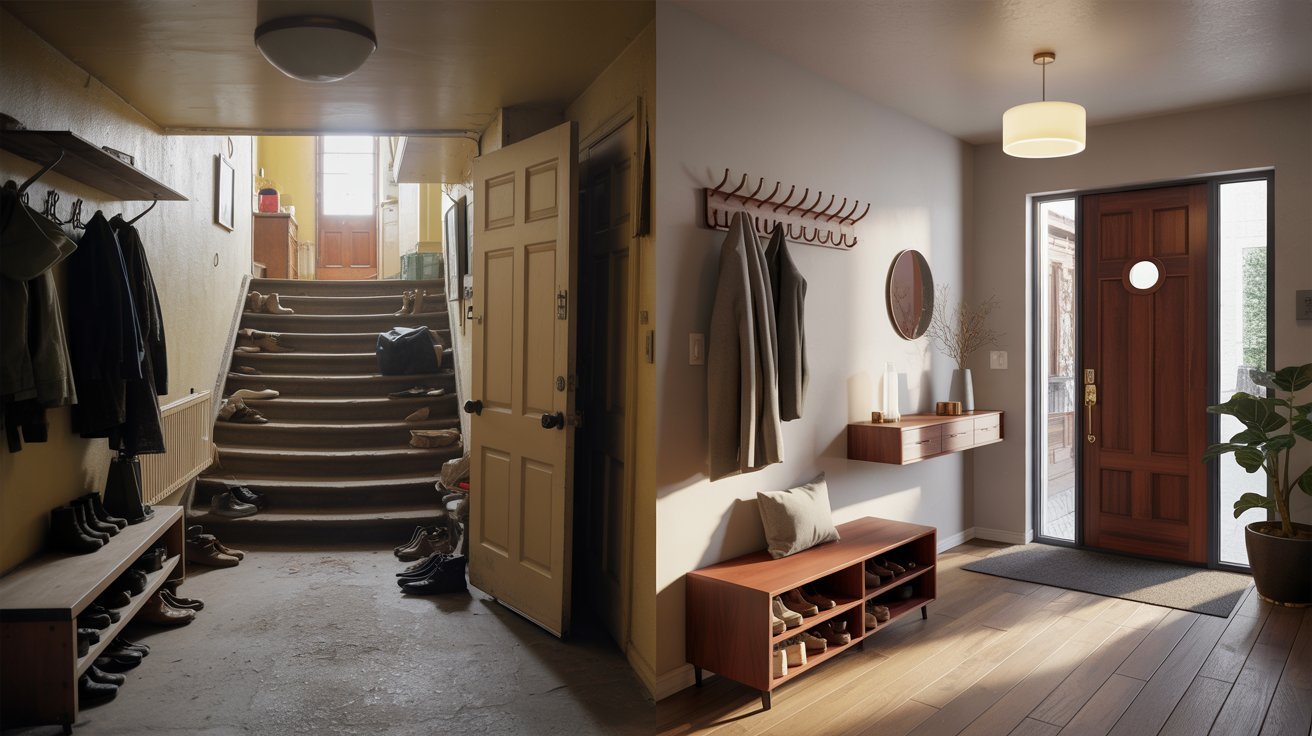
The entryway sets the tone for the whole home, and most original split level entries need a real update.
Creating a Defined and Welcoming Entry Space
Most 1970s split levels drop you right at the stairs with no real landing. A built in bench, console table, or floating shelf near the door gives the space purpose.
Adding Storage (Builtins, Benches, Hooks)
A bench with shoe storage underneath and hooks above for coats keeps the home tidy from the moment you walk in.
Upgrading Doors, Lighting, and First Impressions
Replace the old hollow core door with a solid wood or steel one. Add a pendant light and small mirror to brighten the whole entry area.
1970’s Split Level Remodel Exterior Before and After
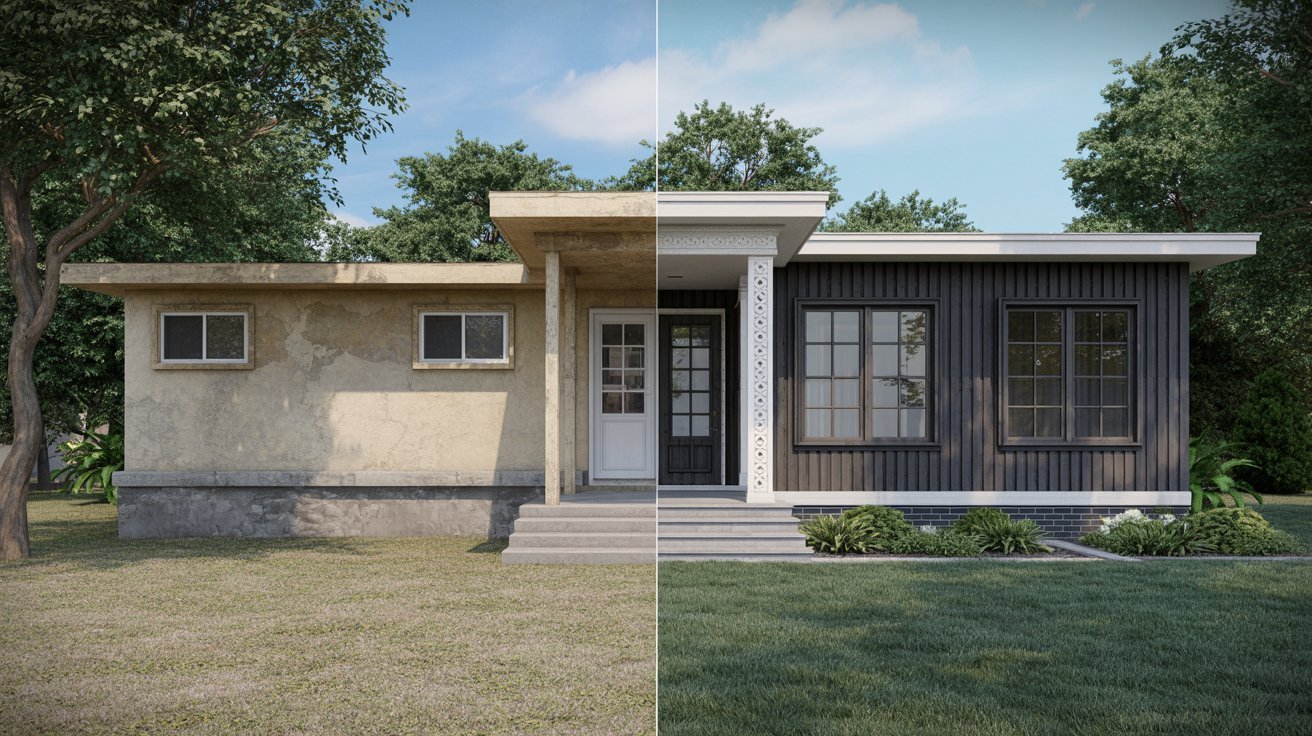
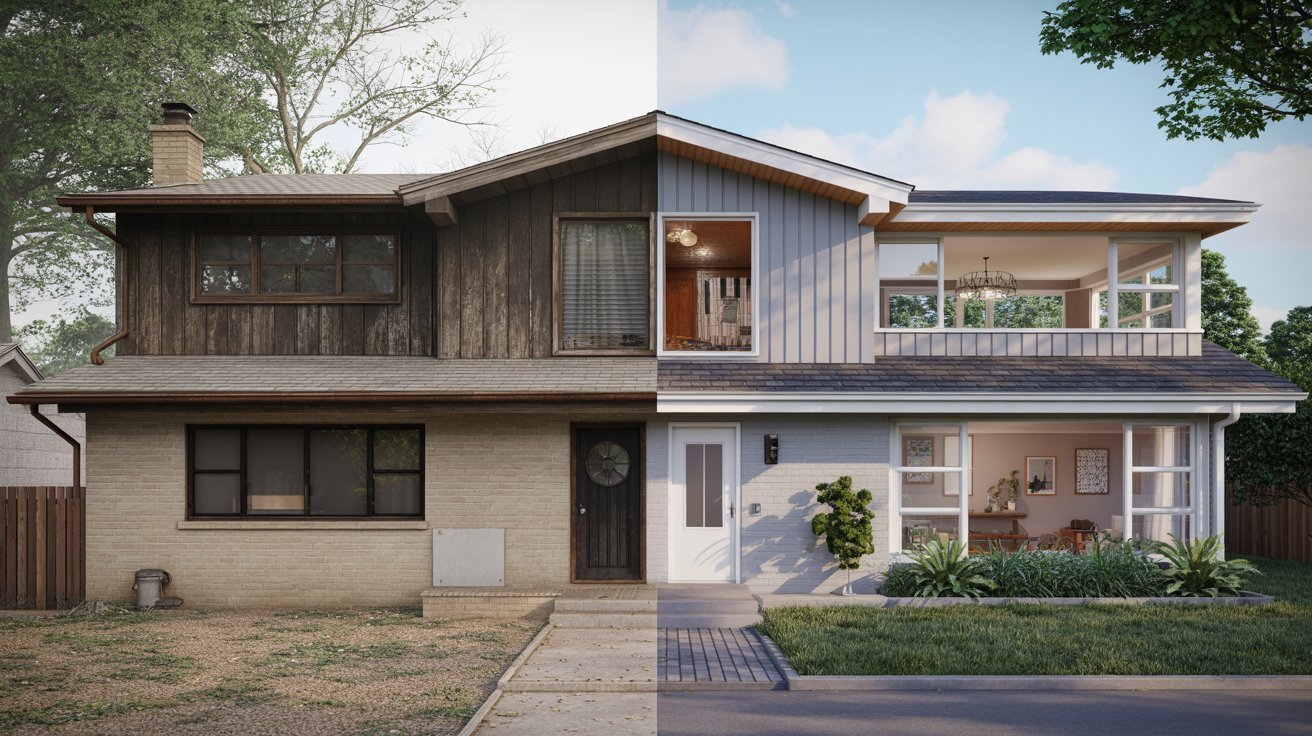
The outside of a 1970s split level is often the hardest part to update, but the results can be dramatic.
Fixing the Boxy Look With Modern Design Elements
A covered entry, board and batten siding, or horizontal wood accents break up the flat facade and make the home look wider overall.
Updating Siding, Paint, and Materials
Dark colors like deep green, charcoal, or navy paired with light trim are a popular and current choice for remodeled split levels.
Window Upgrades for Better Light and Style
Replacing small single pane windows with taller, wider double pane versions improves both the exterior look and the light inside.
Curb Appeal 1970’s Split Level Remodel Ideas
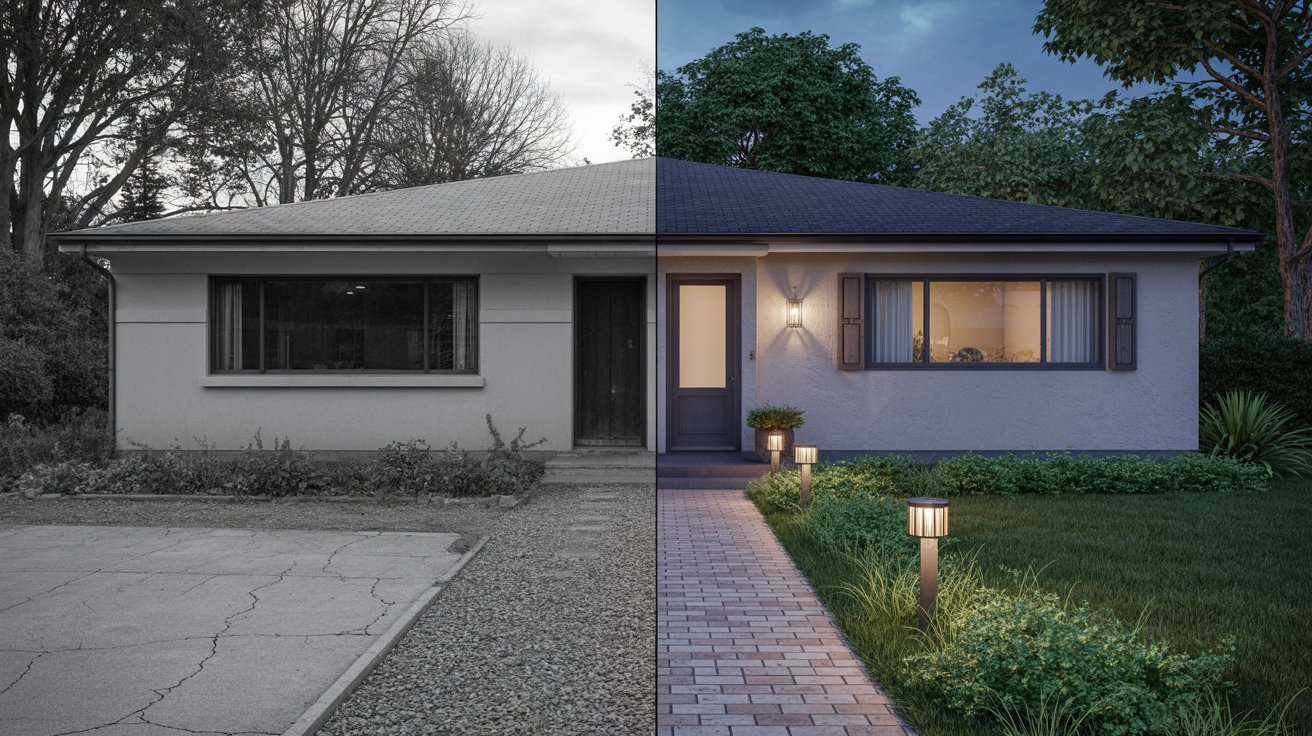
Good curb appeal matters whether you’re selling or staying put.
Adding a Front Porch or Portico
Even a small roofline over the front door adds depth and a clear sense of arrival to an otherwise flat facade.
Landscaping for a Modern Look
Keep it clean with low growing shrubs, ornamental grasses, and a clear path to the front door. Avoid over planting.
Driveway, Walkway, and Entry Enhancements
Replace a cracked concrete driveway with pavers and add a matching walkway from the driveway to the door.
Exterior Lighting for Night Appeal
Wall sconces, path lights, and uplights on architectural features give the home depth and presence after dark.
Bathroom and Lower Level Remodel Ideas
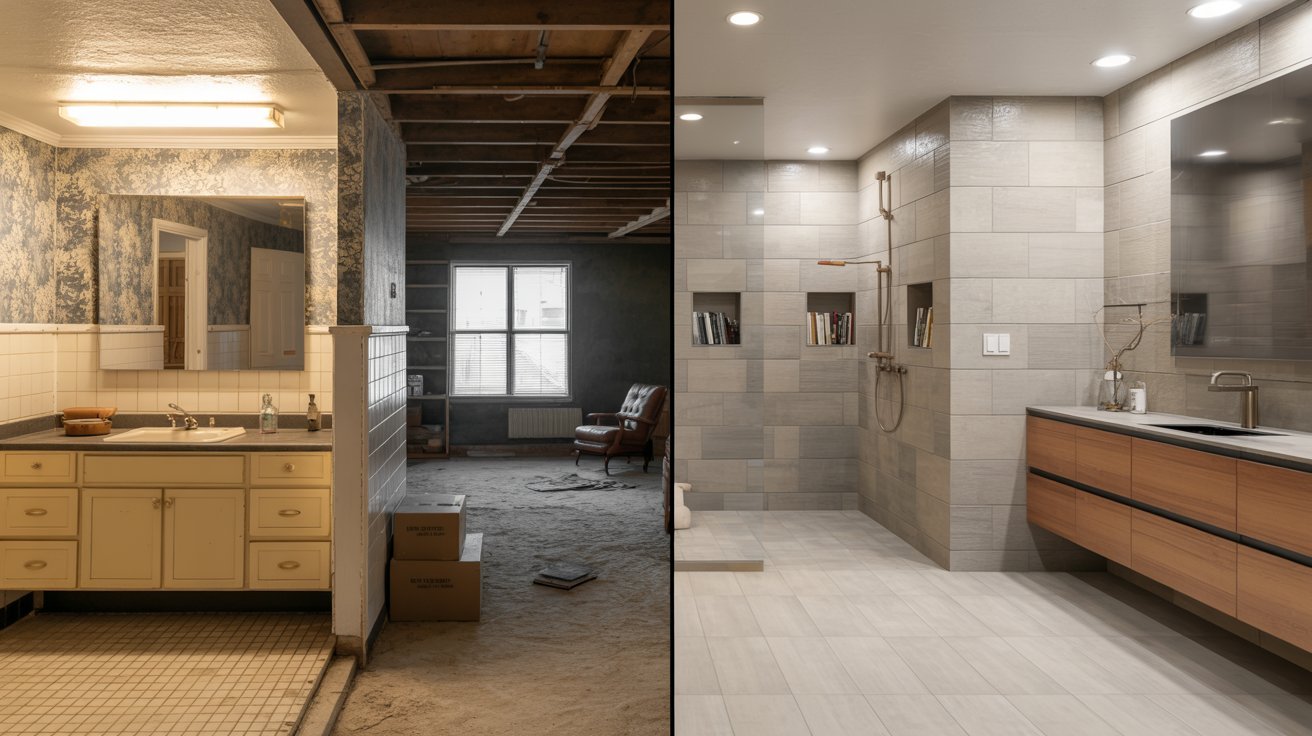
Split level bathrooms are often small and outdated, but they don’t need much space to feel fresh.
Updating Small, Outdated Bathrooms
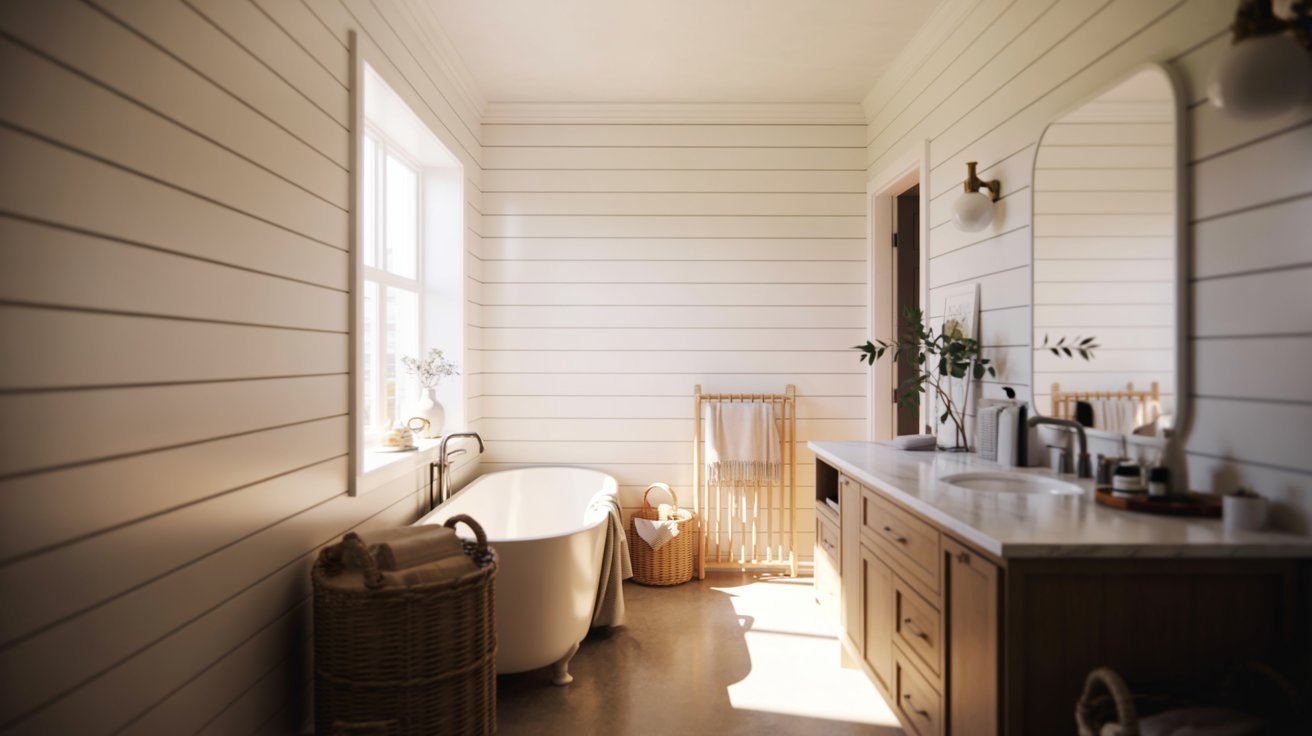
Swap the old vanity for a floating one, replace dated tile with white or light gray, and update the light fixture and mirror.
Creating Spa Like Modern Spaces
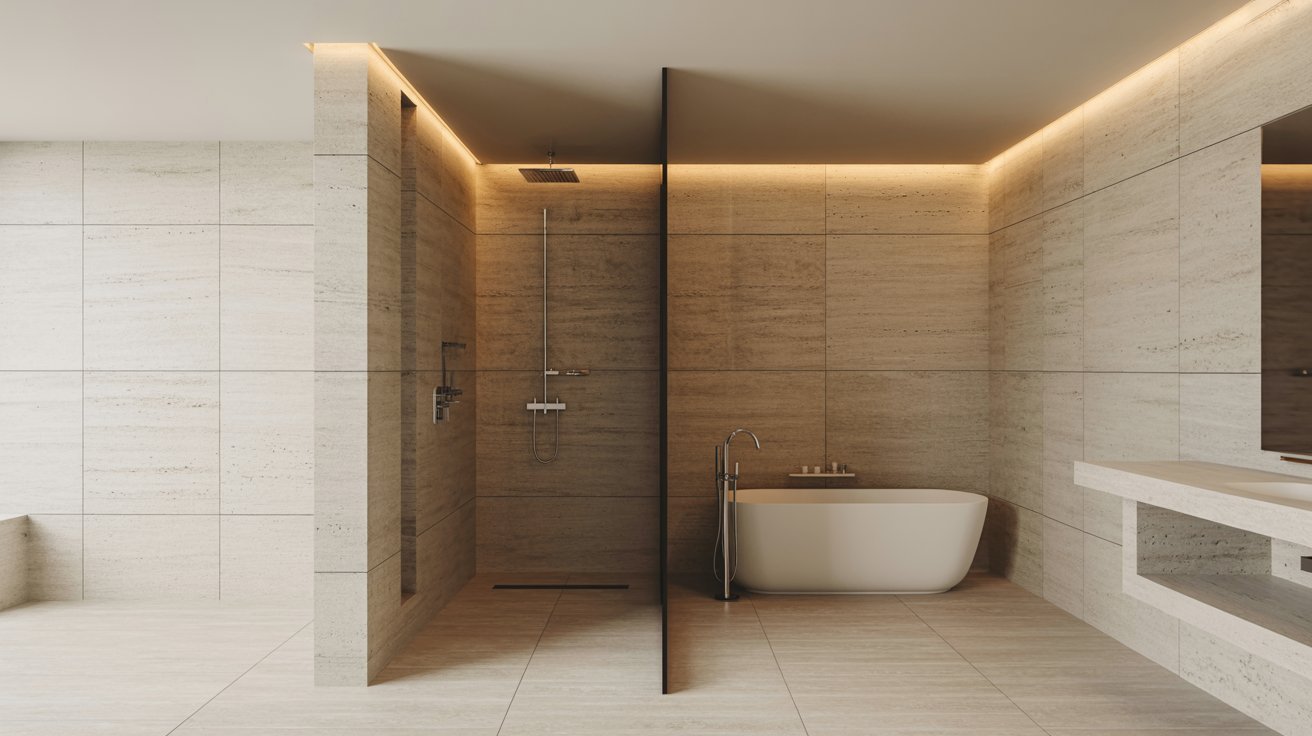
A walk in shower with a frameless glass door, rain shower head, and built in niches gives a more upgraded feel without going over budget.
Transforming Basement or Den Into Functional Areas
Good lighting and proper insulation are the keys to converting the lower level into a home office, gym, or guest suite.
Cost, Planning, and Timeline for a Split Level Remodel
Good planning upfront saves money, time, and stress once the project starts.
Budget Breakdown for Interior and Exterior Updates
General cost ranges: kitchen $15,000 to $60,000, bathroom $8,000 to $25,000, flooring $5,000 to $20,000, exterior siding and paint $10,000 to $35,000, and a full remodel $80,000 to $200,000 or more.
DIY vs Professional Remodeling Decisions
Paint, hardware, and landscaping are solid DIY projects. Anything structural, electrical, or plumbing related needs a licensed professional.
Common Mistakes to Avoid
Set a firm budget before you start and add a 15 to 20 percent buffer for surprises. Hire a contractor with split level experience before making any major changes.
Expert Tips for a Successful 1970s Split-Level Remodel
These tips come from real homeowners and contractors who have worked through dozens of split level projects.
- Focus on the layout before spending money on finishes
- Keep flooring consistent across all connected levels
- Add larger windows wherever the budget allows
- Use islands and built ins so every piece of furniture does more than one job
- Work with the original structure instead of fighting it
- Hire contractors with specific split level experience
Conclusion
The biggest wins in a 1970s split level remodel come from opening the layout, updating finishes, and letting in more light. You don’t always need a full renovation to see a real difference. Start with one change and build from there.
Did this guide help you plan your 1970’s split level remodel? Drop a comment below or share it with a friend tackling the same project.
Frequently Asked Questions
How much does a before and after 1970’s split level remodel cost?
A basic update can start around $20,000. A full remodel with layout changes, kitchen, bathrooms, and exterior work can run $150,000 or more depending on your location and materials.
Can you remove walls in a split-level home?
Yes, but you need to check if the wall is load bearing first. A structural engineer or licensed contractor can tell you which walls can safely come down and what support is needed.
What is the best layout for a split-level remodel?
An open main level with a connected kitchen, dining, and living area works best for most families. Removing walls between these three spaces is the highest impact layout change you can make.
How do you modernize a 1970’s split level on a budget?
Start with paint, lighting, and hardware. These three changes cost the least but make the biggest visual difference. New flooring is the next step once the budget allows.
What are the most common mistakes in a split-level remodel?
Skipping the planning phase, removing load bearing walls without professional help, and picking trendy finishes over timeless ones are the most common issues homeowners run into.